
Originally published 2026-01-24 · Cyclone Bolt
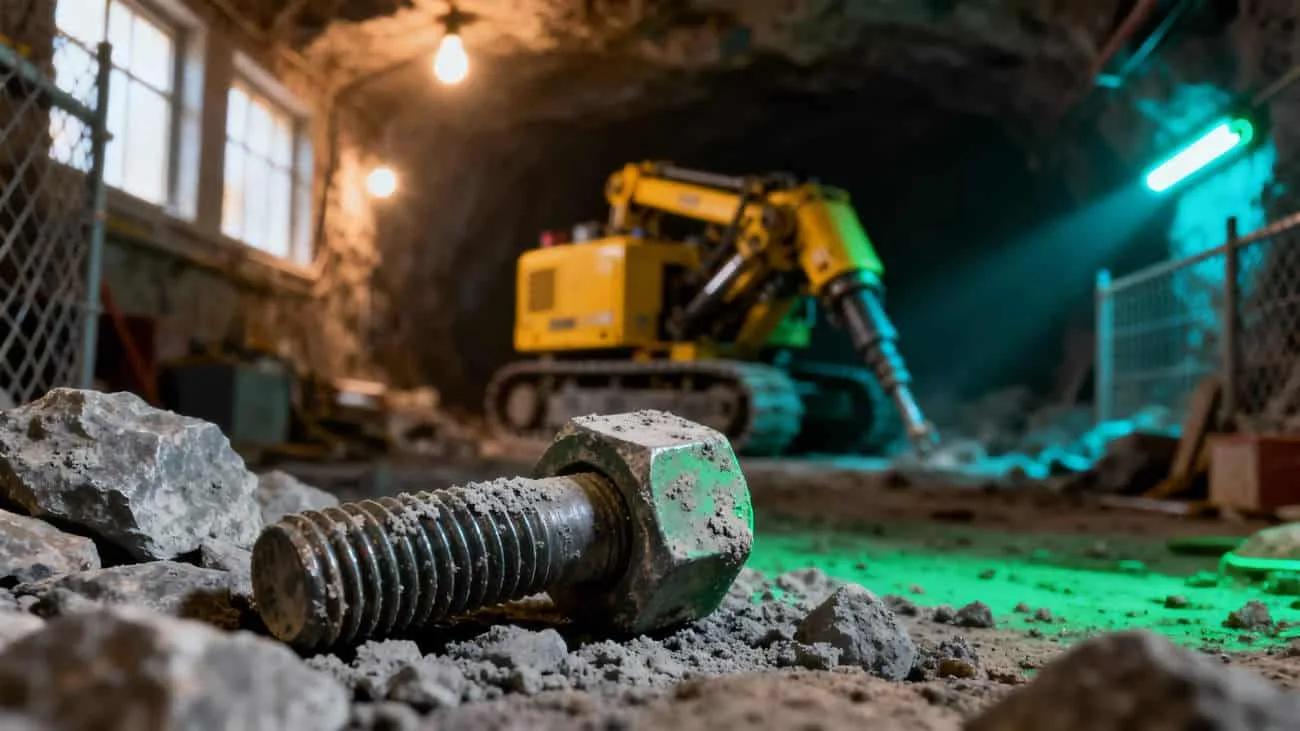
Mine environments are some of the most unforgiving places on Earth. Equipment must endure extreme pressure, vibration, and moisture. However, one of the most persistent threats is nearly invisible. Fine dust and abrasive grime act as a silent killer for threaded fasteners.
Fasteners hold together massive excavators, drill rigs, and conveyor systems. When dust enters the interface between a bolt and a nut, the physics of that connection changes. What was once a secure, static joint becomes a site for friction, wear, and eventual failure.
Cyclone Bolt, located in Houston, Texas, understands these mechanical stressors. We specialize in high-spec fasteners that meet API Spec Q1 9th Edition and ISO 9001:2015 Quality System Certificate standards. Our mission is to ensure your equipment stays operational despite the harsh grime found in mining operations.
The Nature of Mining Dust as an Abrasive
Mining dust is not like household dust. It is often composed of crushed rock, silica, coal, or metallic ores. These particles are incredibly hard. Many are harder than the steel used in standard fasteners.
When these particles settle on equipment, they find their way into every crevice. Threaded connections are particularly vulnerable. The spiral path of a thread is an ideal trap for fine particulate matter.
Once dust enters the threads, it creates an abrasive paste. This happens when the dust mixes with ambient moisture or leaked lubricants. Under the vibration of mining machinery, this paste grinds away at the metal.
The Mechanism of Thread Failure in Mines
Threaded fasteners rely on a specific fit to maintain tension. Engineers call this “thread engagement.” When abrasive grime enters the picture, it destroys the tolerances of these threads.
1. Abrasive Wear
As machinery vibrates, the nut and bolt move slightly against each other. The grit between them acts like sandpaper. It slowly removes material from the flanks of the threads. This leads to a loss of “clamp load.” Once a bolt loses its tension, it is no longer doing its job.
2. Galling and Seizing
Galling is a form of wear caused by adhesion between sliding surfaces. In mining, abrasive particles create high-friction “hot spots.” When you attempt to tighten or loosen a grimy bolt, the threads can literally weld themselves together. This often results in the bolt snapping or the threads being completely stripped.
3. Accelerated Corrosion
Dust often holds moisture against the metal surface. In many mines, this moisture is acidic or saline. By trapping these corrosive elements against the bolt, dust accelerates the pitting process. This weakens the fastener and can lead to stress corrosion cracking.
Why Material Choice Matters
Standard bolts often fail prematurely in mining. This is why material selection is critical. Cyclone Bolt provides a variety of options through our Material Grade Guides.
For high-stress mining applications, materials must have high hardness and fatigue resistance. We manufacture fasteners to API 20E and API 20F specifications. While these are often associated with the oil and gas industry, their strict metallurgical requirements make them perfect for heavy mining equipment.
-
API 20E (Alloy Steel): These fasteners undergo rigorous testing for hardness and microstructure. They are designed to withstand the high-load environments found in deep-earth mining.
-
API 20F (Corrosion-Resistant Bolting): In mines with high water tables or chemical exposure, 20F fasteners offer the necessary protection against both abrasion and rust.
Using fasteners that meet these standards ensures that the core of the bolt can handle the stress, even if the surface faces abrasive grime.
The Role of Specialty Coatings
If the material is the heart of the fastener, the coating is its armor. In a dusty mine, the right coating can be the difference between a five-minute maintenance check and a ten-hour repair.
According to our Coating and Plating Technical Guide, different environments require different barriers.
Xylan and PTFE Coatings
PTFE coatings are popular in mining because they have an extremely low coefficient of friction. This “slipperiness” helps prevent galling when grime is present. It also prevents dust from sticking to the threads as easily as it would to bare steel.
Zinc Plating and Galvanizing
Zinc offers sacrificial protection against corrosion. However, in abrasive environments, hot-dip galvanizing provides a thick, durable layer that can withstand some mechanical wear from dust before the steel is exposed.
Cadmium Plating
While being phased out in some industries, cadmium is still used where high lubricity and corrosion resistance are needed in dusty, salty environments.
Maintenance Challenges in the Mining Sector
Dust doesn’t just impact the fastener while it is installed. It creates a massive headache during maintenance. Mining equipment requires frequent inspections. If a fastener has seized due to grime, technicians often resort to “hot work” or cutting the bolt off.
This adds significant time to maintenance cycles. It also introduces safety risks. Using high-quality bolting with appropriate coatings reduces the frequency of seized hardware. This keeps your team safe and your machines moving.
According to the National Mining Association, equipment downtime is one of the largest costs in the industry. Investing in superior fasteners from the start is a proactive way to lower your total cost of ownership.
Houston’s Hub for High-Spec Fasteners
Cyclone Bolt is proud to operate out of Houston, Texas. Houston is a global center for engineering and manufacturing. Our location allows us to tap into the most advanced material sciences and coating technologies available.
We don’t just sell bolts; we solve mechanical problems. By adhering to API Spec Q1 standards, we ensure every fastener that leaves our shop is capable of surviving the grit and grime of a modern mine.
How to Protect Your Threads from Mine Grime
You can take several steps to extend the life of your fasteners in high-dust environments.
1. Use Thread Protectors
During storage and transport, keep threads covered. Even a small amount of “pre-install” dust can cause issues during the initial torquing process.
2. Choose the Right Lubricant
In mining, traditional grease can be a double-edged sword. It provides lubrication but also acts as a magnet for dust. Consider dry-film lubricants or anti-seize compounds specifically designed for abrasive environments.
3. Regular Cleaning
Before performing any maintenance, use high-pressure air or specialized solvents to clear the threads of visible grime. This reduces the chance of abrasive particles being forced deeper into the threads during loosening.
4. Upgrade Your Material Specs
If you are seeing frequent failures, it is time to look at the metallurgy. Upgrading to API 20E or 20F fasteners provides a level of quality control that standard hardware cannot match.
The Cost of Ignoring Dust
Ignoring the impact of abrasive grime leads to catastrophic failure. A snapped bolt on a critical component can lead to equipment collapse. This puts miners’ lives at risk and causes millions in lost production.
Abrasive grime works slowly, but it is relentless. By the time you see the wear, it is often too late. Longevity in mining fasteners is achieved through superior engineering and the highest quality control standards.
Quality Control as a Barrier to Grime
At Cyclone Bolt, our ISO 9001:2015 Quality System Certificate certification is more than just a piece of paper. It represents our commitment to consistency. In mining, consistency saves lives.
Every fastener we produce undergoes strict testing. We verify dimensions, material hardness, and coating thickness. We know that if a thread is even slightly out of spec, it provides a larger gap for dust to enter. By maintaining tight tolerances, we provide fewer opportunities for abrasive grime to do its damage.
Choosing the Right Partner for Mining Logistics
Mining operations are often in remote locations. You need a partner who can deliver the right fasteners quickly and accurately. Cyclone Bolt combines Houston-based manufacturing speed with international quality standards.
Whether you need heavy-duty studs for a subterranean drill or specialized bolts for an open-pit conveyor, we have the technical expertise to guide your selection. Our Material Grade Guides are a great place to start your search for more durable fasteners.
Recap of Thread Longevity in Mines
-
Abrasive particles: Mine dust consists of hard particles like silica that act as an abrasive paste.
-
Vibration: Constant machinery vibration turns trapped dust into a grinding agent that destroys thread flanks.
-
Galling: Grime increases friction, leading to threads seizing or welding together during maintenance.
-
Standards: Fasteners built to API 20E and API 20F offer superior fatigue and wear resistance.
-
Coatings: PTFE and specialty platings provide a barrier that prevents dust adhesion and reduces friction.
-
Quality: Adhering to API Spec Q1 ensures metallurgical integrity in high-stress zones.
Contact Cyclone Bolt Today
Don’t let abrasive grime stop your operation. Protect your equipment with the highest quality fasteners in the industry. Cyclone Bolt is ready to help you navigate the complexities of mining logistics with Houston-made reliability.
Browse our Material Grade Guides or Contact our Sales Team to secure your mining infrastructure today.