
Double-end & tap-end studs
Threaded ends, unthreaded lengths, and thread requirements made to your drawing or specification.
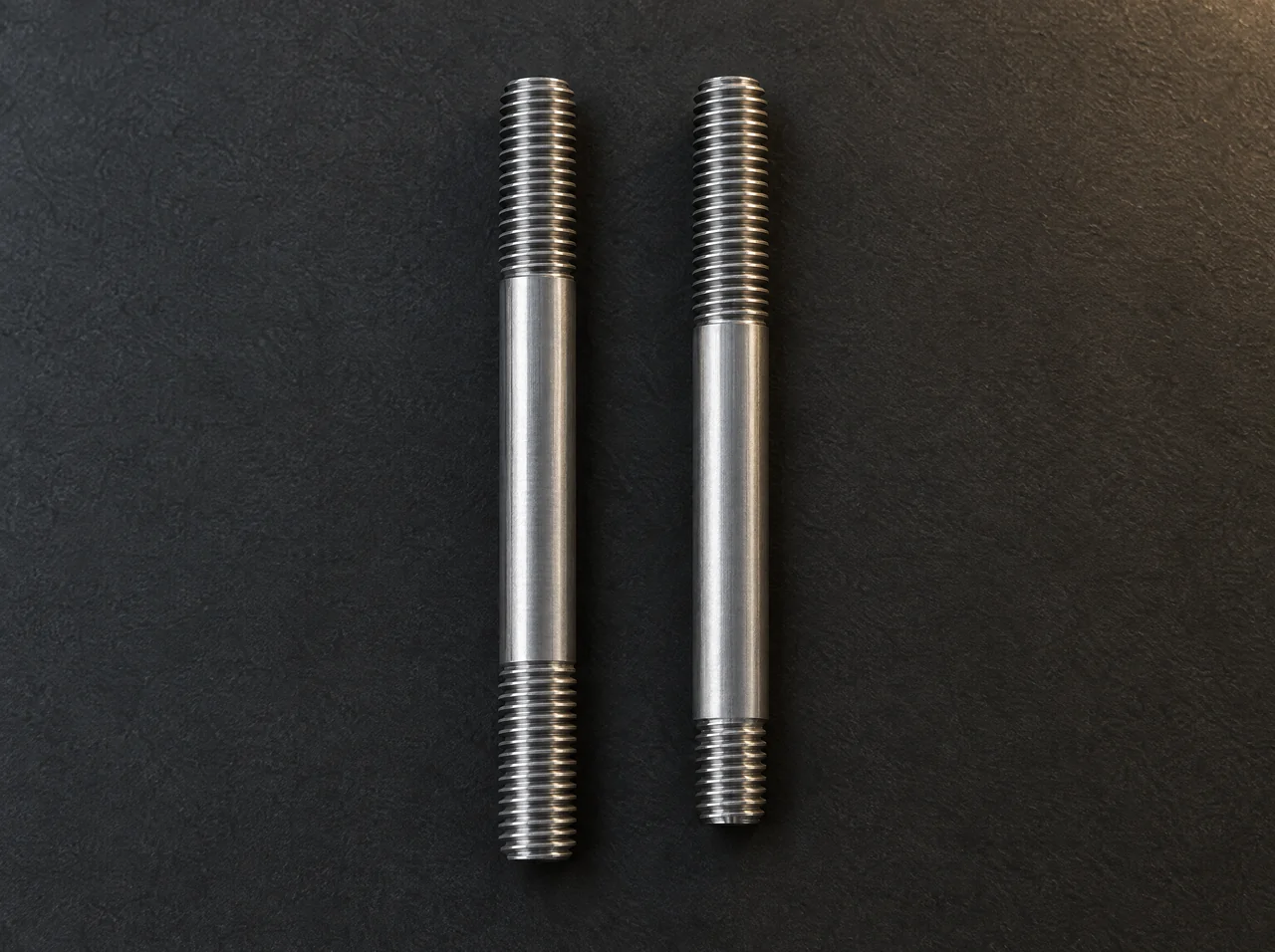
Double-end & tap-end studs, defined by the order.
Double-end and tap-end studs require clear definition of both threaded ends and the intervening length. Include end identification, thread fit, surface treatment, material grade, and dimensional acceptance criteria so the manufacturing team can review the complete requirement.
- Independent end and overall length requirements
- Specified thread form, pitch, and class
- Material, marking, and finish per purchase requirements
Specify material grade and condition, dimensions, thread series/class, quantity, finish, required delivery, and documentation.
Define the part. Align the requirement.
A double-end or tap-end stud connects two different interfaces. Define each end separately so the manufacturing review captures engagement length, thread fit, installation orientation and the unthreaded section between them. Cyclone’s Landis single-head and double-head cut-thread equipment supports threaded-product production alongside CNC machining.
End A and end B
Identify each end on the drawing. Specify diameter, pitch, thread series, fit and threaded length independently, including any required interference fit.
Overall geometry
State overall length, body diameter, unthreaded length, undercuts and end preparation. Do not assume both ends are identical. Dimensions and size feasibility are confirmed during drawing review.
Material and finish
Provide the material grade and condition, applicable standard, surface treatment and any restrictions on the threading process. Availability and process route follow the approved order requirements.
Inspection and identification
Identify thread gaging, critical dimensions, end marking and the heat or lot identification needed for receiving inspection. Include material reports or other required release documents.
Questions before you quote
Can the two threaded ends be different?
Yes, the requirement can define different threaded lengths and end details. Cyclone reviews the complete geometry, material and thread specifications before confirming manufacture.
Are tap-end studs always an interference fit?
The purchase drawing or governing specification must define the fit. Do not infer fit from the product name; identify the required class and acceptance criteria.
Can you quote a replacement from a sample?
Contact the team to discuss the part, but provide an approved drawing and material specification for the order. A sample alone does not establish the original engineering requirements.