
Originally published 2026-02-16 · Cyclone Bolt
In the aviation industry, a bolt is never just a piece of hardware. It is a critical engineering component. Every fastener used in an aircraft must be able to withstand extreme vibrations, massive temperature fluctuations, and immense structural loads. If a single bolt fails, the consequences can be catastrophic. Because the stakes are so high, the aviation sector relies on a rigorous system of documentation known as traceability.
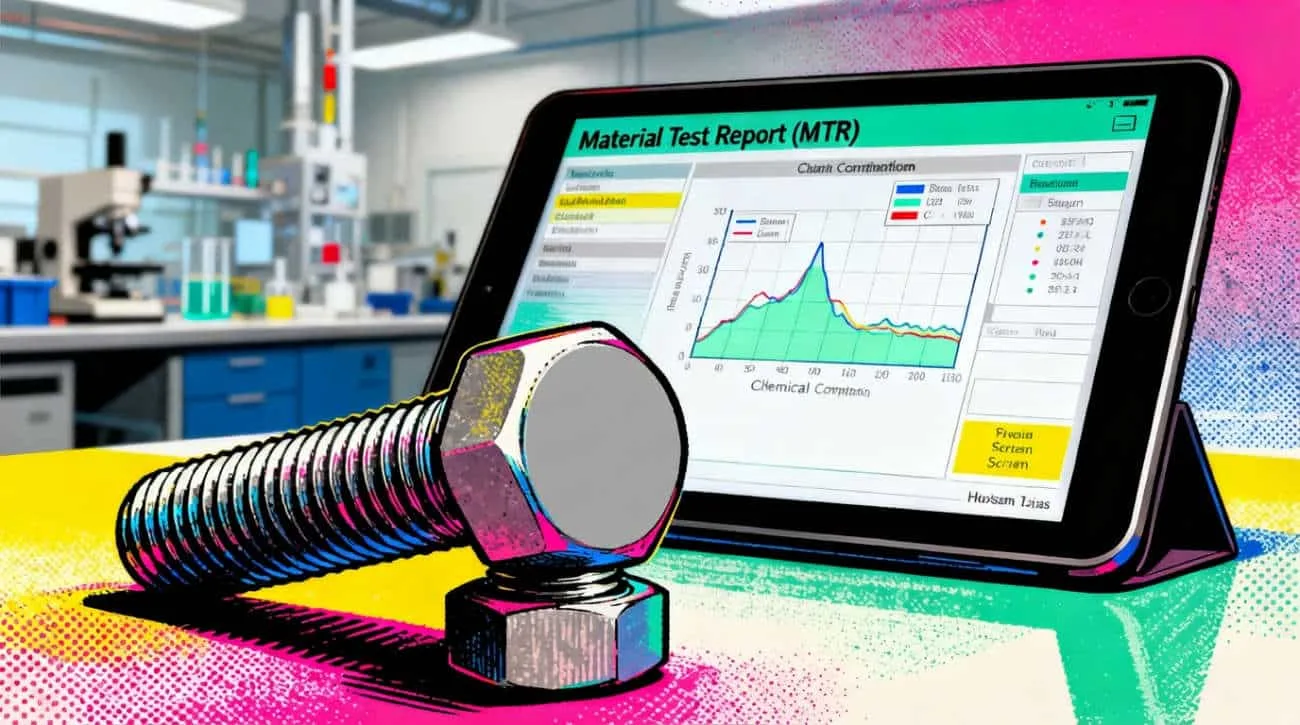
At the heart of this system is the Material Test Report, or MTR. An MTR is the “birth certificate” of a metal component. It provides a complete history of a fastener, from the moment the raw ore was melted in a furnace to the final quality checks in a Houston warehouse. At Cyclone Bolt, we understand that in critical applications, the paperwork is just as important as the part itself.
What is a Material Test Report (MTR)?
A Material Test Report is a certified document that describes the physical and chemical properties of a material. It serves as proof that the metal meets specific industry standards, such as those set by ASTM, ASME, or API. Without an MTR, a bolt is essentially a “mystery metal” with no verifiable strength or composition.
In aviation, where every ounce of weight and every degree of hardness is calculated, mystery metal is a liability. An MTR ensures that the material used in a fastener is exactly what the engineers specified. It provides the data needed to verify that a part will perform as expected under the stresses of flight.
The Core Components of an MTR
A comprehensive MTR contains several layers of data. Each section provides a different piece of the traceability puzzle.
1. Material Heat Number
The heat number is the most vital piece of information on the report. It identifies a specific “heat” or batch of metal produced in a single furnace melt. This number is often stamped or etched directly onto the material. By matching the heat number on the bolt to the heat number on the MTR, you establish an unbreakable link of traceability.
2. Chemical Composition
This section lists the exact percentages of elements like carbon, manganese, phosphorus, and sulfur. In aviation, even a tiny deviation in chemical makeup can alter a bolt’s susceptibility to corrosion or its ability to handle heat.
3. Mechanical Properties
The MTR documents the results of physical testing. This includes:
-
Tensile Strength: The maximum load the material can support without breaking.
-
Yield Strength: The point at which the material begins to deform permanently.
-
Elongation: How much the metal can stretch before it snaps.
-
Hardness: The material’s resistance to localized plastic deformation.
4. Heat Treatment Records
Many high-strength fasteners undergo specialized heat treatment to achieve their final properties. The MTR identifies the specific processes used, such as quenching and tempering. For those utilizing API 20E bolting, these records are mandatory to prove the material’s microstructure meets the required standards.
Why Traceability is Vital for Aviation Safety
Traceability is the ability to track the history, application, or location of an item by means of recorded identification. In aviation, this is not just a best practice—it is a regulatory requirement.
Preventing Counterfeit Parts
The global supply chain is unfortunately prone to counterfeit and sub-standard parts. These “unapproved parts” may look identical to high-quality fasteners but lack the structural integrity to survive in an aerospace environment. A verified MTR acts as a shield against fraud. It allows inspectors to trace a part back to a reputable mill and a certified manufacturer.
Facilitating Root Cause Analysis
If a component fails in the field, investigators must find out why. Traceability allows them to identify other parts from the same “heat” that may be at risk. By reviewing the MTRs of a failed batch, engineers can determine if there was a flaw in the original melt or a mistake in the heat treatment process. This prevents isolated incidents from becoming fleet-wide disasters.
Meeting Regulatory Compliance
Aviation authorities like the FAA and EASA require strict documentation for every component on an aircraft. Maintaining a library of MTRs ensures that your organization is always audit-ready. Failure to produce these records can lead to grounded aircraft, massive fines, and the loss of operating certificates.
Cyclone Bolt’s Commitment to Quality and Traceability
Located in Houston, Texas, Cyclone Bolt has built a reputation for providing high-precision fasteners for the world’s most demanding industries. Our quality management systems are designed to exceed the standard expectations for traceability and performance.
API Spec Q1 and ISO 9001:2015
Our operations are governed by the most rigorous standards in the world. We are certified to ISO 9001:2015 Quality System Certificate, ensuring a consistent level of quality across all our processes. Furthermore, our adherence to API Spec Q1 9th Editiondemonstrates our capability to meet the stringent quality requirements of the petroleum and natural gas industries—standards that are often mirrored in high-stakes aviation applications.
API 20E and API 20F Specialization
We specialize in critical service bolting. This includes API 20E for alloy and carbon steel and API 20F for corrosion-resistant bolting. These specifications represent the highest tiers of fastener manufacturing. They require exhaustive documentation, including full MTRs, heat treat charts, and non-destructive examination (NDE) reports.
The Role of Material Grade and Coatings
Traceability extends beyond the raw metal. It also applies to the grade of the fastener and the coatings used to protect it.
Material Grade Guides
Choosing the right material is the first step in engineering safety. Whether you need the high-tensile strength of Grade 8 or the corrosion resistance of stainless steel, our Material Grade Guides provide the technical data you need to make an informed decision. Every grade we sell is backed by a corresponding MTR to ensure you are getting exactly what you ordered.
Coating and Plating Technical Guide
In aviation, corrosion is a constant threat. High-strength bolts can also be susceptible to hydrogen embrittlement if plating isn’t handled correctly. Our Coating & Plating Technical Guide outlines our processes for ensuring that protective layers—from Zinc and Cadmium to PTFE—are applied without compromising the integrity of the fastener.
Managing MTRs in the Digital Age
Traditional MTR management involved massive filing cabinets filled with paper. In modern aviation, this is no longer efficient. Digital traceability is the new standard.
At Cyclone Bolt, we utilize digital record-keeping to ensure that MTRs are easily accessible for our customers. When a shipment leaves our Houston facility, the digital “paper trail” follows it. This allows our partners to integrate our data into their own maintenance and asset management systems, reducing the administrative burden of manual record-keeping.
Answering the Call for Safety
The aviation industry is built on trust. Pilots trust their aircraft, and maintenance teams trust their suppliers. That trust is earned through transparency and rigorous attention to detail.
By prioritizing MTRs and 100% traceability, we provide our customers with the assurance that their fasteners will hold up under pressure. We don’t just sell bolts; we sell the confidence that every part in your assembly has been tested, verified, and documented to the highest possible standard.
For more information on the global standards that govern fastener safety, you can explore resources from the National Institute of Standards and Technology (NIST) and the International Organization for Standardization (ISO).
Article Recap: The Power of Traceability
-
The MTR Defined: A Material Test Report is the essential “birth certificate” for every high-stakes fastener.
-
Heat Number Links: The heat number connects the physical bolt to its chemical and mechanical history.
-
Safety First: Traceability prevents counterfeit parts from entering the aviation supply chain.
-
Regulatory Compliance: Proper documentation is required by the FAA and other global aviation authorities.
-
Certified Quality: Cyclone Bolt maintains API Spec Q1 and ISO 9001:2015 certifications to ensure total reliability.
-
Technical Precision: We offer specialized API 20E and 20F bolting designed for critical service environments.
Ready to Secure Your Supply Chain?
In the world of aviation, there is no room for error. You need a fastener partner that values traceability and quality as much as you do. Whether you are looking for high-strength alloy bolts or corrosion-resistant solutions, Cyclone Bolt has the expertise and documentation to keep you in the air.
Contact Cyclone Bolt in Houston Today for a Quote! Visit our Material Grade Guides and see how our commitment to precision can protect your operations.