
Originally published 2026-02-10 · Cyclone Bolt
Mining is a battle against the earth itself. As mines go deeper, the pressure from the surrounding rock increases. This creates a high-risk environment where seismic activity is not just a possibility—it is a daily reality. When the ground shakes, every component of the mine’s support system is tested. Among these, the humble bolt is often the most critical point of failure.
In a seismically active mining zone, strength alone is not enough. You can have the strongest bolt in the world, but if it is brittle, it will snap under the sudden, violent movements of a rockburst. This is where ductility comes into play. Ductility is the ability of a material to deform under tensile stress without fracturing. In simple terms, it is the difference between a bolt that bends to absorb energy and one that shatters like glass.
At Cyclone Bolt in Houston, Texas, we understand that the engineering behind a fastener changes when you add seismic variables. We don’t just manufacture bolts; we engineer safety systems that meet the most rigorous standards in the world.
Strength vs. Ductility: The Seismic Mining Trap
Many engineers are trained to prioritize yield strength and tensile strength. In a static environment, this makes sense. You want a bolt that can hold a specific load without moving. However, seismic events are dynamic. They introduce massive amounts of kinetic energy into the support structure in a matter of milliseconds.
A high-strength, low-ductility bolt is rigid. When a seismic wave hits, the energy has nowhere to go. The stress quickly exceeds the material’s limits, leading to a “brittle failure.” This happens without warning. One second the bolt is holding; the next, it has sheared off entirely.
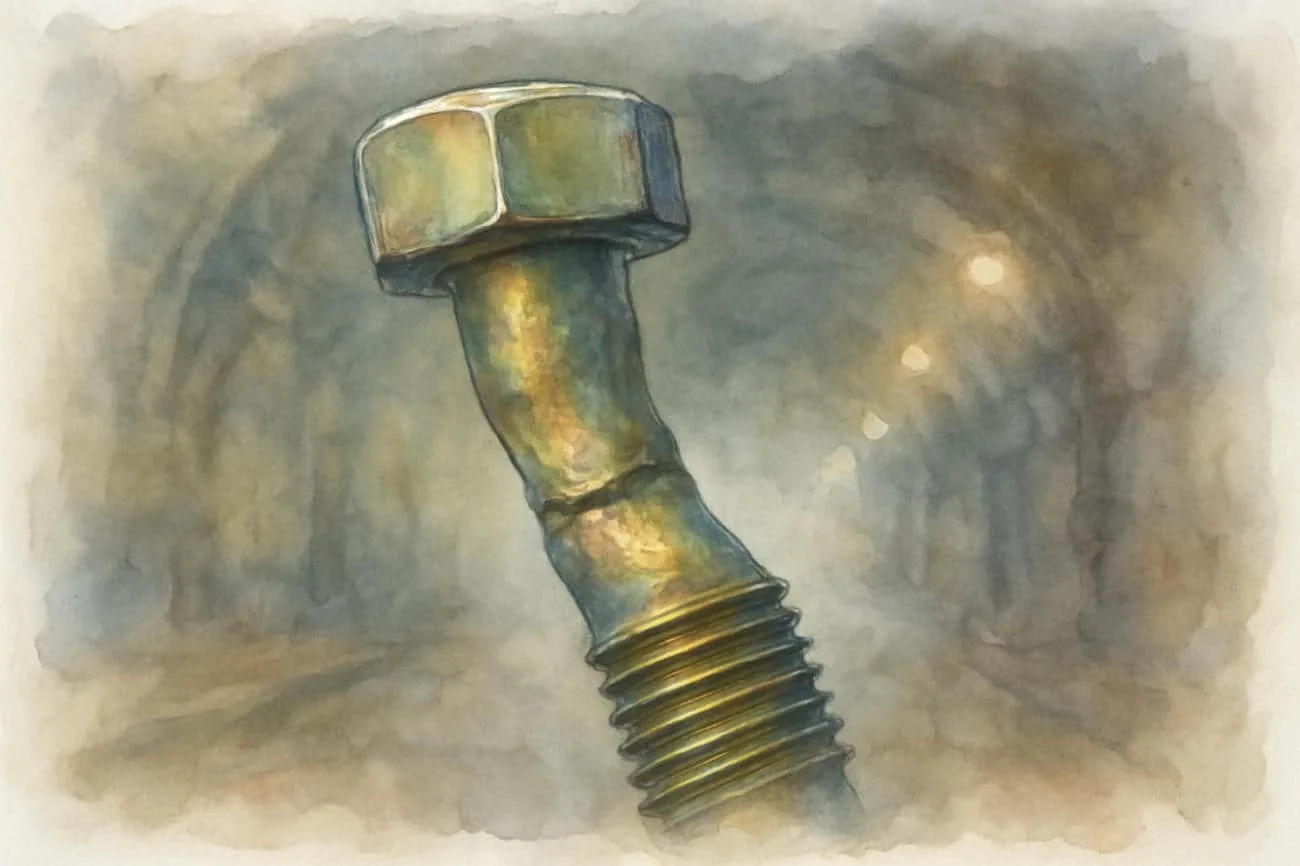
A ductile bolt behaves differently. When the stress spikes, the bolt begins to stretch. This “yielding” process is actually a form of energy dissipation. The bolt converts the kinetic energy of the seismic event into plastic deformation. While the bolt may be permanently stretched, it stays in one piece. This preserves the integrity of the support system and keeps the mine roof or equipment from collapsing.
Why Mines Are Seismically Active
It isn’t just natural earthquakes that miners have to worry about. Mining-induced seismicity is a major factor in modern deep-level operations. When huge amounts of rock are removed, the stress in the remaining “pillars” and walls is redistributed. This can cause the rock to fail violently in events known as rockbursts.
Deep mines (those below 1,500 meters) are particularly vulnerable. Research from organizations like the U.S. Geological Survey (USGS) shows that seismic event frequency increases exponentially with depth. In these environments, the ground support must be “dynamic.” This means every bolt, plate, and mesh must be capable of moving with the rock while still providing support.
The Role of API 20E and API 20F Standards
When you are specifying fasteners for high-risk zones, you can’t rely on generic hardware. You need the precision of API 20E and API 20F standards. Originally developed for the oil and gas industry, these standards are increasingly applied to mining because they focus on “critical bolting.”
API 20E covers alloy and carbon steel bolting, while API 20F covers corrosion-resistant bolting. These specifications are much more than just a list of material grades. They define Bolting Specification Levels (BSL):
-
BSL-1: Standard quality controls.
-
BSL-2: Adds requirements for material testing and heat treatment tracing.
-
BSL-3: The highest level, requiring 100% non-destructive examination (NDE) and strict manufacturing process controls.
In a seismic mining zone, BSL-2 or BSL-3 is often the minimum requirement for safety-critical fasteners. These levels ensure that the ductility of the bolt isn’t just a “typical” value—it is a verified, tested property of every single batch.
Material Grades: Choosing for Ductility
Not all steel is created equal. Our material grade guides highlight several options frequently used in demanding environments.
For seismic zones, ASTM A193 Grade B7 is a workhorse. It offers a great balance of high tensile strength and reasonable ductility. However, in colder mining environments or zones with extreme seismic risk, engineers may look to ASTM A320 Grade L7. Grade L7 is essentially B7 steel that has been treated for improved “impact toughness” at low temperatures.
Toughness and ductility are closely linked. A tough material can absorb energy and resist the propagation of cracks even when it is deformed. This makes L7 an excellent choice for seismic support systems where “snapping” is the primary fear.
The Houston Manufacturing Edge
Operating out of Houston, Texas, gives Cyclone Bolt a unique advantage. Houston is the heart of the world’s energy and industrial supply chain. We have access to the highest quality raw materials and the specialized heat-treatment facilities required to hit precise ductility targets.
Every bolt we produce is subject to our ISO 9001:2015 Quality System Certificate quality management system. This isn’t just paperwork. It is a commitment to consistency. In seismic engineering, “close enough” isn’t good enough. If a bolt is supposed to have an 18% elongation rate but only hits 14% because of a poor heat-treatment cycle, that 4% difference could be the point where it fails in a rockburst.
Hydrogen Embrittlement: The Ductility Killer
One of the greatest threats to bolt ductility is Hydrogen Embrittlement (HE). This is a process where hydrogen atoms enter the steel during manufacturing, particularly during cleaning or plating. These atoms settle in the crystalline structure of the metal, creating internal pressure that makes the steel incredibly brittle.
The danger of HE is that it is invisible. A bolt can look perfect, pass a standard tension test, and then snap weeks later under a load it should easily handle.
At Cyclone Bolt, we use strict “baking” protocols after plating to drive out any hydrogen. Our coating and plating technical guide details how we manage these risks. For seismic zones, where the bolt must be able to stretch, preventing HE is arguably the most important step in the entire manufacturing process.
Zinc-Yellow Plating and Visibility in Seismic Zones
While ductility is about physics, visibility is about safety. In the aftermath of a seismic event, maintenance crews need to inspect the mine support system immediately. Fasteners that are covered in Zinc-Yellow plating are much easier to see in the dim light of a mine.
Zinc-Yellow doesn’t just provide corrosion resistance; it provides a high-contrast finish. If a bolt has stretched (a sign of a significant seismic event), the yellow coating will often crack or flake, providing a clear visual indicator that the bolt has done its job and needs to be replaced. This “visual reporting” is a secondary but vital benefit of choosing the right coating for your seismic fasteners.
Specifying Fasteners for Your Mine
If you are designing or maintaining a mine in a seismically active area, follow these steps to ensure your bolting system is resilient:
-
Demand Traceability: Ensure every bolt can be traced back to its heat lot. Our API Spec Q1 certification ensures this level of rigor.
-
Focus on Elongation: Look at the “Elongation” and “Reduction of Area” values on your Mill Test Reports (MTR). These are the true measures of ductility.
-
Use BSL-2 or BSL-3: For critical roof support or machinery anchoring in high-risk zones, don’t settle for BSL-1.
-
Consult with Experts: Fastener engineering is a specialized field. Reach out to the team at Cyclone Bolt to discuss the specific seismic and chemical stresses of your site.
The Physics of Energy Dissipation
To visualize why ductility is superior in seismic zones, consider a car’s “crumple zone.” Modern cars are designed to smash and deform during an accident. This deformation takes time and uses up the energy of the crash, protecting the passengers inside.
A seismic mining bolt is the “crumple zone” for your mine infrastructure. By yielding slightly, the bolt prevents the energy from transferring directly into the rock face or the machine base, which could cause a much larger failure. This is why a “stretched” bolt is a success story—it did its job so you didn’t have a catastrophe.
Mining in 2026: The New Standard
As we move through 2026, the global mining industry is adopting more stringent safety protocols. The transition to “intelligent” mines means more monitoring, but it also means a higher expectation for the physical hardware. Digital sensors can tell you when the ground is moving, but they can’t stop the ceiling from falling. Only high-quality, ductile fasteners can do that.
Cyclone Bolt remains dedicated to supporting the mining sector with fasteners that exceed industry expectations. Whether you are dealing with the natural tectonic shifts of the Andes or the mining-induced tremors of deep-shaft operations in the United States, our Houston-made bolts are built to weather the storm.
Article Recap
-
Ductility vs. Strength: High strength prevents movement, but ductility prevents snapping during sudden seismic shifts.
-
Energy Absorption: Ductile bolts absorb kinetic energy by stretching, whereas brittle bolts fail instantly.
-
Seismic Risks: Deep mines face both natural and mining-induced seismic events (rockbursts).
-
API Specs: API 20E and 20F provide the quality levels (BSL-2/3) needed for critical seismic bolting.
-
Hydrogen Embrittlement: A major risk that destroys ductility; prevented by strict baking and plating protocols.
-
Visibility: Zinc-Yellow plating helps inspectors identify stressed or failed fasteners quickly in low-light environments.
-
Quality Control: ISO 9001:2015 and API Spec Q1 ensure every bolt meets its performance specifications.
Is your mine prepared for the next seismic event? Don’t let a brittle fastener be your weakest link. Contact Cyclone Bolt in Houston today for high-ductility fasteners that meet API 20E/20F and BSL-3 standards. Get a Quote for Seismic-Grade Fasteners Now!
External Resources:
-
American Petroleum Institute (API): To explore the full details of API 20E and 20F standards for critical bolting.
-
U.S. Geological Survey (USGS): For data on mining-induced seismicity and its impact on infrastructure.