
Originally published 2026-02-11 · Cyclone Bolt
When you are dealing with high-pressure systems in the oil and gas or petrochemical industries, the difference between a secure seal and a catastrophic failure often comes down to a fraction of an inch. We talk a lot about “sealing the joint,” but the actual physics happening inside that flange is a complex dance of force, elasticity, and material science.
At the heart of this dance is gasket compression. To the untrained eye, a gasket is just a piece of material sandwiched between two pieces of steel. To an engineer or a technician on a Houston rig, it is a critical component that must be precisely loaded to prevent leaks.
At Cyclone Bolt, we manufacture the high-spec studs and bolts that provide the “clamp” necessary for this compression. Understanding how that compression works—and how your choice of bolting impacts it—is the key to long-term joint integrity.
The Fundamental Goal of Gasket Compression
A flange joint is essentially a mechanical seal. No matter how finely machined a flange face is, it will have microscopic peaks and valleys. If you simply pressed two metal flanges together, high-pressure gas or fluid would find a path through those microscopic gaps.
The gasket’s job is to act as a “conformable” medium. Under load, the gasket material must flow into those imperfections on the flange face. This creates a continuous physical barrier. This process is called “seating the gasket.”
However, seating is only half the battle. Once the system is pressurized, the internal pressure tries to push the flanges apart and blow the gasket out. The compression must be high enough to resist these “blowout” forces while remaining within the elastic limits of the material.
The Role of Bolting in the Seating Process
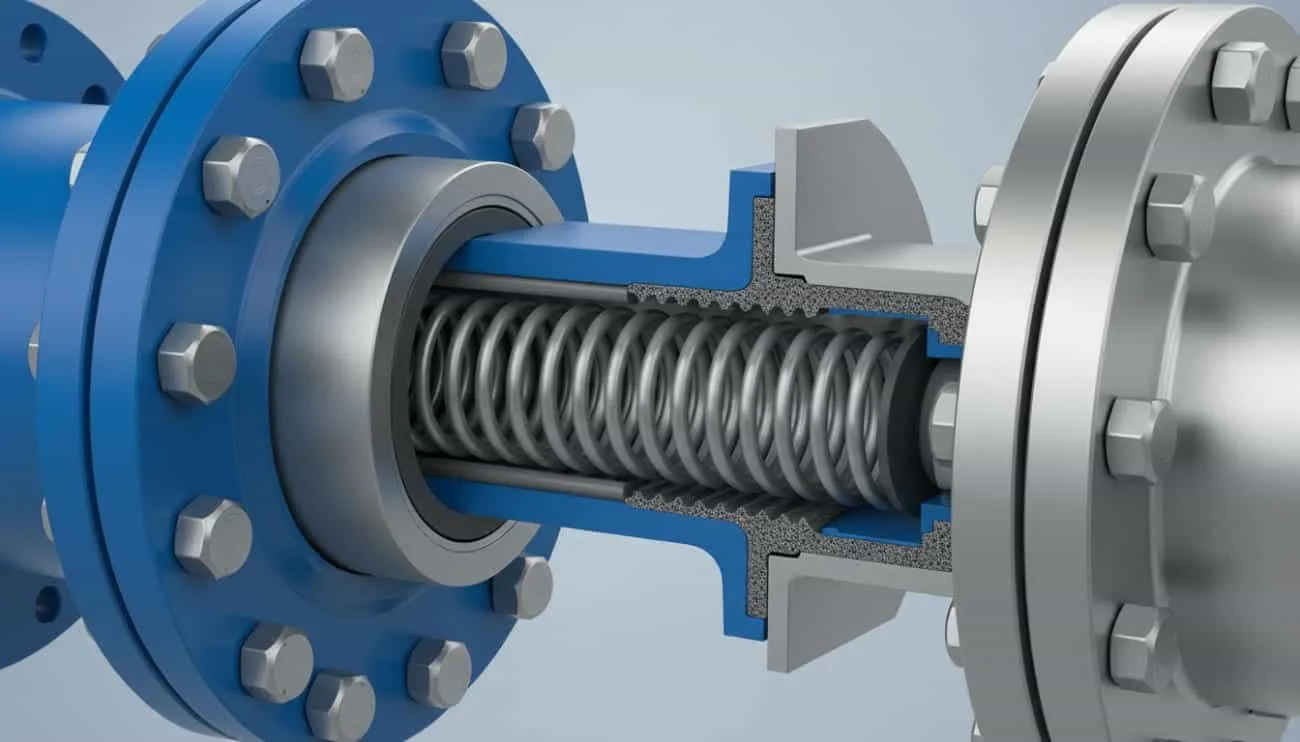
Bolts are essentially heavy-duty springs. When you tighten a nut on a stud, you are stretching that stud. This stretch creates a “clamping force” that pulls the two flanges together.
In high-pressure applications, the bolting must be capable of providing immense force without permanently deforming. This is why we focus so heavily on specifications like API 20E (Alloy and Carbon Steel Bolting) and API 20F (Corrosion-Resistant Bolting). These standards ensure the steel has the tensile strength to maintain gasket compression even under extreme thermal and mechanical stress.
What Happens During Initial Compression?
-
Macro-Conformity: The gasket compresses to take the general shape of the flange.
-
Micro-Conformity: The material fills the “phonographic” grooves or serrations on the flange face.
-
Stress Stabilization: The gasket material reaches a point where it resists further crushing but maintains a tight seal.
Understanding the “Sealing Stress”
Every gasket has a minimum “seating stress” (often referred to in engineering as the ‘y’ factor) and a “minimum design seating stress” (the ‘m’ factor).
-
The ‘y’ Factor: The minimum pressure required to get the gasket to flow into the flange faces at ambient temperature.
-
The ‘m’ Factor: The multiplier that determines how much extra pressure the bolts must apply to keep the seal tight once the internal pipe pressure is added.
If your bolting doesn’t provide enough torque to hit the ‘y’ factor, the joint will leak immediately during a hydro-test. If the bolting fails to maintain the ‘m’ factor during operation, the joint will leak as soon as the system reaches its operating pressure.
Factors That Influence Gasket Compression
Compression is not a “set it and forget it” metric. Several variables can change the way a gasket behaves over time.
1. Thermal Expansion and Contraction
In Houston’s heavy industries, temperature swings are common. When a joint gets hot, the bolt, the flange, and the gasket all expand at different rates. If the bolt expands faster than the flange, you lose “clamp load,” and the gasket decompression leads to a leak.
This is why selecting the right material is vital. Our Material Grade Guides help engineers match bolting expansion rates with their specific flange environments.
2. Creep Relaxation
Over time, all gaskets experience “creep.” This means the material slowly flows or thins out under constant pressure. As the gasket thins, the bolts lose some of their stretch (tension). If the tension drops too low, the compression fails. High-quality bolting with high elastic memory helps compensate for this minor relaxation.
3. Surface Finish
The texture of the flange face—usually a spiral or concentric serration—is designed to “bite” into the gasket. If the compression is too low, the bite isn’t deep enough. If it’s too high, you can crush the serrations or shear the gasket material.
The Critical Importance of Friction
When you apply torque to a nut, a significant portion of that energy is lost to friction. If your threads are dry or corroded, you might think you’ve reached the correct compression because your torque wrench “clicked,” but in reality, the stud hasn’t stretched enough.
To ensure accurate gasket compression, technical coatings and platings are often used. Our Coating and Plating Technical Guide explains how finishes like PTFE or Xylan can provide consistent “K-factors” (friction coefficients). This allows for more predictable and uniform gasket compression across the entire diameter of the flange.
Common Mechanics of Failure
Why do joints fail even when “correct” torque is applied? Usually, it comes down to a failure in the mechanics of compression.
-
Bolting Fatigue: Using sub-par bolts that don’t meet API Spec Q1 9th Edition standards. These bolts may stretch but fail to “spring back,” leading to a gradual loss of compression.
-
Uneven Loading: If bolts aren’t tightened in a star pattern, one side of the gasket will be crushed while the other side remains under-loaded. This creates a “hinge” effect that leads to a blow-by.
-
Over-Compression: Crushing the gasket beyond its “maximum allowable stress.” This destroys the internal structure of the gasket (especially in spiral-wound types), making it brittle and prone to failure.
Material Grade Selection for Proper Loading
Choosing the right bolt grade is the first step in mastering gasket compression. In the oil and gas sector, you often see a push toward B7 or B16 studs.
-
Grade B7: Excellent for general high-pressure and high-temperature services.
-
Grade B16: Designed for even higher temperatures, often used in power generation where thermal stability is the priority.
-
Stainless Steel (B8/B8M): Used when corrosion resistance is necessary, though these have different elongation properties that must be factored into the compression calculation.
Maintaining an ISO 9001:2015 Quality System Certificate certified quality management system ensures that every bolt we produce meets the exact tensile requirements for these grades. When you pull a B7 stud from Cyclone Bolt, you know it will provide the specific clamping force your gasket requires.
The Impact of Internal Pressure on Compression
It is a common mistake to think that once the bolts are tight, the job is done. Internal pressure creates a “hydrostatic end force.” This force acts like a giant piston trying to push the flanges apart.
This force actually reduces the compression on the gasket. Therefore, the “residual stress” on the gasket (the stress left over after internal pressure is applied) must still be high enough to maintain the seal.
According to the American Society of Mechanical Engineers (ASME), particularly within the PCC-1 guidelines for pressure boundary bolted flange joint assembly, the alignment and the residual bolt load are the two most critical factors in preventing fugative emissions.
Precision Bolting: The Cyclone Bolt Difference
In Houston, we are the hub of the energy world. Our refineries and rigs can’t afford “almost right.” We manufacture our fasteners to the highest API standards because we understand that our bolts are the only thing keeping that gasket compressed under thousands of pounds of pressure.
When you work with Cyclone Bolt, you aren’t just buying steel. You are buying the mechanical certainty that your flange joints will maintain their integrity. We provide the traceability and the engineering support needed to ensure that your gasket compression remains within the safe operating envelope.
Practical Tips for Better Joint Integrity
-
Use a Calibrated Torque Wrench: Never guess on high-pressure joints.
-
Lubricate Threads: Use a consistent lubricant to ensure torque translates to actual bolt stretch.
-
Check Flange Alignment: A misaligned flange will create uneven compression that no amount of torque can fix.
-
Follow the Star Pattern: Tighten in increments (30%, 60%, 100%) to ensure the gasket is seated evenly.
-
Verify Bolt Grade: Ensure your studs meet API 20E or 20F if required by the spec.
The Future of Sealing Technology
As we move toward higher pressures and more volatile fluids, the mechanics of gasket compression are becoming even more precise. New gasket designs like kammprofiles require even tighter bolting tolerances.
By staying ahead of the curve with API Spec Q1 manufacturing, we ensure that as the industry evolves, our customers have the fasteners they need to handle the next generation of high-pressure challenges.
Article Recap:
-
Conformity is Key: Gaskets must flow into flange imperfections to create a seal.
-
Bolts as Springs: Bolting stretch (tension) provides the clamping force for compression.
-
The Seating Stress: You must hit the ‘y’ factor to seat the gasket and maintain the ‘m’ factor to resist internal pressure.
-
Environmental Factors: Thermal expansion and creep relaxation can reduce compression over time.
-
Standards Matter: API 20E, 20F, and ISO 9001:2015 ensure bolting can handle the stress of high-pressure environments.
-
Friction Control: Proper coatings and lubrication are essential for accurate torque-to-tension conversion.
Secure Your High-Pressure Systems Today
Don’t leave your joint integrity to chance. Whether you are in the heart of Houston or operating globally, you need fasteners that are engineered for the extreme. From API-certified studs to specialized technical coatings, we provide the hardware that keeps your operations leak-free.
Contact Cyclone Bolt for a Custom Quote Experience the difference that Houston-made, API-standard bolting can make for your project.