Originally published 2026-02-10 · Cyclone Bolt
Mining environments are some of the most unforgiving places on earth. Equipment and infrastructure face a constant barrage of moisture, abrasive dust, and chemical exposure. In these conditions, a standard bolt is not enough. You need fasteners that can survive the elements and remain visible in low-light conditions.
Zinc-Yellow plating has become a staple in the mining industry for these exact reasons. It provides a unique combination of corrosion protection and high visibility. At Cyclone Bolt in Houston, Texas, we specialize in providing high-spec fasteners that meet the rigorous demands of heavy industry.
Understanding why this specific plating works is essential for safety and operational efficiency.
What is Zinc-Yellow Plating?
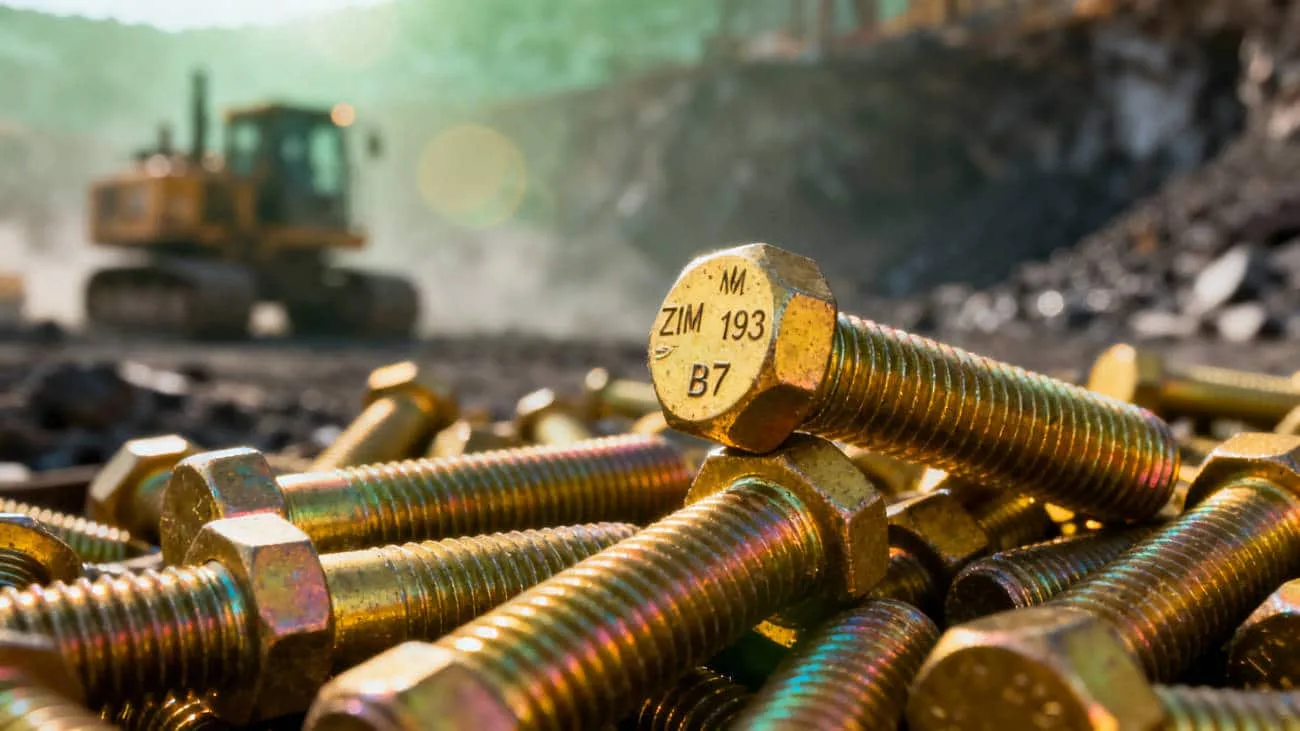
Zinc-Yellow plating is an electroplating process. A thin layer of zinc is applied to the surface of a steel fastener. After the zinc is applied, the part is submerged in a chromate conversion coating. This chemical bath gives the bolt its signature yellow or iridescent gold appearance.
The yellow chromate serves two purposes. First, it acts as an additional barrier against moisture. Second, it heals minor scratches in the zinc layer through a chemical process. This makes the fastener much more durable than one with a simple clear zinc finish.
Why Mining Demands Better Coatings
Mining operations often happen deep underground or in coastal open-pit locations. These areas are naturally corrosive. Groundwater in mines is frequently acidic or rich in minerals that accelerate rust.
When a bolt rusts, it loses its structural integrity. In a mine, a failed bolt can lead to catastrophic equipment failure or, worse, a structural collapse. Replacing these bolts is expensive. The downtime required to pull a machine out of service for a snapped fastener costs thousands of dollars per hour.
Zinc-Yellow plating offers a cost-effective shield. It provides significantly better salt-spray resistance than clear zinc or “white” zinc. Typically, yellow zinc can withstand 72 to 96 hours of salt spray before white rust appears. This is nearly double the protection of standard clear plating.
The Visibility Advantage
Safety in a mine depends on visibility. Underground tunnels are dark. Even with headlamps and machine lights, seeing small components can be difficult.
Standard steel or grey-coated bolts disappear into the shadows. Zinc-Yellow bolts pop. The golden-yellow hue reflects light differently than the surrounding rock or machinery.
This visibility is vital for:
-
Safety Inspections: Maintenance crews can quickly spot missing or loose fasteners during a visual walk-through.
-
Installation: In dark corners, seeing the fastener clearly ensures it is seated correctly and torqued properly.
-
Emergency Repairs: When a machine breaks down in a dim gallery, finding the right bolts quickly saves time and reduces risk.
The color acts as a built-in safety feature. It is a simple way to make a dangerous job slightly safer.
Corrosion Resistance in Harsh Environments
The chemistry behind Zinc-Yellow is fascinating. Zinc is a “sacrificial” coating. This means the zinc will corrode before the underlying steel does. If the coating is damaged, the zinc around the scratch will “sacrifice” itself to protect the steel core.
Adding the yellow chromate layer slows down this sacrifice. It acts like a sealant. For mining applications involving high humidity, this extra layer is the difference between a bolt lasting six months or six years.
Many mines also deal with sulfur and other chemicals in the soil. These chemicals eat through standard paint and oil finishes in days. Zinc-Yellow is chemically stable enough to resist many of these environmental hazards.
Comparing Zinc-Yellow to Other Coatings
You might wonder why mining companies don’t just use Hot-Dip Galvanized (HDG) bolts for everything. While HDG offers incredible corrosion resistance, it has drawbacks:
-
Thickness: HDG is very thick. It can interfere with the threads of high-precision bolts.
-
Hydrogen Embrittlement: For high-strength bolts like Grade 8 or B7, the HDG process can make the steel brittle.
-
Aesthetics: HDG is dull grey. It offers zero visibility benefits.
Zinc-Yellow provides a thinner, more precise coating. It maintains the thread fit required for heavy machinery while offering the “pop” of color needed for safety.
The Role of Quality Standards
At Cyclone Bolt, we focus on more than just the coating. The fastener itself must be up to the task. Our facility adheres to ISO 9001:2015 Quality System Certificate standards, ensuring that every bolt we ship meets strict quality benchmarks.
In mining, you aren’t just looking for “any” bolt. You need fasteners that can handle extreme tension and fatigue. This is where API standards come into play. While often associated with oil and gas, API 20E and API 20F specifications represent the gold standard for high-strength bolting.
These specifications require:
-
Traceability: Knowing exactly where the steel came from.
-
Testing: Rigorous hardness and impact testing.
-
Strict Processing: Controlled heat-treating and plating to prevent failures.
When you combine an API-grade bolt with a Zinc-Yellow coating, you get a fastener that is built for survival.
Preventing Hydrogen Embrittlement
One risk with any electroplating process is hydrogen embrittlement. During the plating process, hydrogen atoms can become trapped in the steel. If not handled correctly, this makes the bolt brittle. Under high stress, the bolt can snap without warning.
This is a major concern for high-strength mining bolts. To prevent this, Cyclone Bolt follows a strict baking process. After plating, bolts are baked in industrial ovens to drive out the hydrogen. This ensures the fastener remains tough and reliable.
Never settle for a plating service that skips the baking step. In a mine, a brittle bolt is a ticking time bomb.
Common Mining Applications for Zinc-Yellow
Where will you see these fasteners in action?
-
Conveyor Systems: Holding together the frames that transport tons of ore.
-
Ground Support: In certain brackets and plates used to stabilize tunnel walls.
-
Heavy Machinery: In the engines and hydraulic systems of loaders, drills, and haul trucks.
-
Ventilation Ducting: Keeping the air flowing by securing massive fans and pipes.
In each of these cases, the yellow finish makes it easier for technicians to perform maintenance in cramped, dark spaces.
Material Grades and Plating
The choice of material grade is just as important as the plating. For example, many mining machines use Grade 8 or ASTM A193 B7 bolts. These are high-strength steels.
When you apply Zinc-Yellow to a B7 bolt, you get a fastener capable of holding high pressure and resisting the rust found in mining shafts. It is a balanced solution for both strength and longevity.
Technical Specifications for Engineers
Engineers often look for ASTM B633 when specifying zinc plating. This standard covers electrodeposited coatings of zinc on iron and steel.
Zinc-Yellow usually falls under “Type II” of this specification. Type II requires a chromate treatment that is typically yellow, iridescent, or olive drab. If your project requires a specific number of salt spray hours, always communicate that to your supplier.
We can adjust the process to meet the specific “Fe/Zn” thickness levels required for your environment.
Why Sourcing from Houston Matters
Cyclone Bolt is located in Houston, Texas. Houston is a global hub for industrial manufacturing and logistics. Being in this region allows us to source the highest quality raw materials and ship them efficiently to mining sites across the globe.
Our expertise in API Spec Q1 means our management systems are designed for high-stakes industries. We understand that a bolt is not just a piece of hardware—it is a critical safety component.
Sustainable and Compliant Coatings
The industry is shifting toward Trivalent Zinc-Yellow (Cr3+). Historically, yellow zinc used Hexavalent Chromium (Cr6+), which is being phased out due to environmental regulations.
Trivalent coatings provide the same yellow hue and excellent corrosion resistance while being more environmentally friendly. At Cyclone Bolt, we stay at the forefront of these technical shifts to ensure our customers remain compliant with evolving environmental standards.
Final Thoughts on Mining Fasteners
Choosing Zinc-Yellow plating is a strategic decision. It shows a commitment to both equipment longevity and worker safety. The visibility benefits alone can prevent accidents and speed up repair times. When combined with the superior corrosion resistance of chromate conversion, it becomes the clear choice for harsh mining environments.
Don’t leave your infrastructure to chance. Use fasteners that are easy to see and hard to break.
External Resources:
-
ASTM International: To provide more context on ASTM B633 standards for zinc plating.
-
MSHA (Mine Safety and Health Administration): For information on underground safety regulationsregarding equipment maintenance and visibility.
Article Recap
-
Visibility: The yellow hue reflects light, making bolts easy to find in dark mines.
-
Corrosion Protection: Provides 72-96 hours of salt spray resistance, outperforming clear zinc.
-
Safety: Better visibility allows for faster, more accurate safety inspections.
-
Durability: Chromate conversion coating adds a self-healing layer to the zinc.
-
Compliance: Cyclone Bolt offers API 20E, 20F, and ISO 9001:2015 certified products.
-
Reliability: Proper baking after plating prevents hydrogen embrittlement in high-strength bolts.
Does your mining operation need fasteners that stand out and stand up to rust? Cyclone Bolt provides high-spec, Zinc-Yellow plated bolts tailored for the toughest environments. Contact Cyclone Bolt today for a custom quote on your next project!