
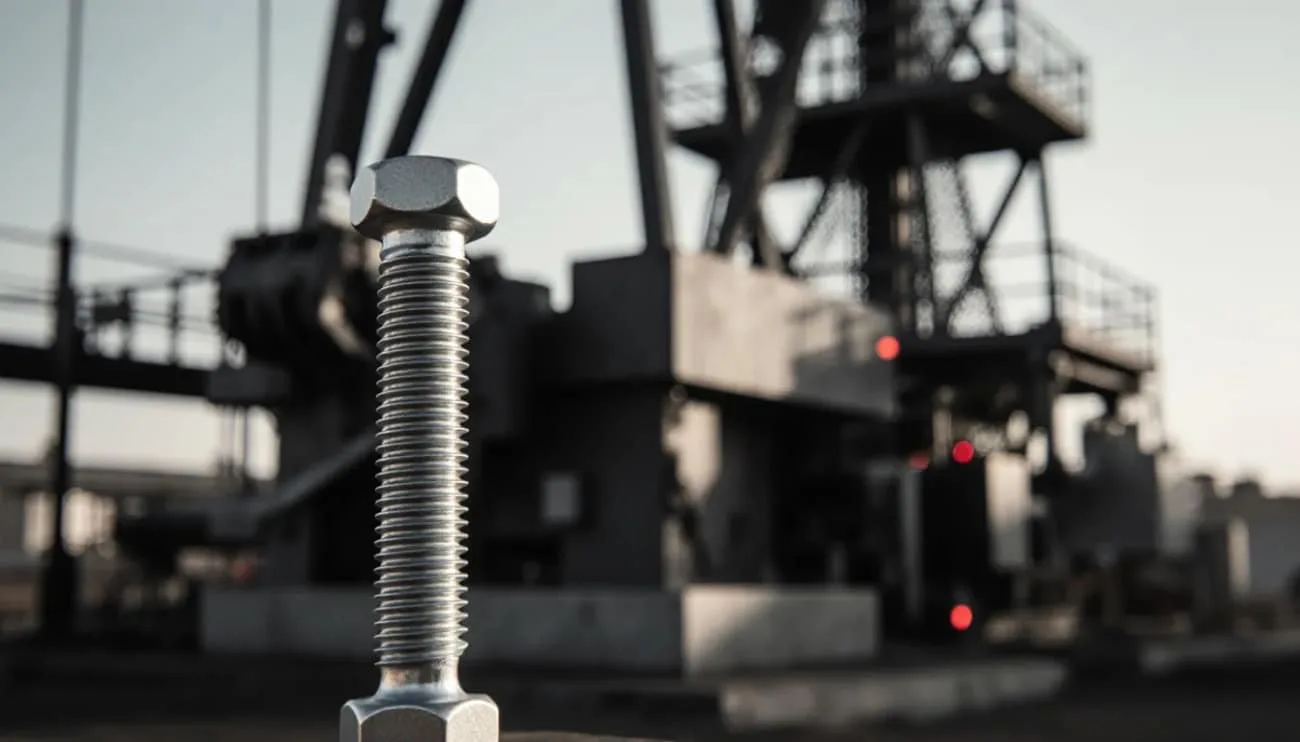
Originally published 2026-01-17 · Cyclone Bolt
Operating a land-based drilling rig requires precision and massive mechanical strength. These environments are notoriously harsh. Equipment faces constant vibration, high pressures, and relentless exposure to the elements. In the heart of the Permian Basin or the outskirts of Houston, the reliability of a single bolt can determine whether a rig stays online or faces costly downtime.
Among the most critical components in these operations are B7 studs. When you add a zinc-plated finish to these high-strength fasteners, you create a powerhouse solution for land-based drilling. This combination provides the structural integrity needed for heavy machinery and the corrosion resistance required for outdoor exposure.
What Makes a B7 Stud Unique?
An ASTM A193 B7 stud is the industry standard for high-pressure and high-temperature applications. These studs are manufactured from chromium-molybdenum alloy steel. They undergo a rigorous heat-treatment process that includes quenching and tempering.
This process gives the B7 stud impressive mechanical properties:
-
High Tensile Strength: Typically reaching a minimum of 125,000 psi.
-
Yield Strength: Maintaining at least 105,000 psi.
-
Thermal Stability: Designed to perform reliably in temperatures ranging from -50°F to 450°F.
On a land-based rig, these studs are the backbone of flange connections, blowout preventers (BOPs), and mud pumps. They hold critical pressure-containing components together under loads that would snap a standard hardware-grade bolt.
The Role of Zinc Plating on the Rig
While the steel provides the strength, the zinc plating provides the armor. In land-based drilling, moisture and oxygen are constant threats. Whether it is humidity in the Gulf Coast or rain on the plains, unplated steel will begin to rust almost immediately.
Zinc plating, often applied via electroplating, serves as a sacrificial barrier. This means the zinc will corrode before the underlying steel does. Even if the coating is scratched during installation, the surrounding zinc will continue to protect the exposed steel through a process called galvanic protection.
Key Benefits of Zinc Plating:
-
Corrosion Resistance: It blocks moisture and prevents the formation of iron oxide (rust).
-
Aesthetics and Inspection: The bright, clean finish makes it easier for technicians to inspect for cracks or loosening during routine maintenance.
-
Cost-Effectiveness: Compared to more expensive coatings like Xylan or stainless steel alloys, zinc plating offers a high level of protection for a lower investment.
-
Uniformity: Electroplating provides a very thin, consistent layer. This ensures that the threads remain clean and easy to engage without the “nut-fit” issues sometimes found with heavy hot-dip galvanizing.
Performance in Vibration-Heavy Environments
Land-based rigs are noisy, vibrating machines. Mud pumps, top drives, and drawworks create a constant hum that can cause fasteners to back out over time. B7 studs are designed to maintain their clamping force even under these dynamic loads.
When a B7 stud is properly torqued, the zinc plating acts as a minor lubricant during the initial tightening. This helps achieve a more accurate “k-factor” or nut factor. This leads to a more consistent preload across all the bolts in a flange, which is essential for preventing leaks in high-pressure lines.
Why Quality Standards Matter in Houston
At Cyclone Bolt, we understand that “good enough” is never sufficient for the oilfield. Based in Houston, Texas, we are at the center of the global energy industry. Our manufacturing processes are built around the most demanding certifications in the world.
API Spec Q1 and ISO 9001:2015
We maintain strict adherence to API Spec Q1 (9th Edition) and ISO 9001:2015 Quality System Certificate. These are not just badges on a website. They represent a commitment to quality management that ensures every zinc-plated B7 stud we produce meets the exact chemical and physical requirements of the job.
API 20E and API 20F
For those operating in critical service environments, we follow the API 20E and API 20F specifications. These standards govern the manufacturing of bolting for use in the petroleum and natural gas industries. They include specific requirements for:
-
Raw material sourcing and traceability.
-
Heat treatment uniformity.
-
Nondestructive examination (NDE).
-
Plating and coating thickness verification.
When you buy a B7 stud from a supplier who understands these standards, you are buying peace of mind. You know that the bolt in your hand has a documented history and has been tested to survive the pressures of a modern land-based rig.
Comparing Zinc to Other Coatings
Choosing the right finish depends on your specific environment. While zinc-plated B7 studs are excellent for land-based operations, other options exist.
-
Plain (Black) Finish: These are unplated. They are the least expensive but offer zero corrosion protection. They are usually only used in “shop” environments or where they will be immediately painted over.
-
Hot-Dip Galvanized (HDG): This provides a much thicker layer of zinc. It offers superior corrosion resistance but can sometimes lead to thread fitment issues because the coating is so thick.
-
PTFE/Teflon (Xylan): These coatings are highly resistant to chemicals and offer extreme corrosion protection. They are often used in offshore or subsea environments where salt spray is a 24/7 reality.
-
Cadmium Plating: Historically popular for its lubricity, cadmium is being phased out due to environmental concerns and is largely replaced by zinc or zinc-nickel alloys.
For many land-based rigs, the Zinc-Plated B7 Stud represents the “sweet spot” of performance, cost, and ease of use.
The Threat of Hydrogen Embrittlement
A critical technical detail that often gets overlooked in cheap plating is hydrogen embrittlement. During the electroplating process, hydrogen can become trapped in the high-strength steel. If this hydrogen isn’t removed, it can cause the B7 stud to snap under load without warning.
To prevent this, high-quality manufacturers like Cyclone Bolt perform a “post-plate bake.” By heating the studs to a specific temperature for several hours immediately after plating, we drive the hydrogen out of the metal. This ensures the B7 stud retains its legendary toughness and won’t fail prematurely on the rig.
Best Practices for Installation
Even the best zinc-plated B7 stud can fail if it is installed incorrectly. To get the most out of your fasteners, follow these guidelines:
-
Check for Cleanliness: Ensure the threads on both the stud and the nut are free of dirt and grit.
-
Use the Right Nut: B7 studs should almost always be paired with ASTM A194 Grade 2H heavy hex nuts. This combination ensures the nut is strong enough to handle the tension of the B7 stud.
-
Apply Lubricant: Even though zinc has some natural lubricity, using a high-quality anti-seize compound ensures consistent torque-to-tension conversion.
-
Follow the Torque Pattern: Always use a “star” or “cross” pattern when tightening a flange. This ensures the gasket is compressed evenly and prevents leaks.
Protecting Your Operations with Cyclone Bolt
The oil and gas industry is unforgiving. A single failed fastener can lead to environmental hazards, equipment damage, and millions of dollars in lost production. In Houston, the team at Cyclone Bolt takes this responsibility seriously.
We provide a wide range of fastener solutions specifically designed for the energy sector. From standard B7 studs to custom-engineered bolting, we have the inventory and the expertise to keep your land-based drilling operations running smoothly.
Our facility is equipped to handle the rigorous testing required by the American Petroleum Institute (API) and ASTM International. We don’t just ship bolts; we ship certified components that have been vetted for the toughest jobs on earth.
Investing in Reliability
When you choose zinc-plated B7 studs for your land-based rig, you are investing in the longevity of your equipment. You are choosing a material that has been the “workhorse” of the industry for decades, enhanced by a coating that protects it from the unpredictable weather of the oil patch.
Don’t leave your rig’s integrity to chance. Partner with a supplier that understands the technical demands of Houston’s energy corridor. Whether you need a thousand studs for a new build or a handful of replacements for a quick repair, we are here to deliver.
Your Partner in Houston Fasteners
Cyclone Bolt is more than just a warehouse. We are a technical partner for engineers, rig managers, and procurement professionals who refuse to compromise on quality. Our deep understanding of API 20E, API 20F, and ISO 9001 means you get the right part, with the right paperwork, every single time.
Ready to secure your next project with the highest quality zinc-plated B7 studs? Contact Cyclone Bolt today. Our Houston-based experts are ready to provide the technical support and fast turnaround you need to stay ahead of the curve. Visit our material grade guides to find the perfect fit for your application.
FAQs from Cyclone Bolt
1. What are the primary uses of B7 studs on a drilling rig?
B7 studs are high-strength fasteners used primarily in pressure-containing equipment. On land-based drilling rigs, you will find them in pipe flanges, valves, blowout preventers (BOPs), and mud pump manifolds. They are designed to withstand the high internal pressures and external vibrations common in oilfield operations. Because they are made from heat-treated alloy steel, they provide the necessary tensile strength to prevent leaks and structural failures.
2. Why is zinc plating used on B7 studs instead of leaving them plain?
Zinc plating serves as a sacrificial barrier against corrosion. Land-based rigs are exposed to rain, humidity, and varying temperatures that cause untreated steel to rust rapidly. The zinc coating oxidizes before the underlying steel does, which extends the life of the fastener. Additionally, zinc plating provides a cleaner surface for easier installation and maintenance inspections compared to “black” or plain finish studs.
3. What is the tensile strength of an ASTM A193 B7 stud?
An ASTM A193 B7 stud has a minimum tensile strength of 125,000 psi (860 MPa). For sizes up to 4 inches in diameter, the yield strength is typically a minimum of 105,000 psi (725 MPa). These mechanical properties are achieved through a specific heat-treatment process that includes quenching and tempering. This makes them significantly stronger than standard hardware bolts.
4. How does hydrogen embrittlement affect zinc-plated B7 studs?
Hydrogen embrittlement is a phenomenon where high-strength steel becomes brittle and fails unexpectedly under load. This can happen when hydrogen is trapped in the metal during the electroplating process. To prevent this, professional manufacturers like Cyclone Bolt perform a “post-plating bake.” This process heats the studs to drive out the hydrogen, ensuring the B7 stud maintains its toughness and reliability.
5. Can B7 studs be used in high-temperature drilling environments?
Yes, B7 studs are specifically engineered for high-temperature service. They are rated for use in temperatures ranging from −50∘F to 450∘F. This range covers the vast majority of land-based drilling applications. While the alloy steel can handle higher temperatures, the zinc plating itself is generally stable up to about 350∘F to 400∘F before the coating integrity may begin to degrade.
6. What is the difference between B7 and B7M studs?
While both are part of the ASTM A193 specification, the “M” in B7M stands for modified. B7M studs are heat-treated to a lower hardness level to resist Sulfide Stress Cracking (SSC) in “sour” environments containing Hydrogen Sulfide (H2S). B7M studs have a lower tensile strength of 100,000 psi compared to the 125,000 psi of a standard B7. For most general land-based rigs where H2S is not a primary factor, the standard B7 is preferred for its higher strength.
7. What type of nut should be used with a zinc-plated B7 stud?
A B7 stud should almost always be paired with an ASTM A194 Grade 2H heavy hex nut. These nuts are heat-treated to match the strength and pressure-handling capabilities of the B7 stud. Using a lower-grade nut can lead to stripped threads or connection failure. For the best results, the nuts should also be zinc-plated to ensure consistent corrosion resistance across the entire fastening system.
8. Is zinc plating better than hot-dip galvanizing for rig fasteners?
The choice depends on the required thread tolerance. Hot-dip galvanizing provides a much thicker layer of zinc, offering better corrosion protection in extremely wet environments. However, the thickness can interfere with thread fitment. Zinc plating is much thinner and more uniform. This allows for precise “nut-fit” and easier assembly of high-pressure flanges without the need to over-tap the nuts.
9. Are zinc-plated B7 studs compliant with API 20E standards?
Yes, if manufactured correctly. API 20E is a specific standard for bolting used in the petroleum industry. It requires strict raw material traceability, audited heat-treatment processes, and specific testing for hydrogen embrittlement. Cyclone Bolt in Houston follows these rigorous API 20E and 20F requirements to ensure that every fastener meets the safety needs of critical drilling operations.
10. How do I prevent galling when installing zinc-plated B7 studs?
Galling occurs when threads lock together during tightening. To prevent this, always use a high-quality anti-seize lubricant during installation. The zinc plating provides some natural lubricity, but a dedicated lubricant ensures a smooth torque-to-tension conversion. This helps technicians achieve the correct preload on the stud, which is vital for maintaining a leak-free seal on high-pressure drilling equipment.