Originally published 2026-01-16 · Cyclone Bolt
Offshore oil and gas environments are among the most punishing on Earth. Saltwater, constant humidity, and extreme pressure create a perfect storm for metal degradation. In these conditions, a standard steel bolt will not last. Corrosion starts quickly. Once it begins, it threatens the structural integrity of the entire platform or subsea assembly.
Flange bolts are the primary connectors for piping systems and pressure vessels. If they fail, the result is often a leak, an environmental disaster, or a costly shutdown. Engineers rely on advanced coatings to prevent these outcomes. Xylan, a brand of Polytetrafluoroethylene (PTFE) coating, has become the industry standard for offshore protection.
At Cyclone Bolt in Houston, Texas, we understand the science of fastener longevity. Choosing the right coating is just as critical as choosing the right metal grade. Xylan coatings do more than just stop rust. They change how fasteners perform under stress.
What is Xylan PTFE Coating?
Xylan is a family of fluorpolymer coatings designed for high-performance engineering. PTFE is the primary ingredient. It is a synthetic fluoropolymer of tetrafluoroethylene. You might know it by its common name: Teflon.
When applied to a fastener, Xylan creates a thin, hard, and slippery film. This film acts as a permanent lubricant and a physical barrier. It is often applied in multiple layers, including a primer and a topcoat, to ensure maximum adhesion to the base metal.
The Brutal Reality of the Splash Zone
The “splash zone” is the area of an offshore rig that is intermittently wet and dry. It is the most corrosive environment for any metal. Saltwater evaporates on the surface of the bolts, leaving behind concentrated salt crystals. Oxygen from the air fuels the oxidation process.
Uncoated bolts in the splash zone can seize in weeks. They become “frozen” to the flange. This makes maintenance nearly impossible. Xylan coatings are engineered specifically to survive this cycle of wetting and drying. They provide a barrier that prevents saltwater from ever touching the steel.
How Xylan Extends Fastener Life
Xylan offers a unique combination of physical and chemical properties. These features work together to keep flange bolts in service longer than untreated hardware.
1. Exceptional Corrosion Resistance
Xylan coatings can withstand thousands of hours of salt spray testing. While a standard zinc-plated bolt might last 96 hours, a Xylan-coated bolt can exceed 2,000 hours in an ASTM B117 salt spray chamber. This translates to years of additional service life in the field.
2. Low Coefficient of Friction
Friction is the enemy of accurate bolting. When you tighten a bolt, you want the force to turn into “preload” or tension. If the threads are rough, much of that torque is lost to friction. Xylan has an incredibly low coefficient of friction. This ensures that the bolt tightens smoothly and reaches the required tension without overstressing the metal.
3. Prevention of Galling
Galling is a form of wear caused by friction and adhesion between sliding surfaces. It is common in stainless steel and high-alloy fasteners. During installation, the threads can literally weld themselves together. Once a bolt galls, it cannot be tightened or removed without cutting it off. Xylan’s lubricating properties virtually eliminate galling, even in high-torque offshore applications.
4. Chemical and UV Resistance
Offshore rigs use a variety of harsh chemicals for cleaning and processing. Xylan is chemically inert. It resists acids, bases, and solvents. Additionally, it does not degrade under intense sunlight and UV exposure. This is vital for the exposed topside components of a platform.
The Science of the Nut Factor
In bolting, the “Nut Factor” (K-factor) is used to calculate the required torque. A dry, rusty bolt has an unpredictable K-factor. This leads to uneven clamping force across a flange. If one bolt is tighter than the rest, the flange can warp, leading to a leak.
Xylan provides a consistent, predictable K-factor. Because the surface is uniform and slippery, engineers can calculate torque with high precision. This consistency is a primary reason why Xylan is specified in API 20E and API 20Fstandards for critical bolting.
Matching Xylan with the Right Material
A coating is only as good as the bolt underneath it. At Cyclone Bolt, we help customers navigate our Material Grade Guides to find the right pairing.
-
B7 Carbon Steel: Often coated with Xylan for general offshore use. It provides high strength and, with the coating, excellent corrosion protection.
-
Stainless Steel (B8/B8M): Coated with Xylan primarily to prevent galling during installation and to add an extra layer of chemical resistance.
-
L7 Low-Temperature Steel: Used in arctic or cryogenic offshore environments. Xylan remains flexible and effective even in extreme cold.
Compliance with Global Standards
Offshore operators must meet strict regulatory requirements. Failure to use certified fasteners can result in heavy fines or operational bans.
API Spec Q1 and ISO 9001
Our facility in Houston is committed to total quality management. We operate under API Spec Q1 9th Edition and ISO 9001:2015 Quality System Certificate certifications. These standards ensure that every coated bolt we ship has a documented history and has been inspected for quality.
API 20E and 20F
The American Petroleum Institute (API) has specific requirements for bolting in the oil and gas industry.
-
API 20E focuses on alloy and carbon steel bolting.
-
API 20F focuses on corrosion-resistant alloys (CRA).
Both standards emphasize the importance of surface treatments. When we apply Xylan to an API-certified bolt, we ensure the process doesn’t cause “hydrogen embrittlement.” This is a risk where hydrogen atoms enter the metal during the cleaning or plating process, making the bolt brittle and prone to sudden failure. Our Quality and Tech team monitors these processes to ensure safety.
The Xylan Application Process
Applying Xylan is a precise technical process. It is not just “dipping a bolt in paint.”
-
Surface Preparation: The bolt must be perfectly clean. We use abrasive blasting to remove all mill scale and oils. This creates a “profile” that helps the coating stick.
-
Base Layer: Depending on the specification, a base layer of zinc or phosphate may be applied for additional corrosion protection.
-
Coating: The Xylan is applied via spray or dip-spin methods. We ensure a uniform thickness, usually between 0.0008″ and 0.0012″.
-
Curing: The bolts are baked in high-temperature ovens. This “cures” the PTFE, bonding it permanently to the metal surface.
-
Inspection: We verify the thickness and adhesion. You can learn more in our Coating and Plating Technical Guide.
Comparing Xylan to Other Coatings
Engineers often ask how Xylan compares to other common offshore coatings.
Xylan vs. Hot-Dip Galvanizing
Galvanizing involves dipping bolts in molten zinc. It is excellent for structural steel but can be problematic for threaded fasteners. The thick zinc layer can clog threads, requiring them to be “over-tapped.” This can weaken the connection. Xylan is much thinner and does not interfere with thread fit.
Xylan vs. Zinc-Nickel Plating
Zinc-Nickel is a great sacrificial coating. However, it does not provide the lubrication that Xylan does. Xylan is superior for fasteners that need to be removed and replaced during maintenance.
The Economic Impact of Coated Fasteners
Using Xylan-coated bolts costs more upfront than using plain steel. However, the long-term savings are massive.
-
Reduced Maintenance Time: Coated bolts can be removed with standard wrenches. Rusty, uncoated bolts often have to be cut or torched off, which is dangerous and slow.
-
Longer Service Intervals: You don’t have to replace your flange bolts as often. This reduces the frequency of shutdowns.
-
Leak Prevention: Consistent clamping force means fewer flange leaks. A single leak can cost more in environmental fines and cleanup than a decade’s worth of coated fasteners.
Why Houston is the Hub for Fastener Technology
Cyclone Bolt is proud to be located in Houston, Texas. As the energy capital of the world, Houston is where material science meets practical application. We work closely with engineers who are designing the next generation of deepwater platforms.
Being local means we can offer fast turnaround times for custom-coated orders. We understand the urgency of offshore operations. If a rig is down because of a broken flange, every hour counts.
Common Questions About Xylan Coatings
Can Xylan be used subsea?
Yes. Xylan is frequently used for subsea trees, manifolds, and valves. It handles the high pressure and cold temperatures of the ocean floor without peeling or cracking.
What colors are available?
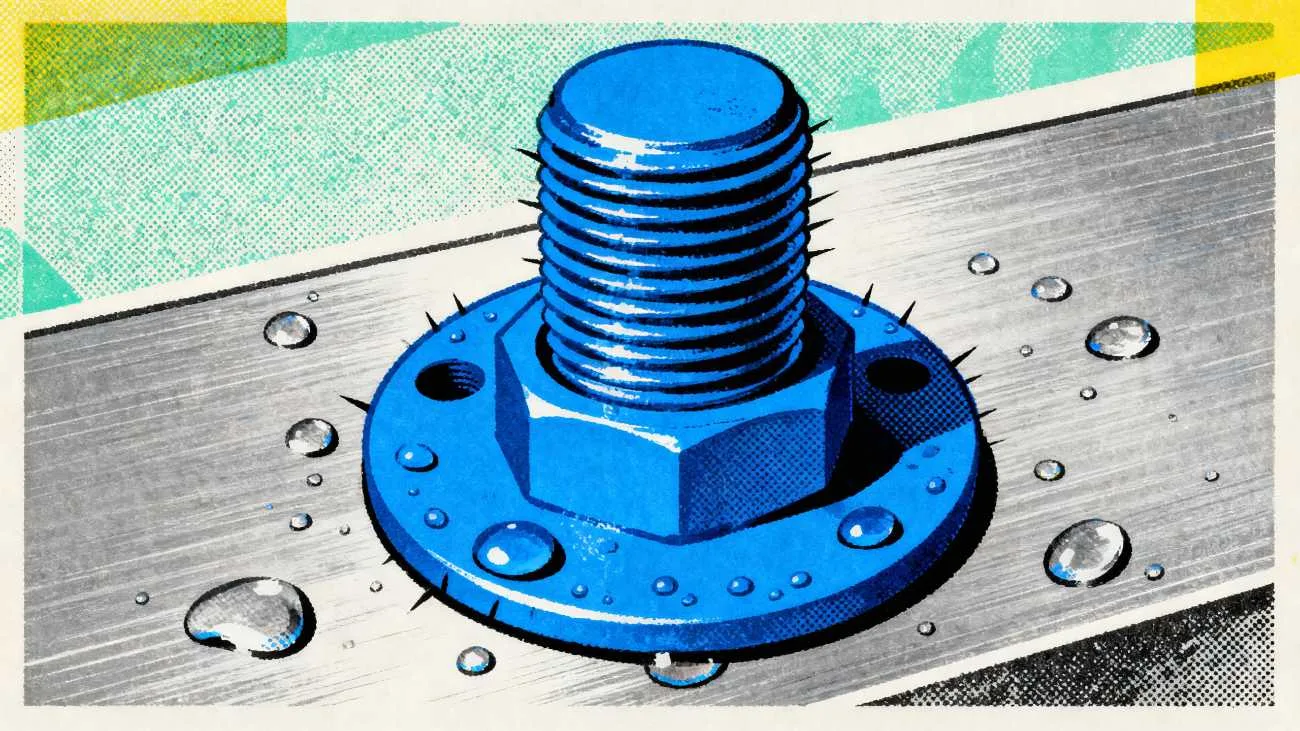
Xylan is famous for its colors. While blue (Xylan 1424) is the most common for offshore fasteners, it is also available in green, red, black, and silver. Colors are often used to help divers or ROVs identify different systems underwater.
Does Xylan affect the strength of the bolt?
No. The coating process is performed at temperatures that do not alter the heat-treatment of the steel. The bolt retains its original mechanical properties while gaining a protective shell.
Sustainable Practices in Coating
The modern energy industry focuses on sustainability. Xylan coatings help by extending the life of hardware, which reduces the need for new metal production. Additionally, modern application processes have moved toward water-based and low-VOC (Volatile Organic Compound) formulas to minimize environmental impact.
External Resources for Engineers
For those wanting to dive deeper into the technical specifications of PTFE coatings and corrosion science, we recommend these high-authority sources:
-
AMPP (Association for Materials Protection and Performance): Visit ampp.org for industry-leading research on corrosion prevention.
-
ASTM International: Search for ASTM B117 to understand the standards for salt spray testing.
Trust Cyclone Bolt for Offshore Reliability
Offshore flange bolts are the silent sentinels of oil and gas infrastructure. They hold back immense pressure in the harshest conditions on the planet. Protecting them with Xylan PTFE coating is a smart, cost-effective way to ensure safety and performance.
At Cyclone Bolt, we combine decades of experience with a commitment to the highest quality standards. From our Houston facility, we supply the certified fasteners that keep the energy industry moving. Whether you need API 20E B7 studs or high-alloy API 20F bolts, we have the coating expertise to match.
Contact Cyclone Bolt today to discuss your offshore fastener requirements. Call our Houston office or visit our website to request a quote for your next project.