
Originally published 2026-01-25 · Cyclone Bolt
Off-highway haul trucks are the giants of the industrial world. These machines move hundreds of tons of rock, ore, and earth in a single trip. They operate in the most punishing environments on the planet. From the freezing tundras of northern mines to the scorching heat of desert quarries, the mechanical stress on these vehicles is immense.
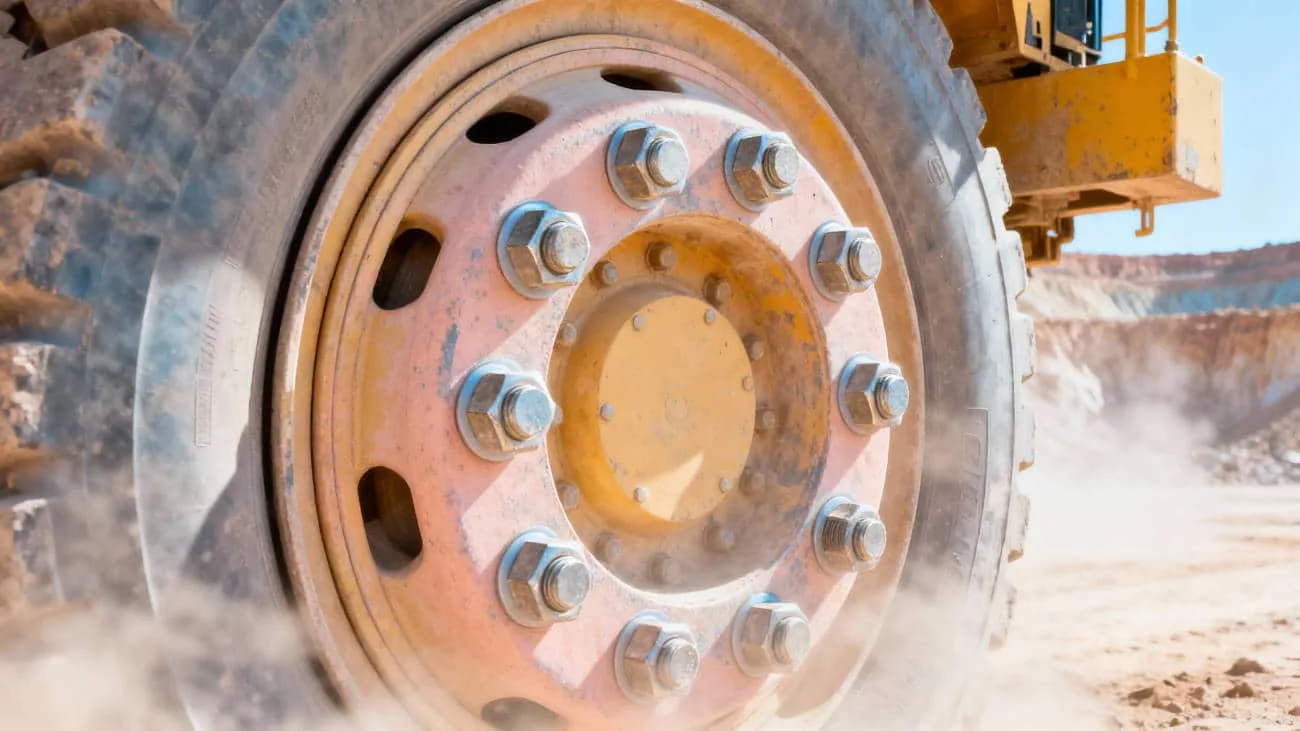
One of the most critical points of failure and a key area for maintenance is the wheel hub assembly. The bolts and studs holding these massive wheels in place are under constant pressure. They face extreme torque, heavy vibration, and massive payloads. Choosing the right bolting solution is not just a matter of maintenance. It is a matter of safety and operational continuity.
Cyclone Bolt, based in Houston, Texas, understands these demands. High-torque applications require more than just a standard bolt. They require precision engineering and adherence to strict quality standards.
The Physics of Haul Truck Hubs
A haul truck wheel hub must transfer massive amounts of power from the drivetrain to the ground. At the same time, it must support the weight of the truck and its cargo. This weight can easily exceed 400 tons.
The fasteners in the hub assembly experience two main types of stress:
-
Tensile Stress: This is the “stretching” force applied when the bolt is tightened.
-
Shear Stress: This is the force applied perpendicular to the bolt, caused by the weight of the truck and the rotation of the wheels.
In high-torque environments, vibration is a constant enemy. If a bolt loses its tension, the joint becomes loose. A loose joint leads to rapid wear, metal fatigue, and eventually, catastrophic failure. This is why high-torque bolting solutions are essential for the mining and heavy construction industries.
Why Quality Standards Matter
When you are dealing with equipment of this scale, “good enough” is never enough. You need fasteners that are manufactured to the highest global standards. Cyclone Bolt operates under several key certifications that ensure every bolt can handle the pressure.
API Spec Q1 (9th Edition)
The American Petroleum Institute (API) sets some of the toughest standards in the world. API Spec Q1 is a quality management system specifically designed for organizations that manufacture products for the petroleum and natural gas industries. However, its principles are vital for any heavy-duty application like mining. It focuses on risk assessment, contingency planning, and rigorous product quality. When a bolt meets these standards, it means the manufacturing process is consistent and documented.
ISO 9001:2015
This is the gold standard for quality management. ISO 9001:2015 Quality System Certificate ensures that a company consistently provides products that meet customer and regulatory requirements. For a haul truck operator, this certification provides peace of mind. It guarantees that the fasteners delivered today are just as strong as the ones delivered last year.
API 20E and API 20F: The Difference
For high-torque hub applications, choosing between API 20E and API 20F is critical. These specifications define the requirements for bolting used in the energy and heavy industry sectors.
API 20E: Alloy and Carbon Steel Bolting
API 20E covers alloy and carbon steel bolting. These are common in high-strength applications. This standard classifies bolts into three levels: BSL-1, BSL-2, and BSL-3. BSL-3 is the most stringent level. It requires the highest degree of testing and documentation. For haul truck hubs, BSL-2 or BSL-3 fasteners are often preferred to ensure they can withstand the cyclical loading of a mining environment.
API 20F: Corrosion-Resistant Bolting
API 20F focuses on corrosion-resistant bolting. This includes stainless steels and nickel alloys. While haul trucks aren’t always submerged in saltwater, they often face corrosive mud, chemical-heavy soils, and road salts. Using fasteners that meet API 20F standards ensures that corrosion won’t weaken the bolt over time, leading to a “frozen” hub or a snapped stud.
Selecting the Right Material Grade
The material of the bolt determines its yield strength and durability. Haul truck hubs often require high-grade alloys to manage the torque.
-
Grade B7: This is a chromium-molybdenum alloy steel. It is heat-treated and widely used for high-pressure and high-temperature service. It is a staple in heavy industrial bolting.
-
Grade L7: Similar to B7 but specifically tested for low-temperature toughness. This is essential for trucks operating in Arctic mining conditions.
-
Grade B16: A heat-treated chromium-molybdenum-vanadium steel. It offers even higher strength at elevated temperatures.
You can find a detailed breakdown of these materials in the Cyclone Bolt Material Grade Guide. Understanding these grades helps fleet managers choose the right fastener for their specific geography.
The Importance of Coatings and Plating
In the world of off-highway hauling, the environment is your biggest obstacle. Bare steel bolts will rust quickly. Rust leads to two problems: it weakens the metal and it changes the friction during installation.
If a bolt is rusty, the torque wrench might show the correct number, but the actual tension in the bolt might be too low. This is because the energy is being used to overcome the friction of the rust rather than stretching the bolt.
Popular Coating Options
-
Zinc Plating: Offers basic corrosion resistance and a clean finish.
-
Cadmium Plating: Excellent for preventing galling and providing consistent torque-tension relationships.
-
PTFE (Teflon/Xylan) Coatings: These are highly recommended for high-torque applications. They provide a very low coefficient of friction. This ensures that the torque applied actually translates into the necessary clamping force.
-
Hot-Dip Galvanizing: Provides a thick layer of protection, ideal for extremely harsh outdoor environments.
Refer to the Coating and Plating Technical Guide to see which finish is best for your haul truck fleet.
Preventing Hub Failures
The failure of a wheel hub on a haul truck is a nightmare scenario. It leads to massive repair costs and dangerous “wheel-off” incidents. High-torque bolting solutions help prevent these issues in several ways.
Fatigue Resistance
Bolts in a wheel hub are constantly “flexing” as the wheel turns. This is called cyclical loading. Over millions of rotations, this can cause microscopic cracks. Fasteners manufactured to API 20E standards are tested to ensure they have the fatigue resistance necessary for this environment.
Consistent Clamping Force
A wheel hub stays together because of clamping force. This force is created when the bolt is stretched. High-torque bolting solutions use high-strength materials that can maintain this “stretch” even under heavy loads.
Resistance to Vibration
Mining trucks operate on uneven haul roads. The constant jarring can vibrate standard nuts loose. Using high-quality studs and bolts with proper thread profiles helps maintain the integrity of the joint.
Installation Best Practices
Even the best bolt from Cyclone Bolt will fail if installed incorrectly. For high-torque hub applications, follow these steps:
-
Clean the Threads: Ensure the hub threads and the bolt threads are free of debris.
-
Inspect for Damage: Never reuse a bolt that shows signs of stretching or thread wear.
-
Use Proper Lubrication: If using a coating like Xylan, check the manufacturer’s specs for the “K-factor” (friction factor).
-
Follow the Torque Sequence: Always tighten hub bolts in a star or cross pattern to ensure even pressure across the flange.
-
Use Calibrated Tools: Ensure your torque wrenches are calibrated and capable of reaching the high levels required for these machines.
The Economic Impact of Better Bolting
It might be tempting to buy cheaper, non-certified fasteners. However, the cost of a single hub failure far outweighs the savings.
Consider the “Total Cost of Ownership”:
-
Downtime: A haul truck sitting in the shop is not making money. In some mines, an hour of downtime costs thousands of dollars.
-
Labor: Replacing failed bolts takes time and specialized equipment.
-
Safety: The cost of an accident involving a 400-ton truck is immeasurable in terms of liability and human life.
By sourcing bolts from a Houston-based expert like Cyclone Bolt, you ensure that your fleet stays on the haul road. You get the benefits of local manufacturing speed with global quality standards.
Engineering for the Future
As haul trucks get larger, the demands on fasteners will only increase. We are seeing a move toward even more exotic alloys and smarter coating technologies. Digital torque monitoring is also becoming more common. This allows maintenance teams to track the “health” of a hub in real-time.
Cyclone Bolt remains at the forefront of these changes. By adhering to API Spec Q1, they are prepared to adapt to new engineering challenges. Whether it is a custom stud for a specialized hub or a high-volume order of Grade B7 bolts, quality is the priority.
External Resources for Mining and Engineering
To learn more about heavy equipment safety and mechanical engineering standards, visit these resources:
-
The Mine Safety and Health Administration (MSHA) – For guidelines on haulage safety and equipment maintenance.
-
The American Society of Mechanical Engineers (ASME) – For deep technical standards on fasteners and materials.
Summary of Key Points
-
Off-highway haul truck hubs face extreme tensile and shear stress.
-
High-torque bolting is essential to prevent vibration-related loosening and fatigue failure.
-
API 20E (alloy steel) and API 20F (corrosion-resistant) are the primary standards for these fasteners.
-
API Spec Q1 and ISO 9001:2015 certifications ensure manufacturing consistency and risk management.
-
Material choice (like Grade B7 or L7) must match the operational environment (temperature and load).
-
Coatings like PTFE/Xylan are critical for achieving accurate torque-tension results.
-
Proper installation, including star-pattern tightening and tool calibration, is mandatory for safety.
-
Sourcing from a reputable Houston manufacturer like Cyclone Bolt reduces the risk of downtime and accidents.
Does your fleet need fasteners that can handle the heaviest loads in the world? Do not settle for uncertified hardware. Contact Cyclone Bolt in Houston, Texas, today. Visit to explore our full inventory of API-certified fasteners, studs, and bolts. Let our team help you select the perfect high-torque solution for your off-highway haul trucks.