
Originally published 2026-03-11 · Cyclone Bolt
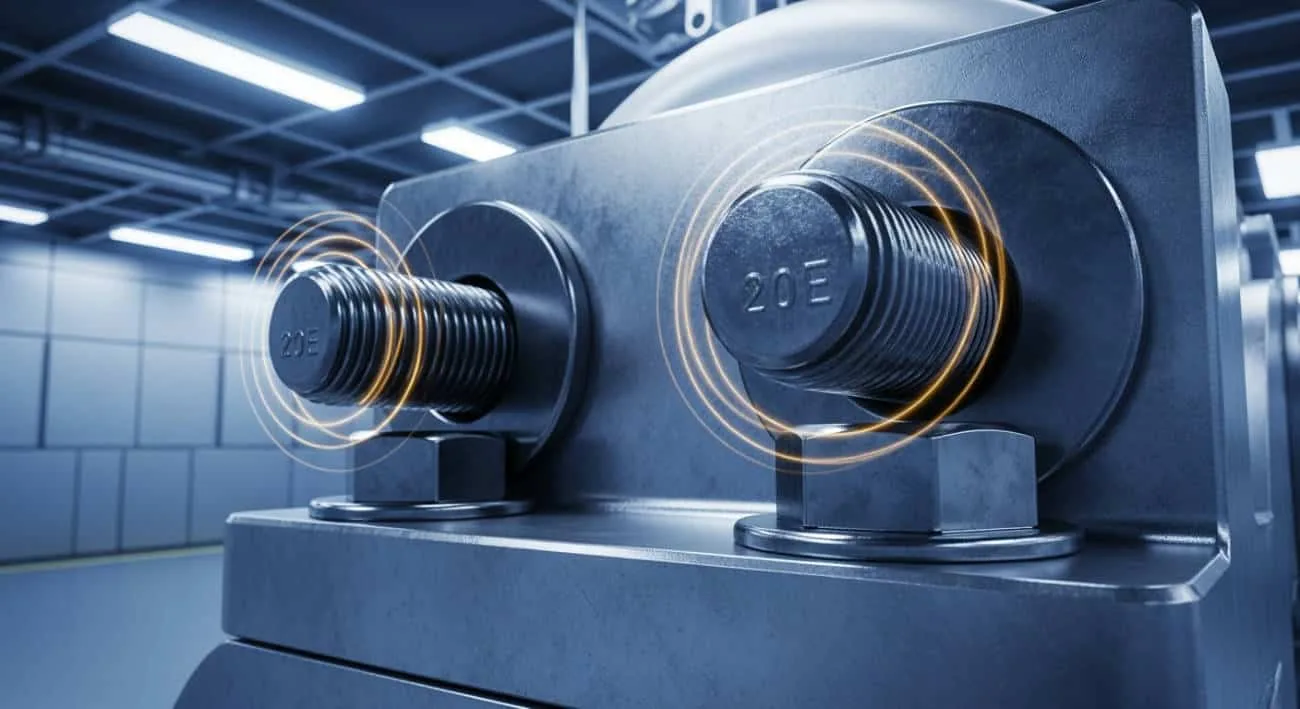
The ocean is a punishing environment. Beyond the salt spray and corrosive humidity, a silent force is constantly at work beneath the deck: vibration. For offshore vessels, tankers, and marine platforms, engine vibration is more than just a background hum. It is a persistent mechanical stressor that directly threatens the integrity of hull bolts and structural fasteners.
When a massive marine engine turns, it creates harmonic frequencies. These vibrations travel through the engine mounts into the hull. If your fasteners are not designed to withstand this constant oscillation, they will fail. In the maritime world, a failed bolt is not just a maintenance headache. It is a potential catastrophe.
The Mechanics of Vibration and Fastener Failure
Fasteners work by creating tension. When you tighten a bolt, it acts like a stiff spring, pulling two surfaces together. This “pre-load” is what keeps the joint secure. Vibration interferes with this tension in several specific ways.
Rotational Self-Loosening
This is the most common cause of failure. Small, transverse movements caused by engine hum can overcome the friction between the bolt threads and the nut. Over time, the bolt literally unscrews itself. Even a fraction of a turn reduces the clamping force. Once the clamp load is gone, the joint is free to move, leading to rapid wear.
Fatigue Cracking
Marine engines don’t just vibrate; they pulse. This cyclic loading means the bolt is being stretched and released thousands of times per hour. If the material grade isn’t right, microscopic cracks form at the root of the threads. These cracks grow until the bolt snaps under a load it would normally handle with ease.
Why Material Selection is Your First Line of Defense
You cannot use standard hardware store bolts for marine hull applications. The combination of vibration and sea-level pressure requires specific metallurgical properties.
At Cyclone Bolt, we emphasize the importance of using the correct material grade guides to match the specific stress profile of the vessel. For example, high-strength alloys are necessary to maintain pre-load under high-frequency vibration, but they must also remain ductile enough not to become brittle in cold seawater.
The Role of API 20E and 20F Standards
In the oil and gas and marine industries, “good enough” doesn’t exist. This is why the American Petroleum Institute (API) developed specific specifications for bolting.
-
API 20E: This covers alloy and carbon steel bolting. It sets strict requirements for how the steel is melted, heat-treated, and tested.
-
API 20F: This covers corrosion-resistant bolting (stainless and nickel alloys).
Engine vibrations can cause “stress corrosion cracking.” If a bolt is under high tension and exposed to salt water, vibration can accelerate the chemical breakdown of the metal. Using API-certified fasteners ensures the material has the toughness to resist these synchronized attacks.
The Critical Importance of Quality Management
Houston is the heart of the energy and marine sector. At Cyclone Bolt, our facility operates under ISO 9001:2015 Quality System Certificate and API Spec Q1 9th Edition standards.
Why does this matter for your hull bolts? Because vibration finds the weakest link. If a batch of bolts has inconsistent thread dimensions or improper heat treatment, those specific bolts will loosen first. A quality management system ensures that every single bolt in your hull meets the same rigorous threshold for performance.
Coatings and Plating: More Than Just Rust Prevention
Many people think coatings are only for preventing orange rust. In reality, the right coating changes the “K-factor” or the friction coefficient of the bolt.
When dealing with engine vibration, you need consistent friction. If a coating is too slick, the bolt might loosen more easily. If it is too rough, you might not achieve the proper tension during installation.
According to our coating and plating technical guide, options like Xylan or Zinc-Nickel are popular in marine environments. These coatings provide:
-
Corrosion Resistance: Stopping the “pitting” that creates weak spots for fatigue cracks.
-
Consistent Torque: Ensuring the installer reaches the exact clamping force needed to resist vibration.
-
Anti-Galling: Vital for stainless steel bolts (API 20F) that might otherwise seize and snap during maintenance.
Best Practices for Maintaining Hull Integrity
Protecting a vessel from engine-induced vibration failure requires a proactive strategy. You cannot simply install a bolt and forget it for a decade.
1. Proper Torque Sequencing
Bolts in a hull or engine mount should be tightened in a specific pattern. This ensures the load is distributed evenly. If one bolt is tighter than its neighbor, it will absorb a disproportionate amount of the vibration energy and fail prematurely.
2. Regular Ultrasonic Testing
For critical hull fasteners, visual inspections aren’t enough. Many vibration-induced cracks start inside the bolt hole. Ultrasonic testing can detect these internal flaws before the bolt fails completely.
3. Use of Locking Mechanisms
In high-vibration zones near the engine room, secondary locking measures are often required. This can include:
-
Wedge-locking washers: Which use tension instead of friction to stay tight.
-
Nyloc nuts: Though these have temperature limits.
-
Safety wire: A physical barrier to rotation.
The Impact of Harmonic Resonance
Every ship has a natural frequency. If the engine’s vibration frequency matches the natural frequency of the hull, the vibrations are amplified. This is called resonance.
During resonance, bolts experience extreme “snapping” forces. This is often where we see the most significant failures in offshore platforms. Engineers must ensure that the fasteners chosen have a fatigue life that exceeds the expected operational hours of the engine at these specific frequencies.
Environmental Synergy: Salt, Heat, and Shake
Vibration doesn’t work alone. In the engine room, temperatures are high. Outside the hull, the water is cold and salty. This thermal gradient adds “thermal stress” to the mechanical vibration.
A bolt that expands and contracts due to heat changes is more likely to lose its pre-load. Once that happens, the engine’s vibration finishes the job. This is why material traceability and strict adherence to API standards are vital. You need to know exactly how that bolt will behave at 150 degrees Fahrenheit versus 40 degrees Fahrenheit.
External Resources for Marine Engineering
For further technical reading on marine structural integrity and fastener standards, these resources are invaluable:
Why Houston’s Cyclone Bolt is the Right Partner
Shipping and offshore operations are global, but the expertise is local. Being based in Houston allows us to work closely with the engineers designing the next generation of resilient vessels.
We don’t just supply parts; we supply certainty. When your ship is miles offshore, the only thing keeping the engine from vibrating the hull apart is the quality of the fasteners you chose months prior.
Whether you need API 20E alloy studs for a high-pressure manifold or API 20F stainless fasteners for hull plating, the manufacturing process must be flawless. Our commitment to API Spec Q1 means we track every step of production. We provide the documentation you need to prove your vessel is compliant and safe.
Quick Recap
-
Vibration Causes Loosening: Harmonic frequencies from marine engines overcome thread friction, leading to self-loosening.
-
Fatigue is the Silent Killer: Cyclic loading creates microscopic cracks that lead to sudden bolt failure.
-
API Standards are Vital: API 20E and 20F provide the specific metallurgical requirements for offshore and marine environments.
-
Coatings Matter: The right plating ensures consistent torque and prevents the corrosion that accelerates vibration damage.
-
Quality Systems: ISO 9001 and API Q1 certifications ensure every bolt is manufactured to handle extreme stress.
-
Proactive Maintenance: Proper torque sequencing and internal testing are necessary to catch vibration damage early.
Secure Your Marine Assets Today
Vibration never stops, but your fasteners can be ready for the challenge. Don’t leave your hull integrity to chance. Partner with a manufacturer that understands the rigors of the marine environment. Contact the experts at Cyclone Bolt today for a consultation on your next project.