
Originally published 2026-03-10 · Cyclone Bolt
The Hidden Danger in Aerospace Fasteners
Imagine a high-stakes assembly on a modern aircraft. Every bolt and nut must fit perfectly. Engineers often choose stainless steel for these critical roles because it resists corrosion and stands up to extreme temperatures. However, stainless steel has a notorious personality trait that can ruin a project in seconds: it loves to stick to itself.
This phenomenon is known as galling. It is more than just a minor inconvenience. In the aerospace industry, a galled fastener can lead to seized joints, broken bolts, and compromised structural integrity. When metal surfaces rub against each other under high pressure, they can literally cold-weld together. Once this happens, the connection is often permanent—and not in a good way.
What Exactly is Galling?
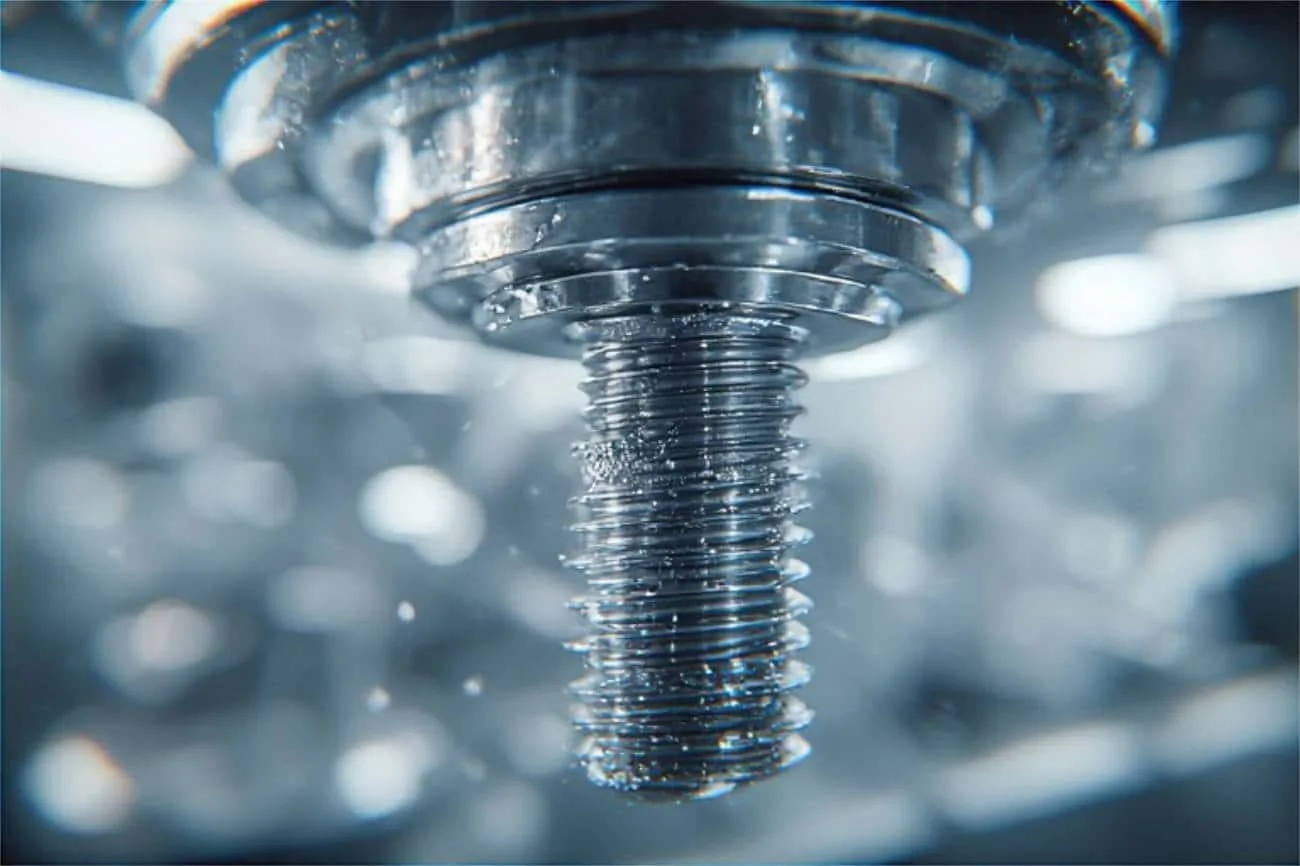
Galling is a form of severe adhesive wear. It happens when the protective oxide layer on the surface of stainless steel is rubbed away by friction. Stainless steel relies on a thin chromium oxide film to stay “passive” or corrosion-resistant. In aerospace applications, where vibrations are high and tolerances are tight, this film can break down.
When that film vanishes, the bare metal crystals beneath it touch. They begin to transfer material from one surface to another. This creates microscopic “clumps” of metal that act like sandpaper. As you continue to tighten the bolt, these clumps grow larger. Eventually, the friction becomes so intense that the bolt seizes completely.
Why Aerospace Connections are at Risk
Aerospace environments are unique. Fasteners are subjected to:
-
Extreme thermal cycling.
-
Intense mechanical vibrations.
-
High-pressure loads during takeoff and landing.
-
Corrosive atmospheric conditions at high altitudes.
Because weight is always a factor, aerospace engineers often use thin-walled components and high-strength alloys. These factors increase the pressure on thread faces, making galling much more likely than in standard industrial applications.
The Role of Material Selection
Preventing galling starts at the drawing board. Not all stainless steels are created equal. Some alloys are much more prone to seizing than others.
-
Austenitic Steels: Common grades like 304 and 316 are versatile but are very susceptible to galling.
-
Hardness Matters: If you use a nut and bolt made of the exact same material and hardness, you are asking for trouble. Using different alloys or varying the hardness levels between the male and female threads can reduce the risk of molecular bonding.
-
Specialty Alloys: Aerospace often utilizes precipitation-hardened (PH) steels. These offer better mechanical properties and can sometimes resist surface tearing better than standard grades.
Coating and Plating Solutions
In many cases, the metal itself needs a “shield.” This is where technical coatings come into play. A good coating acts as a physical barrier between the metal surfaces.
Cadmium Plating Historically, cadmium was the gold standard for aerospace. It provides excellent lubricity and corrosion resistance. However, due to environmental regulations, many manufacturers are moving toward safer alternatives.
Zinc-Nickel Plating This is a popular modern alternative to cadmium. It offers high corrosion resistance and works well with supplementary lubricants to prevent thread friction.
Dry Film Lubricants These are specialized coatings often made of Molybdenum Disulfide (MoS2) or PTFE (Teflon). Unlike grease, these lubricants are “baked” onto the fastener. They don’t migrate or evaporate in the vacuum of high-altitude flight. They provide a permanent slippery surface that prevents the metal-to-metal contact that triggers galling.
The Importance of Precision Threading
At Cyclone Bolt in Houston, Texas, we understand that thread quality is a primary defense against seizing. Rough threads have “high spots” or burrs. These tiny imperfections are the starting points for galling.
Our adherence to API Spec Q1 9th Edition ensures that every fastener meets rigorous quality management standards. This means:
-
Consistent thread geometry.
-
Minimal surface roughness.
-
Strict dimensional tolerances.
When threads are smooth and precise, the load is distributed evenly across the entire surface area. This lowers the localized pressure and keeps the protective oxide layer intact.
Best Practices for Installation
Even the best bolt can fail if it is handled poorly. Aerospace technicians should follow strict protocols to ensure a clean connection.
-
Slow Down: High-speed installation with power tools generates heat. Heat expands the metal and breaks down lubricants, leading to instant galling. Hand-tightening or using low-RPM tools is always safer.
-
Keep it Clean: A single grain of sand or a tiny metal shaving in the threads acts as a catalyst for galling. Always inspect fasteners for debris before assembly.
-
Use Torque Specs: Over-torquing puts immense pressure on the threads. Always use a calibrated torque wrench and follow the engineer’s specifications exactly.
Advanced Quality Standards: API 20E and 20F
While many people associate API (American Petroleum Institute) standards with oil and gas, these standards represent the pinnacle of bolting technology.
API 20E focuses on alloy and carbon steel bolting, while API 20F covers corrosion-resistant bolting, including the stainless steels used in aerospace-adjacent hardware. These standards require:
-
Raw Material Traceability: You know exactly where your metal came from.
-
Heat Treatment Verification: Ensuring the metal has the correct hardness to prevent wear.
-
Strict Testing: Including hardness testing and microstructural examination.
By following these high-level specs, Cyclone Bolt ensures that the fasteners can withstand the most punishing environments without failing.
Lubrication: The Vital Buffer
If a coating isn’t used, a high-quality anti-seize compound is mandatory. In aerospace, these aren’t your standard hardware store greases. They must be stable at high temperatures and compatible with the specific alloys being used.
For instance, nickel-based anti-seize is often used for stainless steel because it doesn’t contain copper, which can sometimes cause galvanic corrosion in certain aerospace environments. The lubricant fills the microscopic valleys in the metal surface, ensuring that the “peaks” never actually touch.
ISO 9001:2015 and Reliability
Consistency is the enemy of galling. If every batch of bolts is slightly different, your assembly process will never be reliable. Our ISO 9001:2015 certification is our promise of consistency. It means we have a system in place to catch errors before they leave our Houston facility. When an aerospace project requires thousands of connections, that peace of mind is priceless.
The Cost of Failure
Why spend so much time worrying about a bolt seizing? Consider the “drill-out” cost. If a $50 aerospace bolt galls during assembly, you can’t just pull it out. You often have to drill it out. This risks damaging a multi-million dollar component like an engine housing or a wing spar.
Prevention is always cheaper than the cure. By choosing the right material grades, applying the correct technical coatings, and sourcing from a manufacturer that understands API and ISO standards, you eliminate this risk.
Choosing the Right Grade
Reference our Material Grade Guide to see which alloys offer the best balance of strength and galling resistance. For instance, cold-worked stainless steels may offer more strength but require more careful lubrication than annealed versions.
External Resources for Further Reading
To better understand the physics of metal friction and the standards governing aerospace materials, consider these resources:
-
ASM International – The Materials Information Society: A leader in metallurgy research and data.
-
SAE International: The primary body for aerospace engineering standards and fastener specifications.
The Cyclone Bolt Advantage
Located in the heart of the industrial world in Houston, Texas, Cyclone Bolt is perfectly positioned to serve the aerospace and high-tech industries. We combine the precision of a boutique manufacturer with the rigorous standards of global industry leaders.
Whether you need fasteners that meet API 20E/20F or you require custom Coating and Plating to prevent galling on 316 stainless steel, we have the technical expertise to deliver. We don’t just ship boxes of bolts; we provide engineered solutions for the most demanding environments on (and off) the planet.
Article Recap
-
Galling Definition: A form of “cold-welding” where stainless steel surfaces seize under pressure.
-
Causes: High friction, identical material hardness, and the breakdown of the chromium oxide layer.
-
Prevention: Use different alloys for nuts and bolts, apply dry-film lubricants, and ensure smooth thread quality.
-
Standards: Following API Spec Q1, API 20F, and ISO 9001:2015 ensures fastener reliability.
-
Installation: Always use proper torque, clean threads, and avoid high-speed installation tools.
Don’t let galling compromise your next aerospace project. Contact the experts at Cyclone Bolt today to discuss our API-certified fasteners and specialized anti-galling coatings. Visit our website to request a quote or view our technical guides.