Originally published 2025-12-22 · Cyclone Bolt
The Hidden Cost of “Cheap” Fasteners and Plating
Walk onto any industrial job site in Houston, and you’ll see thousands of bolts. At a glance, they all look roughly the same. They are pieces of threaded metal designed to hold massive structures together. Because they look so simple, it is tempting to look at fasteners as a commodity where the lowest price wins.
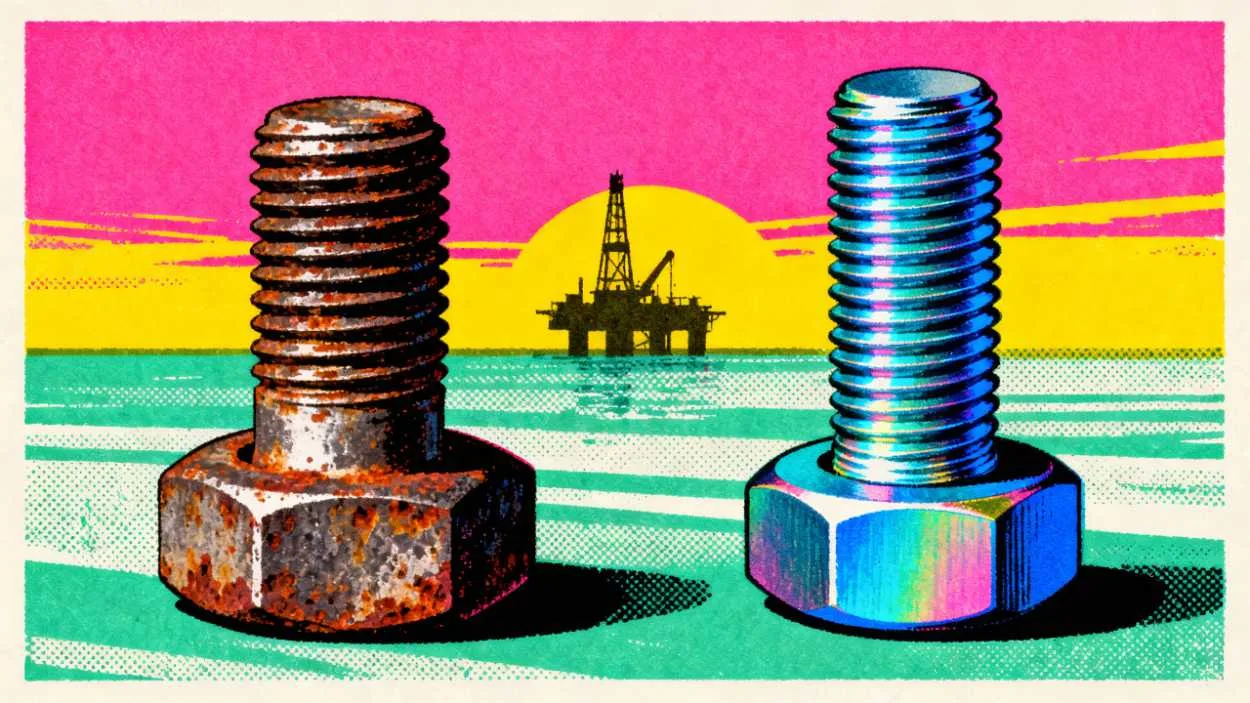
However, the purchase price of a bolt is only a tiny fraction of its actual cost over its lifetime. In the oil and gas, petrochemical, and power generation industries, the environment is the enemy. Salt air, extreme heat, and corrosive chemicals are constantly trying to break down your hardware.
If you choose a coating based solely on the upfront cost, you might be setting yourself up for a financial disaster. Replacing a failed bolt isn’t just about the five dollars you spend on a new one. It’s about the thousands of dollars lost in downtime, labor, and potential safety hazards.
At Cyclone Bolt, we focus on the long-term math. We want to show you why investing in superior plating and technical standards isn’t just a “quality” choice—it’s a smart economic one.
Understanding the Corrosion Tax
Corrosion is essentially a tax on industrial operations. When a bolt rusts, it doesn’t just look bad. It loses structural integrity. It can become “seized,” making it impossible to remove without specialized cutting tools.
Think about the labor involved in a maintenance turnaround. If your crew spends three extra hours trying to remove corroded studs from a flange, those hours add up. You are paying for specialized labor, equipment rental, and delayed production.
Better plating acts as insurance against this “corrosion tax.” By choosing the right coating and plating technical guide, you extend the service life of the hardware and reduce the frequency of maintenance cycles.
The Role of Technical Standards in ROI
Quality isn’t just a buzzword; it’s a measurable set of criteria. When we talk about saving money, we have to talk about the standards that ensure reliability. At Cyclone Bolt, we adhere to the most rigorous certifications in the world.
ISO 9001:2015
Our commitment to ISO 9001:2015 Quality System Certificate means our quality management system is optimized for consistency. For you, this means every bolt in a batch of 5,000 will perform exactly like the first one. Consistency reduces the risk of unexpected failures, which are the most expensive types of failures.
API Spec Q1 (9th Edition)
In the oil and gas world, API Spec Q1 9th Edition is the gold standard. It focuses on risk-based thinking. By identifying potential failure points in the manufacturing process, we eliminate them before the product ever reaches your facility. This preventive approach is fundamentally more economical than reacting to failures in the field.
API 20E and 20F: The Critical Differentiators
For high-pressure and high-temperature environments, the standard “off-the-shelf” bolt won’t cut it. This is where API 20E and API 20F come in.
-
API 20E: This covers alloy and carbon steel bolting for use in the petroleum and natural gas industries. It requires strict testing for hardness, chemistry, and micro-structure.
-
API 20F: This focuses on corrosion-resistant bolting, such as stainless steel and nickel alloys.
Using fasteners that meet these standards ensures that the metal itself is capable of handling the load. But even the best metal needs a shield. That shield is the plating.
Comparing Common Industrial Coatings and Plating
Not all coatings are created equal. The “best” coating depends on your specific environment. Choosing the wrong one is a waste of money. Choosing the right one is an investment.
Zinc Plating and Galvanization
Zinc is the most common coating. It is relatively inexpensive and provides good sacrificial protection. Hot-dip galvanizing is excellent for outdoor structures but can sometimes lead to “thread fit” issues because the coating is thick. If you are in a low-corrosion environment, this is often the most economical choice.
Cadmium Plating
Cadmium is legendary for its lubricity and corrosion resistance, especially in marine environments. It helps prevent “galling,” which is when threads lock together under pressure. While it is more expensive than zinc, the ease of installation and removal can save significant labor costs over time.
Fluoropolymer Coatings (PTFE)
Often known by brand names like Xylan®, these coatings provide incredible chemical resistance and a low coefficient of friction. In a subsea environment or a chemical plant, these are the heavy hitters. They allow for accurate torque tensioning, ensuring the joint is sealed perfectly the first time. This prevents leaks, which are both dangerous and costly.
You can find more details on these in our material grade guides.
The “Cost of Failure” Calculation
To truly understand the economics of plating, you have to look at the worst-case scenario. According to NACE International, the global cost of corrosion is estimated at $2.5 trillion annually.
Imagine a single bolt failure on a high-pressure line. The results could include:
-
Unplanned Shutdown: Every hour of lost production can cost tens of thousands of dollars.
-
Environmental Fines: Leaks can lead to regulatory penalties that far exceed the cost of an entire year’s worth of premium fasteners.
-
Safety Risks: Protecting your team is priceless. High-quality plating reduces the risk of catastrophic structural failure.
When you divide the cost of a premium coated bolt by its years of service, the “expensive” bolt often ends up being the cheapest option on a per-year basis.
Accuracy in Specifications: Avoiding Over-Engineering
Saving money isn’t just about buying the best; it’s about buying the right thing. Over-engineering can be just as wasteful as under-engineering. If you are bolting together a shelf in a climate-controlled warehouse, you don’t need API 20F nickel-alloy studs with PTFE coating.
Our materials and specifications page helps you match the fastener to the environment. We look at:
-
Operating Temperature: Some coatings break down at high heat.
-
Chemical Exposure: Will the bolt be hit with acids or bases?
-
Tensile Requirements: How much force will be applied?
By getting the technical standards right at the start, you avoid spending money on features you don’t need.
The Houston Advantage
Cyclone Bolt is located in the heart of the global energy capital: Houston, Texas. Being local means we understand the specific challenges of the Gulf Coast. We deal with the humidity, the heat, and the salt air every day.
Our team of quality and tech experts is here to help you navigate the complex world of ASTM, ASME, and API specifications. We don’t just ship boxes; we provide technical consultation to ensure your project stays on budget and on schedule.
Long-Term Value vs. Short-Term Savings
If you are a purchasing manager, you are under pressure to cut costs. It is easy to show a “saving” on a spreadsheet by choosing a cheaper fastener supplier. However, that saving is often an illusion.
Real savings are found in:
-
Increased Mean Time Between Failures (MTBF).
-
Reduced replacement labor.
-
Lower risk of environmental or safety incidents.
-
Simplified inventory management through consistent quality.
When you partner with a manufacturer that prioritizes quality and tech, you are building a more resilient business.
How Cyclone Bolt Ensures Your ROI
We don’t leave quality to chance. Every piece of hardware that leaves our facility has a paper trail. We provide Mill Test Reports (MTRs) and certificates of compliance. This transparency is vital for your internal audits and for meeting the requirements of your own customers.
We believe that a bolt is more than just a fastener. It is a promise that your structure will hold, your pipe won’t leak, and your facility will keep running. By investing in better plating and higher standards, you are keeping that promise to your stakeholders and your bottom line.
Secure Your Operations with Cyclone Bolt
The economics are clear. Better plating saves money. It reduces maintenance, prevents failure, and ensures your operations remain profitable. Don’t let a “cheap” bolt become the most expensive mistake in your project.
Whether you need heavy hex bolts for a new construction or specialized studs for a maintenance turnaround, Cyclone Bolt has the inventory and the technical expertise to support you. We are ready to help you analyze your specific environmental challenges and find the most cost-effective solution for the long haul.
Your Next Step: Are you ready to optimize your fastener spend? Check out our Technical Guide for Coatings and Plating today. If you have a specific project in mind, reach out to our Houston team at Cyclone Bolt. Let’s make sure you’re using the right hardware to protect your project and your profit.