
Originally published 2026-03-07 · Cyclone Bolt
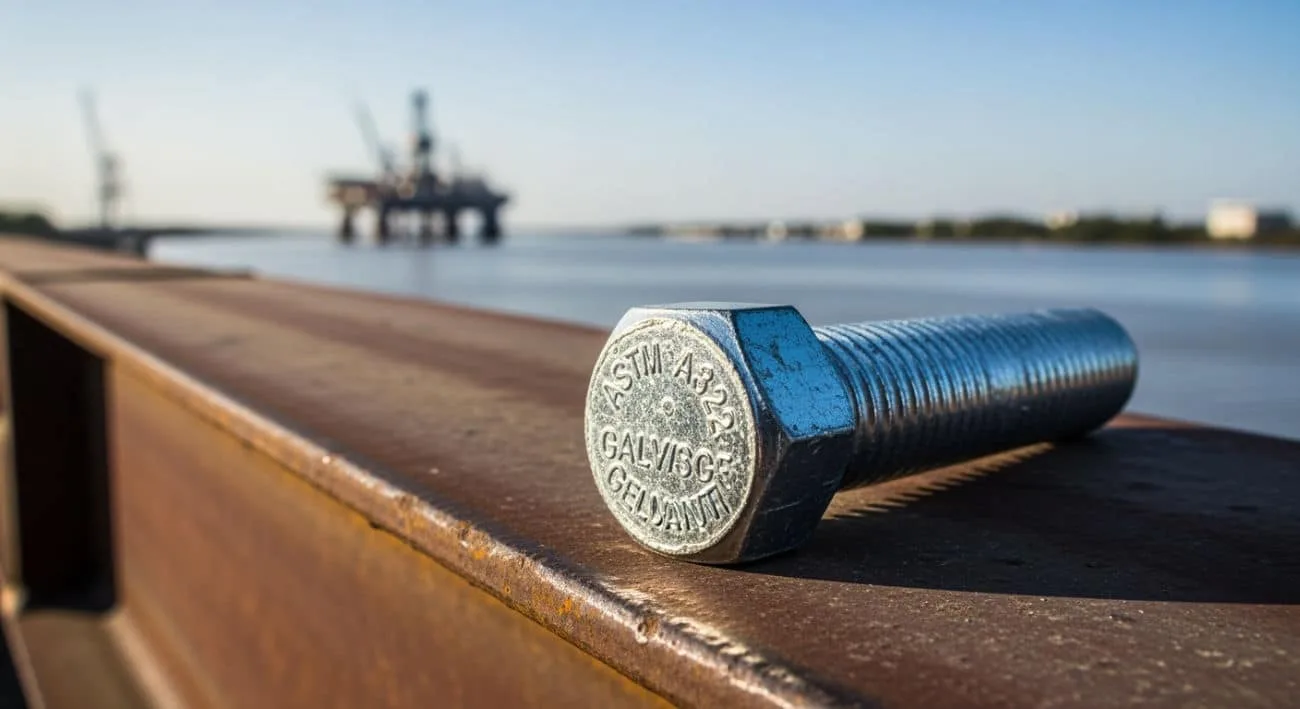
If you are building in a marine environment, the stakes are incredibly high. Saltwater, constant humidity, and heavy structural loads create a “perfect storm” for fastener failure. When engineers and contractors look for a reliable heavy hex bolt for these conditions, the ASTM A325 specification often tops the list.
Cyclone Bolt & Gasket, located in the heart of Houston, Texas, specializes in providing high-strength fasteners that meet these rigorous standards. Understanding how these bolts function within marine structural steel projects is the key to longevity and safety.
What Exactly is the ASTM A325 Specification?
ASTM A325 is a technical standard that covers high-strength structural bolts. Specifically, it focuses on heavy hex structural bolts made from heat-treated steel. These are not your average hardware store bolts. They are designed specifically for steel-to-steel structural connections.
In the industry, ASTM A325 has recently been consolidated under the ASTM F3125 umbrella. However, the term “A325” remains the most common way professionals refer to these fasteners. They are characterized by a shorter thread length than standard hex bolts, which ensures the threads stay out of the “shear plane” of the connection.
The Strength Profile of A325 Bolts
For bolts with a diameter of 0.5 inches to 1.5 inches, the minimum tensile strength is 120,000 psi. This high strength is achieved through a quenching and tempering heat-treatment process. This process gives the steel the toughness required to handle the vibrations and shifting loads typical in offshore platforms, piers, and coastal bridges.
Why Marine Environments Demand More
The marine environment is one of the most corrosive on Earth. The combination of oxygen, moisture, and salt creates an electrolyte that accelerates the oxidation of steel. Standard A325 bolts are made of medium carbon steel, which will rust almost immediately if left unprotected in sea spray.
Because of this, the “Type” of A325 bolt you choose—and the coating you apply—makes all the difference.
Type 1 vs. Type 3 Bolts
-
Type 1: This is the most common version. It is made of medium carbon steel, carbon boron, or medium carbon alloy steel. In marine settings, these must be coated to prevent corrosion.
-
Type 3: Often referred to as “Weathering Steel.” These bolts contain copper, chromium, and nickel. They develop a protective “patina” or rust layer that actually prevents deeper corrosion. While popular in some structural applications, they are less common in direct saltwater immersion than coated Type 1 bolts.
Essential Coatings for Marine A325 Bolts
Since corrosion is the primary enemy in marine structural steel, the coating is your first line of defense. Cyclone Bolt & Gasket offers a comprehensive coating and plating technical guide to help you choose.
Hot-Dip Galvanizing (HDG)
This is the “gold standard” for marine fasteners. The bolts are dipped in molten zinc, creating a thick, durable layer that provides sacrificial protection. If the coating is scratched, the zinc will corrode before the steel does. It is cost-effective and extremely long-lasting in coastal areas.
Fluoropolymer Coatings (Xylan/PTFE)
Often used in the oil and gas industry, these coatings provide excellent chemical resistance and a low coefficient of friction. This makes the bolts easier to install and remove later. They are often used in conjunction with other base layers to provide a “dual-layer” defense against the salt air.
Zinc-Nickel Plating
This provides superior corrosion resistance compared to standard zinc plating. It is often used in marine applications where the thickness of hot-dip galvanizing might interfere with the fit of the threads.
The Importance of Quality Standards: API and ISO
In Houston, the energy and marine sectors demand more than just a “good” bolt. They demand certified quality. Cyclone Bolt & Gasket operates under several critical certifications that ensure every A325 bolt meets its theoretical strength.
-
ISO 9001:2015: This international standard ensures that our management and manufacturing processes are consistent and focused on customer satisfaction. You can view our ISO 9001:2015 certification details to see our commitment to quality.
-
API Spec Q1: For offshore and subsea applications, the American Petroleum Institute (API) has the most stringent requirements. Our adherence to API Spec Q1 9th Edition means our fasteners are ready for the most dangerous environments on the planet.
Material Grade Selection for Marine Use
Choosing the right material is about balancing cost, strength, and corrosion resistance. While A325 is the workhorse of structural steel, sometimes a project requires a different grade. Our material grade guides provide a deep dive into the alternatives.
For example, if you need even higher strength than A325 provides, you might look toward ASTM A490. However, be careful—A490 bolts are more susceptible to hydrogen embrittlement, making them trickier to coat for marine use. In most marine structural steel cases, the A325 remains the safer, more reliable choice.
Proper Installation in Marine Structures
Even the best A325 bolt will fail if it is not installed correctly. Structural bolts are unique because they are often “pretensioned.” This means they are tightened until they are under a specific amount of tension, which creates friction between the steel plates. This friction is what actually holds the structure together, rather than the bolt just acting as a pin.
The Turn-of-Nut Method
In marine environments, the “turn-of-nut” method is a common way to ensure the bolt is tight enough. The nut is tightened to a “snug-tight” condition and then turned a specific additional amount (like a 1/3 turn or 1/2 turn). This stretches the bolt slightly, locking it into place.
Avoiding Galvanic Corrosion
When installing A325 bolts, you must ensure they are compatible with the steel beams they are connecting. If you use a galvanized bolt on a stainless steel beam in a saltwater environment, the zinc will disappear very quickly due to galvanic reaction. Always match your fastener coating to your structural material.
Fasteners for the Oil and Gas Industry
Since many marine structural projects in Houston involve the energy sector, it is vital to mention API 20E and API 20F. These specifications cover bolting for use in the petroleum and natural gas industries.
-
API 20E: Focuses on alloy and carbon steel bolting. You can learn more about our API 20E capabilities here.
-
API 20F: Covers corrosion-resistant bolting, such as stainless steel and nickel alloys. Check out our API 20F overview for high-consequence environments.
Local Expertise in Houston, Texas
Geography matters in manufacturing. Being located in Houston allows Cyclone Bolt & Gasket to serve the Gulf Coast’s massive maritime and offshore industry with speed. We understand the local climate and the specific engineering challenges faced by coastal builders.
When you source your ASTM A325 bolts locally, you reduce lead times and ensure that you are talking to experts who know the difference between a standard inland project and a salt-lashed pier.
Engineering Resources for Professionals
To ensure your project stays within code, it is helpful to reference external standards bodies.
-
The American Institute of Steel Construction (AISC): They provide the Specification for Structural Jointswhich dictates how A325 bolts should be used in steel buildings.
-
The Research Council on Structural Connections (RCSC): This is the definitive source for bolting proceduresand installation standards.
Article Recap
-
ASTM A325 bolts are high-strength fasteners designed specifically for structural steel-to-steel connections.
-
In marine environments, corrosion is the primary threat, making coatings like Hot-Dip Galvanizing essential.
-
ASTM A325 is now technically part of the ASTM F3125 standard but is still widely called A325.
-
Certifications like API Spec Q1 and ISO 9001:2015 ensure that fasteners meet the safety needs of offshore and coastal projects.
-
Proper installation, including pretensioning, is required to achieve the full structural benefits of these bolts.
-
Cyclone Bolt & Gasket provides Houston-based expertise and a wide range of coatings and material grades.
Need high-strength fasteners that won’t let you down in the salt air? Cyclone Bolt & Gasket has the inventory and the certifications to keep your project secure. Request a quote for ASTM A325 bolts and experience Houston-made quality today.