
Originally published 2026-01-30 · Cyclone Bolt
Mining is a war against geology. Every piece of equipment in a mine is under constant attack. Rocks, dust, and massive pressures work together to destroy metal. If you work in the mining industry, you know that downtime is the ultimate profit killer. When a critical pin, shaft, or fastener fails, the entire operation can grind to a halt.
To survive these conditions, metal parts need more than just brute strength. They need a specific kind of resilience. This is where induction hardening comes into play. It is a heat-treatment process that allows a part to be incredibly hard on the outside while remaining tough and flexible on the inside.
Cyclone Bolt, located in Houston, Texas, understands that mining equipment requires extraordinary specifications. Whether you are looking for high-strength fasteners or specialized wear parts, the treatment process determines how long that part will last in the field. Let’s look at why induction hardening is the preferred choice for the mining sector.
The Basics of Induction Hardening
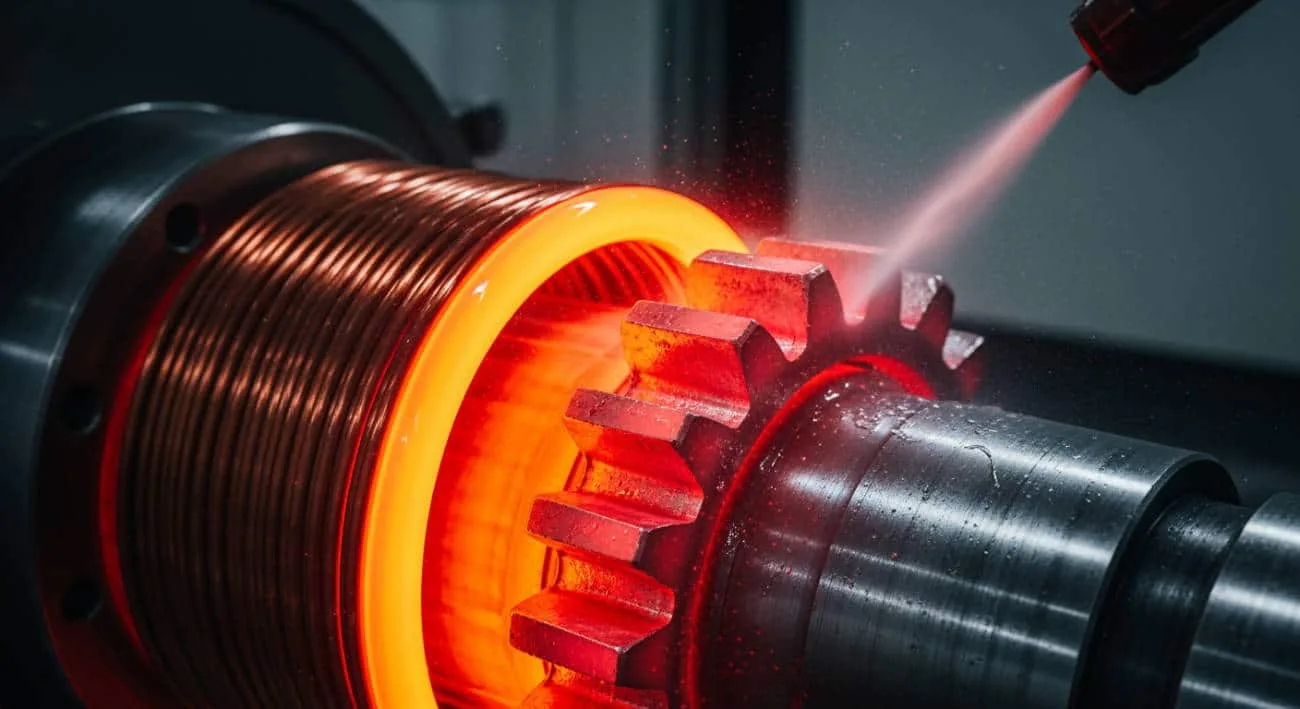
Induction hardening is a targeted heat-treatment process. It uses electromagnetic induction to heat the surface of a metal part. A high-frequency alternating current is passed through a copper coil. When a metal part is placed inside this coil, it generates heat rapidly.
Once the surface reaches the desired temperature, the part is immediately quenched. This quenching—usually with water, oil, or a specialized polymer—locks the metal into a hard, crystalline structure.
The magic of this process is that it only affects the surface layer. The core of the metal remains untouched by the intense heat. This creates a “case” of hardness. In the world of metallurgy, this is often called “case hardening.” For a deep dive into the science of heat treating, the ASM International provides extensive technical resources on phase transformations in steel.
Surface Hardness vs. Core Toughness
In mining, a part that is hard all the way through is often a liability. If a bolt or a gear is too hard, it becomes brittle. Think of a piece of glass. It is very hard and resistant to scratching, but if you hit it with a hammer, it shatters.
Mining equipment faces constant impact. Drills vibrate, excavators slam into rock faces, and crushers deal with sudden, massive loads. A brittle part would snap under these conditions.
Induction hardening provides the best of both worlds.
-
The Hardened Skin: This outer layer resists abrasion. It stands up to the “sandpaper” effect of rock dust and mineral debris.
-
The Ductile Core: The inner section of the part remains soft enough to absorb shock. It can bend slightly without breaking.
This combination is essential for “wear parts.” These are the components specifically designed to take the brunt of the abuse so the main machine remains protected.
Fighting Abrasion in the Pit
Abrasion is the primary enemy in mining. Whether you are in an open-pit mine or deep underground, mineral particles are everywhere. These particles are often harder than the base steel of the equipment.
Without induction hardening, these particles would gouge and scratch the metal surfaces. This creates “stress risers.” A stress riser is a small notch where energy concentrates. Eventually, these tiny scratches turn into cracks. Induction hardening creates a surface that is often 50 to 60 on the Rockwell C scale. At this level, most common minerals simply slide off or crumble against the metal surface.
This longevity keeps your equipment in the dirt longer. If you want to see how different materials stand up to these stresses, check out our Material Grade Guides. Choosing the right alloy is the first step before the hardening process even begins.
Precision Control for Complex Parts
One reason induction hardening is so popular for mining parts is its precision. Since the heat is generated by a coil, we can shape that coil to match the part.
If you have a long shaft but only the center section touches a bearing, we can harden just that section. This saves energy and prevents unnecessary stress on the rest of the part. This level of control is impossible with traditional furnace hardening, where the entire part is heated.
In Houston, Cyclone Bolt sees many custom requests for specific hardening patterns. This flexibility allows engineers to design parts that are lighter but more durable. It allows for better weight distribution in massive mining machinery, which can improve fuel efficiency and reduce wear on the engines.
Improving Fatigue Life
Mining is repetitive. A drill bit hits the rock thousands of times per hour. An excavator bucket opens and closes all day long. This repetition creates “fatigue.”
Metal fatigue is like bending a paperclip back and forth. Eventually, it just snaps. Induction hardening improves the fatigue life of mining parts by creating “compressive residual stress” on the surface.
When the surface is quenched and hardens, it actually tries to expand, but the core holds it in place. This creates a surface that is “pre-squeezed.” For a crack to start, the force has to first overcome that squeezing pressure. This significantly delays the onset of fatigue failure.
For more information on how the industry manages these technical challenges, the Society for Mining, Metallurgy & Exploration (SME) offers great insights into equipment maintenance and material science.
The Role of Chemistry and Material Grade
You cannot induction harden just any piece of metal. The steel must have enough carbon content to respond to the heat. Typically, this means a medium carbon steel like 1045 or an alloy steel like 4140.
At Cyclone Bolt, we focus on the integrity of the material before it ever hits the induction coil. If the chemistry of the steel is off, the hardness will be inconsistent. This is why we adhere to strict standards.
When you are looking at critical bolting for mining infrastructure, you should look for API 20E and API 20Fspecifications. These standards ensure that the materials and the processes—including heat treatment—are documented and verified. In a mine, a bolt is never “just a bolt.” It is a critical safety component.
Why Quality Standards Matter
In Houston, we are surrounded by heavy industry. We know that a failed part can cost millions in lost production and potentially put lives at risk. That is why our facility operates under ISO 9001:2015 Quality System Certificate and API Spec Q1 9th Edition quality management systems.
These certifications mean that our induction hardening processes are repeatable. We don’t guess. We use calibrated equipment to monitor the temperature, the frequency of the induction, and the speed of the quench. This ensures that every part in a batch has the exact same case depth and hardness.
In the mining world, consistency is key. If one pin on a loader lasts six months and the next one lasts six weeks, your maintenance schedule becomes a nightmare. Induction hardening, when done under a strict quality system, provides the predictability you need.
The Synergy of Coatings and Hardening
Sometimes, hardness isn’t enough. Mining environments are often corrosive. Saltwater, acidic runoff, and humidity can eat away at hardened steel.
The beauty of induction hardening is that it works well with modern coatings. After a part is hardened and ground to its final size, we can apply specialized platings or coatings.
For example, a hardened pin might receive a Xylan or zinc-nickel coating to prevent rust. Because the surface underneath is so hard, the coating is less likely to be “crushed” into the metal by high loads. You can learn more about these options in our Coating and Plating Technical Guide.
Economic Benefits: Reducing the Total Cost of Ownership
There is a common misconception that induction hardening is too expensive for simple wear parts. This is a short-term view.
If an untreated part costs $100 and lasts two months, your annual cost is $600. If an induction-hardened part costs $150 but lasts six months, your annual cost drops to $300. You have saved 50% on parts alone.
But the real savings are in the labor and the uptime. Every time you have to pull a machine out of the pit to change a wear part, you are losing money. By doubling or tripling the life of your fasteners and pins, you keep your crew focused on moving ore, not turning wrenches.
Applications in Mining Equipment
Where will you find these induction-hardened parts? They are everywhere.
-
Track Pins and Bushings: These hold the massive tracks of bulldozers and excavators together. They are in constant contact with dirt and grit.
-
Drive Shafts: These transmit power to the wheels or tracks. They need a hard surface for seals and bearings but a tough core to handle torque.
-
Gears and Sprockets: The teeth of these parts take incredible pressure. Induction hardening prevents the teeth from wearing down or pitting.
-
Cylinder Rods: Hydraulic cylinders use rods that must stay perfectly smooth to prevent leaks. A hardened surface prevents nicks and scratches that would destroy the seals.
-
High-Spec Bolting: In vibrating equipment like shakers and crushers, hardened bolts prevent thread deformation and fatigue failure.
The Houston Advantage with Cyclone Bolt
Being located in Houston gives us a unique perspective. We serve some of the most demanding industries in the world, from offshore oil to heavy mining. We have the logistics network to get parts to remote mine sites quickly.
We also have the technical expertise to help you choose the right hardening depth for your specific application. A part used in a soft coal mine might need different specs than one used in a hard rock copper mine. We help you navigate those choices to get the best performance.
Moving Toward a Harder Future
As mining moves toward more automation, the demand for reliable parts will only grow. An automated truck or drill doesn’t “feel” when a part is about to fail. It relies on the engineered life of the components.
Induction hardening is a cornerstone of this reliability. It turns standard steel into a high-performance material capable of surviving the most hostile environments on earth. By focusing on the surface while protecting the core, this process ensures that your mining equipment remains as tough as the rock it is meant to move.
Article Recap: Why Induction Hardening Wins
-
Two-in-One Protection: Hardens the surface for wear resistance while keeping the core tough for impact resistance.
-
Abrasion Resistance: Protects metal from the sandpaper effect of mineral dust and rocks.
-
Fatigue Life: Creates compressive stress that prevents cracks from forming and growing.
-
Precision: Allows for localized hardening of only the areas that need it, preserving the integrity of the rest of the part.
-
Cost-Effective: Reduces long-term costs by extending part life and decreasing machine downtime.
-
Certified Quality: Adheres to API 20E/20F and ISO 9001 standards for predictable, repeatable performance.
-
Coating Compatible: Works seamlessly with industrial coatings for added corrosion protection.
Is your mining equipment failing faster than it should? Don’t let abrasion and fatigue kill your margins. Cyclone Bolt provides the high-spec fasteners and hardened wear parts you need to stay productive. Based in Houston, we are ready to tackle your toughest technical challenges.
Contact Cyclone Bolt today to discuss your project and get a quote on induction-hardened parts!