
Originally published 2026-02-08 · Cyclone Bolt
Why Vibration is the Top Killer of Mining Fasteners
Mining is one of the most demanding environments on Earth. Equipment works around the clock in remote locations. It faces heat, dust, and corrosive moisture. However, the most destructive force in any mine is not the weather. It is vibration.
Vibration is the silent killer of mining fasteners. It works slowly but relentlessly. It can turn a multimillion-dollar excavator into a pile of scrap metal in minutes. Understanding why vibration is so lethal is the first step toward preventing catastrophic failure.
The Physics of Fastener Failure
Most people think of bolts as simple metal pegs. In reality, a tightened bolt is a sophisticated spring. When you tighten a fastener, you stretch the bolt. This stretch creates tension, known as preload. This preload provides the clamping force that holds two parts together.
Vibration attacks this clamping force. There are two primary ways vibration destroys a bolted joint: rotational self-loosening and fatigue.
Rotational Self-Loosening
This is the most common form of failure. When a machine vibrates, it creates tiny “transverse” movements. These movements happen perpendicular to the axis of the bolt.
Imagine a nut sitting on a bolt. Friction holds it in place. Vibration creates micro-shifts that momentarily reduce this friction. Once the friction drops below a certain point, the nut begins to “walk” down the threads. It rotates ever so slightly with every shake.
Over thousands of cycles, these micro-rotations add up. Eventually, the preload vanishes. The joint becomes loose. Once a joint is loose, the bolt is no longer a spring. It is just a loose piece of metal rattling in a hole.
The Junker Test
Engineers use the Junker Test to study this phenomenon. It is the gold standard for testing vibration resistance. The test applies transverse loads to a bolted joint and measures how quickly the preload drops.
Most standard nuts and bolts fail this test quickly. This is why specialized fasteners and locking mechanisms are essential in mining. You can learn more about vibration testing standards through organizations like ASME.
Mining: A High-Vibration Nightmare
Mining equipment is built for power, not for smoothness. Several key machines create extreme vibrational profiles that punish fasteners.
Rock Crushers and Mills
Gyratory crushers and ball mills are vibration factories. They use massive force to break rocks. This creates constant, high-amplitude shocks. Fasteners on these machines must stay tight while being hammered thousands of times per hour.
Haul Trucks and Excavators
Heavy mobile equipment travels over uneven terrain. Massive engines and hydraulic systems create a spectrum of high and low-frequency vibrations. A loose bolt on a haul truck wheel can lead to a runaway tire, which is a lethal safety hazard.
Drilling Rigs
Drills use rotational and percussive force to penetrate the earth. This creates intense, localized vibration. Fasteners in the drill string or on the rig structure face some of the highest stress levels in the industry.
Fatigue: The Second Strike
Even if a bolt does not unscrew, vibration can still kill it through fatigue. Fatigue failure occurs when a material is subjected to repeated loading and unloading.
Think of a paperclip. You can bend it once, and it stays strong. If you bend it back and forth fifty times, it snaps. This is fatigue.
Vibration acts like a tiny, rapid bending force. If a bolt has a manufacturing defect or the wrong material grade, these vibrations create microscopic cracks. These cracks grow over time. Eventually, the bolt snaps suddenly, even though the load is well below its breaking point.
This is why quality standards like API 20E and API 20F are critical. These standards ensure that fasteners have the metallurgical integrity to resist fatigue.
The Importance of Material Grades
Choosing the right material is vital for fighting vibration. Not all steel is created equal. Cyclone Bolt provides a variety of material grades designed for high-stress environments.
-
ASTM A193 Grade B7: This is the workhorse of the industry. It is a chromium-molybdenum steel that is heat-treated for high strength. It handles temperature cycles and vibrations well.
-
ASTM A193 Grade B16: Similar to B7 but with added vanadium. This allows it to maintain its strength at even higher temperatures.
-
ASTM A320 Grade L7: This grade is specifically designed for low-temperature environments. It maintains its toughness so it doesn’t become brittle and snap in cold climates.
-
Stainless Steel (B8/B8M): Used when corrosion is a primary concern. However, stainless steel can be prone to galling, which is why proper coating is necessary.
You can view our full Material Grade Guide for more details.
API 20E and API 20F: The Gold Standard
Cyclone Bolt is an industry leader in Houston for high-spec bolting. We specialize in fasteners that meet API 20E and API 20F specifications.
-
API 20E: This covers alloy and carbon steel bolting. It requires strict testing, including hardness testing and microstructural analysis. These checks ensure the bolt can survive the dynamic loads of a mine.
-
API 20F: This is for corrosion-resistant bolting. In wet or acidic mining environments, corrosion weakens metal. Weakened metal fails faster under vibration.
Meeting these standards requires a robust Quality Management System. Cyclone Bolt is certified to ISO 9001:2015 Quality System Certificate and API Spec Q1. This means every bolt we ship has a documented history of quality. For more on these standards, visit the American Petroleum Institute.
The Role of Coatings and Platings
Friction is both a friend and an enemy. It keeps the bolt tight, but too much friction makes it impossible to achieve the correct preload.
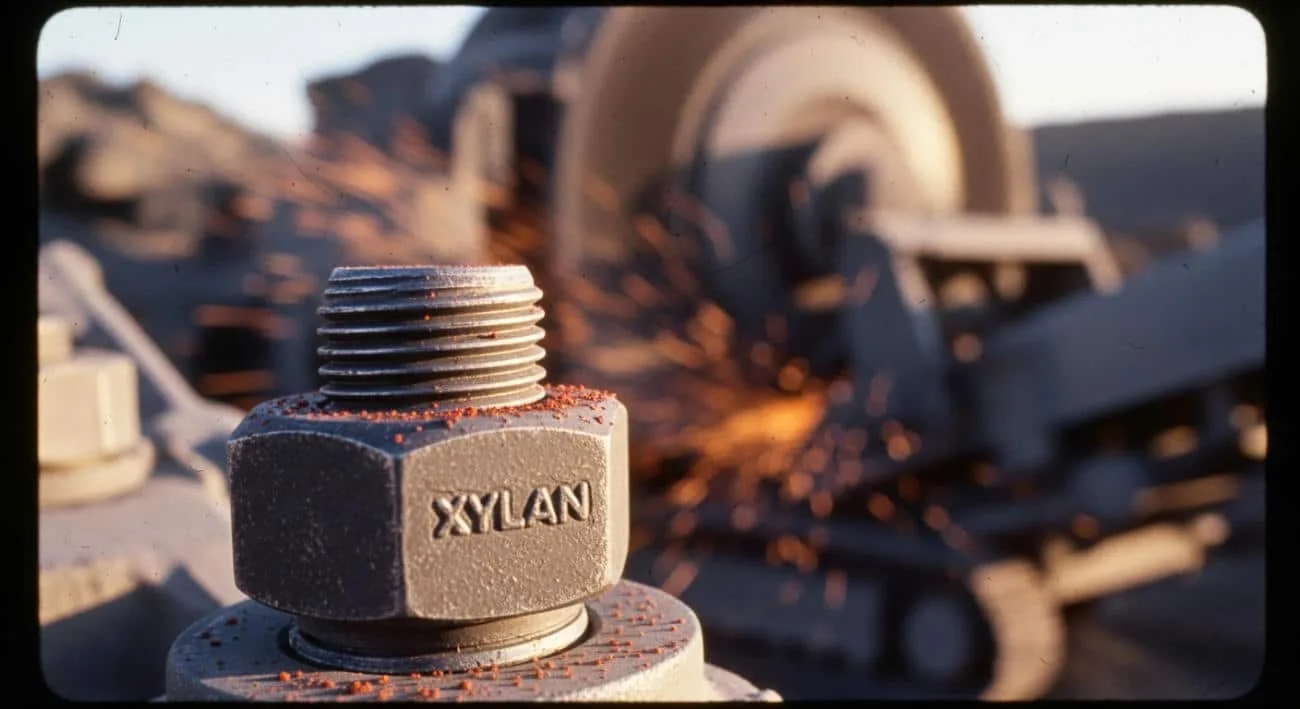
Coatings change how a fastener responds to vibration. For example, Xylan or PTFE coatings provide a consistent “nut factor.” This allows for more accurate torque application. If you can’t reach the target preload because of thread friction, the bolt will vibrate loose almost immediately.
Common coatings include:
-
Zinc Plating: Offers basic corrosion protection.
-
Hot-Dip Galvanizing: Thick protection for outdoor environments.
-
Fluoropolymer (Xylan): Excellent for low friction and chemical resistance.
Explore our Coating and Plating Guide to find the best match for your machinery.
Prevention Strategies
You cannot stop vibration in a mine, but you can stop it from killing your fasteners.
1. Proper Torque and Preload
The best defense is a properly tightened bolt. If the preload is high enough, the friction between the threads will be greater than the vibration forces trying to loosen it. Always use calibrated tools.
2. Locking Mechanisms
Standard washers are often useless in high-vibration mining. Split lock washers can actually make loosening happen faster. Instead, use:
-
Wedge-Locking Washers: These use tension instead of friction.
-
Nylon Insert Nuts: The nylon grips the threads to prevent rotation.
-
Adhesives: Thread-locking fluids create a chemical bond.
3. Regular Inspections
Vibration damage is cumulative. Check critical joints during every maintenance shift. Look for “bleeding” (red dust around a bolt head), which indicates micro-movement and wear.
4. Upgrade Your Fastener Class
If Grade 5 bolts are failing, move to Grade 8 or API 20E spec fasteners. Higher-grade bolts can handle higher preloads, making them more resistant to self-loosening.
The Economic Cost of Failure
Fastener failure is expensive. It isn’t just the cost of a ten-dollar bolt. It is the cost of downtime.
A haul truck sitting in the shop costs a mine thousands of dollars per hour in lost production. A structural failure on a conveyor can halt an entire site. By investing in high-quality fasteners from Cyclone Bolt, you are buying insurance against unplanned downtime.
Why Choose Cyclone Bolt in Houston?
We understand the stakes. Based in Houston, Texas, we serve the global mining and energy sectors. We don’t just sell hardware; we provide solutions for the toughest environments on the planet.
Our commitment to API and ISO standards means you receive fasteners that are engineered for reliability. We know that in the mining world, there is no room for “good enough.”
Article Recap
-
Vibration causes rotational self-loosening and material fatigue.
-
Mining equipment like crushers and haul trucks create extreme vibrational stress.
-
Preload is the primary force that keeps fasteners tight.
-
API 20E and 20F standards provide the quality needed for high-vibration environments.
-
Correct material and coating selection are essential for fastener longevity.
-
Proper torque and specialized locking mechanisms are the best ways to mitigate risk.
Stop Letting Vibration Destroy Your Equipment
Don’t wait for a catastrophic failure to occur. Secure your machinery with the highest-quality fasteners available. Contact the experts at Cyclone Bolt today for a quote on API-certified bolting solutions.