
Originally published 2026-01-01 · Cyclone Bolt
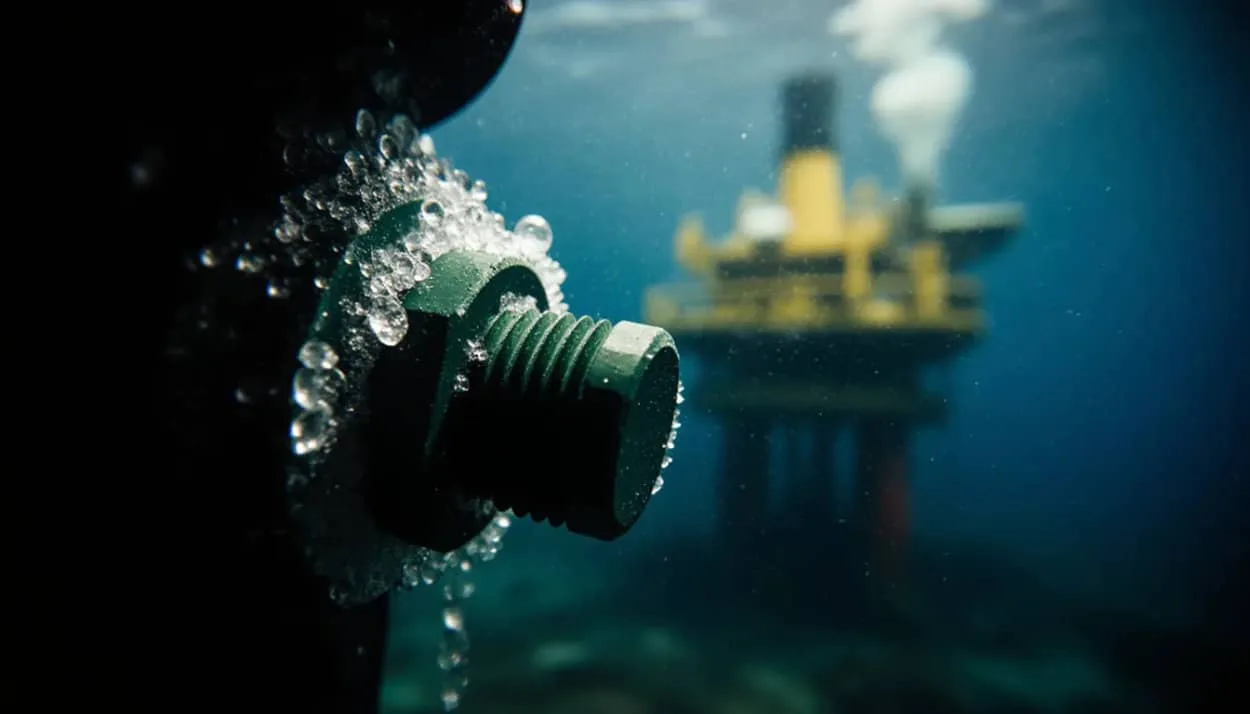
Imagine a world where the weight of a skyscraper rests on a single fingertip. Now, add a relentless chemical bath designed to eat through solid steel. This is the reality for every fastener on the ocean floor. Subsea bolting is the silent foundation of the offshore oil and gas industry. These components hold together blowout preventers, wellheads, and pipelines in some of the most hostile environments on Earth.
At Cyclone Bolt in Houston, Texas, we don’t just see a piece of threaded metal. We see a critical safety component. A single bolt failure in a subsea environment doesn’t just mean downtime. It can mean environmental catastrophe. That is why our approach to quality and tech is so rigorous. To survive the deep, a bolt must be a masterpiece of material science and engineering.
The Dual Threat: Pressure and Saltwater
The ocean floor presents two primary challenges: hydrostatic pressure and electrochemical corrosion. As you go deeper, the pressure increases by about one atmosphere for every 33 feet of depth. At several thousand feet, the forces trying to crush equipment are immense.
Saltwater is one of the most corrosive naturally occurring substances. It acts as an electrolyte, facilitating the movement of ions that lead to rust and pitting. When you combine high pressure with a corrosive medium, you create a phenomenon called Stress Corrosion Cracking (SCC). This can cause a bolt to snap without warning, even if it looks perfectly fine on the surface.
The Dynamics of Hydrostatic Pressure
In deepwater applications, fasteners aren’t just holding two flanges together. They are resisting the internal pressure of the hydrocarbons while being squeezed from the outside by the ocean. This requires specific technical standards to ensure the material remains within its elastic limit. If a bolt deforms under pressure, the seal fails.
The Chemistry of Corrosion
Seawater contains high levels of chloride. These ions are notorious for attacking protective oxide layers on metals. For carbon steel bolts, this usually results in uniform corrosion. For stainless steels, it can lead to localized “pitting.” At Cyclone Bolt, we utilize a variety of material specifications to combat these specific chemical attacks.
Material Selection: The First Line of Defense
Choosing the right metal is the most important decision in subsea bolting. You cannot simply use a standard hardware-store bolt. You need materials that have been forged and heat-treated specifically for marine service.
ASTM A320 Grade L7 and L7M
These are the workhorses of the subsea world. Grade L7 is a chromium-molybdenum alloy steel that is quenched and tempered. It is specifically designed for low-temperature service, which is vital because the deep ocean stays a consistent, chilly 39°F (4°C).
-
Grade L7: Offers high strength and impact resistance.
-
Grade L7M: A variation with a capped hardness level. This makes it more resistant to Sulfide Stress Cracking (SSC) in “sour” environments containing H2S.
Corrosion Resistant Alloys (CRA)
For the most extreme conditions, we move into the realm of CRAs. These materials don’t just resist rust; they are virtually immune to it in standard seawater.
-
Stainless Steels (316/316L): Good for general marine use but can be susceptible to pitting in stagnant water.
-
Duplex and Super Duplex: These offer double the strength of standard stainless steel and exceptional resistance to chloride-induced stress corrosion.
-
Nickel Alloys (Inconel 625/718): These are the elite materials. They maintain their properties at incredible pressures and are used for the most critical subsea connections.
You can find more details on these in our material grade guides.
Navigating the API Standards: 20E and 20F
The American Petroleum Institute (API) provides the roadmap for bolting integrity. In the subsea industry, two specifications reign supreme: API 20E and API 20F.
API 20E: Alloy and Carbon Steel Bolting
This specification covers the standard high-strength steel bolts used in most offshore equipment. It establishes Bolting Specification Levels (BSL-1, BSL-2, and BSL-3).
-
BSL-3 is the most stringent. It requires 100% non-destructive examination (NDE) and strict traceability.
-
At Cyclone Bolt, we are fully equipped to meet API 20E requirements, ensuring every steel bolt is documented from the mill to the ocean floor.
API 20F: Corrosion-Resistant Bolting
When the job calls for stainless steel or nickel alloys, API 20F is the standard. It addresses the unique manufacturing challenges of these alloys, such as work-hardening and grain structure. Because these materials are often used in safety-critical valves and trees, the margin for error is zero.
[Image comparing API 20E and API 20F bolting materials]
The Importance of Coatings and Plating in Subsea
While the metal itself provides the strength, the coating provides the “armor.” A subsea bolt without a coating is like a knight without a shield.
PTFE (Xylan) Coatings
Polytetrafluoroethylene (PTFE) is a popular choice for subsea fasteners. It serves two roles:
-
Corrosion Barrier: It creates a physical wall between the metal and the salt.
-
Lubrication: It ensures consistent “make-up torque.” In subsea installations, often done by ROVs (Remotely Operated Vehicles), having a predictable friction coefficient is essential to prevent over-tightening or under-tightening.
Zinc-Nickel Plating
In 2026, Zinc-Nickel has largely replaced older Cadmium plating due to environmental regulations. It provides excellent sacrificial protection. The zinc and nickel alloy corrodes before the base steel is ever touched. Our coating and plating technical guide explores how these layers interact with the marine environment.
Quality Management: The API Spec Q1 and ISO 9001 Edge
You can have the best material and the best coating, but if your manufacturing process is flawed, the bolt will fail. This is why Cyclone Bolt adheres to the highest levels of quality management.
API Spec Q1 9th Edition
This is the “gold standard” for the oil and gas industry. Unlike general quality standards, API Spec Q1 9th Editionfocuses heavily on risk assessment and contingency planning. It mandates that every step of the manufacturing process—from heat treatment to threading—is verified and repeatable.
ISO 9001:2015
We also maintain ISO 9001:2015 Quality System Certificate certification. This provides a universal framework for customer satisfaction and continuous improvement. By blending these two standards, we create a quality ecosystem that minimizes the risk of human error.
Advanced Testing for Subsea Reliability
How do we know a bolt will survive 10,000 feet deep? We prove it through testing.
-
Charpy Impact Testing: This measures how much energy a material can absorb during a fracture. It is vital for ensuring the bolt won’t be “brittle” in cold deep-sea temperatures.
-
Hardness Testing: We verify that the heat treatment was successful. If a bolt is too hard, it becomes brittle; too soft, and it lacks the necessary strength.
-
Magnetic Particle Inspection (MPI): For carbon steel, this detects surface and near-surface cracks that the naked eye would miss.
-
Dye Penetrant Inspection: Used on non-magnetic materials like stainless steel to ensure there are no microscopic flaws in the threads.
For more information on the environmental impact of subsea failures, the Bureau of Safety and Environmental Enforcement (BSEE) provides extensive research on bolting performance and safety regulations.
Why Houston is the Hub for Subsea Innovation
Cyclone Bolt is located in Houston, Texas, for a reason. This city is the global headquarters for subsea engineering. Being in the heart of the “Energy Capital of the World” allows us to collaborate directly with the engineers designing the next generation of deepwater equipment. We stay ahead of the curve, adapting our manufacturing as the industry pushes into deeper and “sourer” wells.
Our proximity to major ports also allows us to move fast. In the offshore world, time is money. If a rig is down because they need specialized API 20E studs, they need them yesterday. We pride ourselves on the speed and precision that our Houston facility offers.
Frequently Asked Questions
What is the best material for subsea bolts?
The “best” material depends on the depth and the chemistry of the fluids being transported. For many applications, ASTM A320 L7 is the standard. However, for highly corrosive “sour” service, Super Duplex or Nickel Alloy 718 (Inconel) is preferred.
What is the difference between BSL-2 and BSL-3 in API 20E?
BSL-3 (Bolting Specification Level 3) is the highest tier of quality control. It requires more rigorous testing, including 100% NDE and individual traceability for each bolt, whereas BSL-2 allows for sample-based testing.
Why is PTFE coating used on offshore fasteners?
PTFE (like Xylan) provides a dry-film lubricant that ensures consistent torque during installation. It also acts as a primary corrosion barrier against saltwater.
Can carbon steel bolts be used underwater?
Yes, but they must be properly coated (like with Zinc-Nickel or PTFE) and are often used in conjunction with “cathodic protection” systems that help prevent corrosion on the entire subsea structure.
Building a Safer Future with Cyclone Bolt
Subsea bolting is a specialized field that leaves no room for shortcuts. From the initial selection of alloy bar stock to the final coating application, every decision matters. At Cyclone Bolt, we combine the technical rigor of API standards with a passion for precision manufacturing.
We understand that our products are the only thing standing between a successful operation and a catastrophic leak. That is a responsibility we take seriously. Whether you need a standard set of L7 studs or a custom-machined nickel alloy component, our team in Houston is ready to deliver.
Don’t leave your subsea integrity to chance. Partner with a company that speaks the language of the deep. Explore our full range of technical standards and see how we can support your next offshore project.
If you are ready to secure your subsea assets with the most reliable fasteners in the industry, reach out to Cyclone Bolt today. Our specialists are standing by to provide the engineering support and high-quality products your mission-critical applications demand.