
Originally published 2026-01-06 · Cyclone Bolt
The Hidden Dangers of Deep Cold in Pressure Vessels
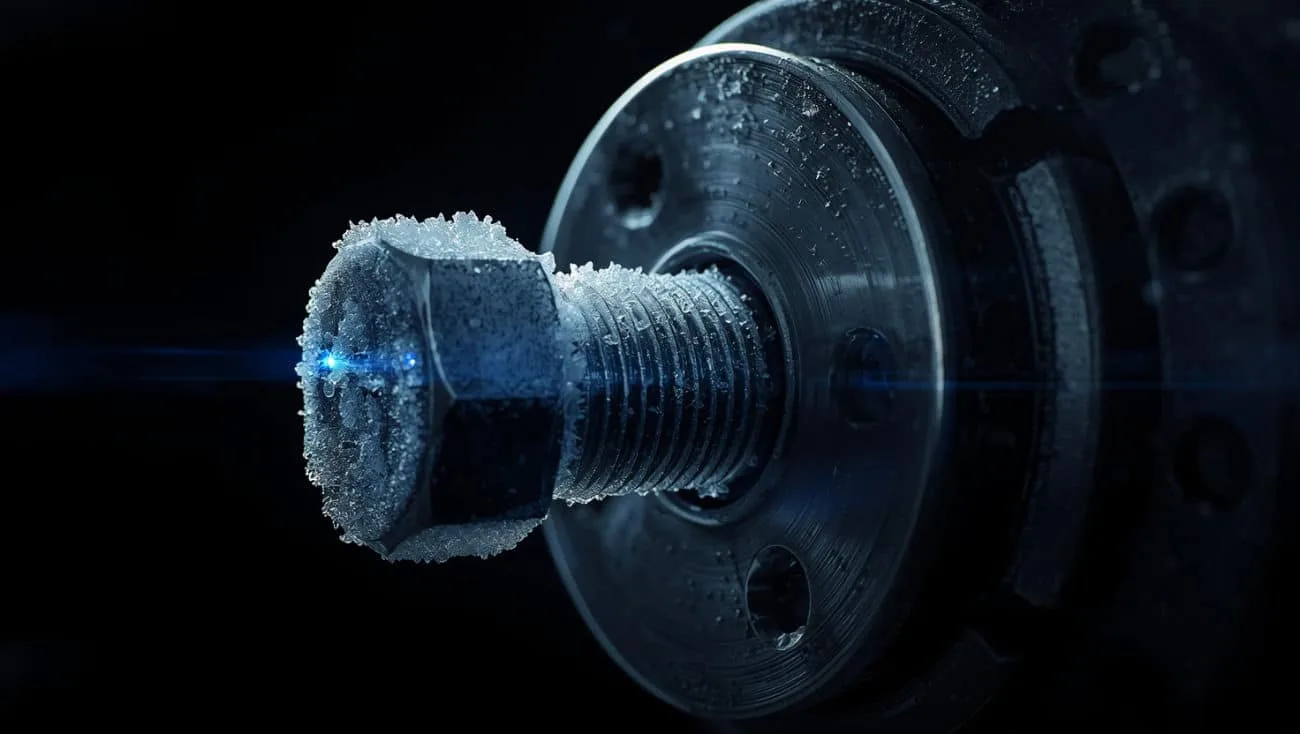
When temperatures drop into the cryogenic range, materials change. Standard carbon steel that is strong at room temperature can suddenly become as brittle as glass. In the world of pressure vessels and midstream oil and gas, this phenomenon—known as brittle fracture—is a major safety risk.
If a fastener fails because it cannot handle the cold, the results are catastrophic. This is why engineers and procurement specialists rely on specific low-temperature alloys. Specifically, the ASTM A320 specification governs these critical components.
Based in Houston, Texas, Cyclone Bolt serves as a vital link in the global supply chain for these specialized fasteners. We provide the expertise and the hardware needed to keep high-pressure systems safe when the mercury plummets. Understanding why A320 L7 and L43 are the industry standards requires a look at the science of impact testing and metallurgy.
The Science of Brittle Fracture
Most metals have a “ductile-to-brittle transition temperature” (DBTT). Above this temperature, the metal is ductile. It will stretch or deform before it breaks. Below this temperature, the metal loses its ability to absorb energy. Instead of stretching, it snaps.
Pressure vessels operating in Arctic environments or handling liquified natural gas (LNG) operate far below standard temperatures. Fasteners in these systems must maintain their toughness. They need to resist cracking even under extreme tension and vibration.
To ensure a bolt is ready for these conditions, it must undergo rigorous testing. At Cyclone Bolt, our quality and techteam ensures that every low-temp fastener meets the necessary safety benchmarks.
Charpy Impact Testing: The Gold Standard
How do we prove a bolt won’t snap in the cold? We use the Charpy V-Notch impact test. This is a standardized high-strain-rate test that measures the energy absorbed by a material during fracture.
How the test works:
-
A notched sample of the material is cooled to a specific target temperature.
-
A heavy pendulum is released, striking the sample.
-
The machine measures how much energy (usually in foot-pounds or Joules) was required to break the sample.
For A320 L7 bolting, the material must meet specific minimum impact energy requirements at -150°F (-101°C). If the metal absorbs enough energy, it proves it has the “toughness” to survive a sudden shock in a cold environment. You can find more details on these requirements in our technical standards guide.
ASTM A320 Grade L7: The Workhorse of the Cold
A320 Grade L7 is the most common fastener material for low-temperature service. It is an alloy steel, typically based on the 4140 chrome-moly chemistry. It is heat-treated (quenched and tempered) to achieve its specific mechanical properties.
Key Features of A320 L7:
-
Temperature Rating: Suitable for service down to -150°F (-101°C).
-
Tensile Strength: High strength, comparable to the standard ASTM A193 B7 used in warmer applications.
-
Compatibility: Frequently paired with ASTM A194 Grade 4 or Grade 7 nuts, which are also designed for low-temp service.
L7 is the go-to choice for most low-temp pressure vessels and flanges. However, it is important to check the material grade guides to ensure the chemistry is appropriate for your specific chemical environment.
ASTM A320 Grade L43: When Size and Strength Matter
While L7 is excellent, it has a limitation: size. As the diameter of a bolt increases, it becomes harder to ensure that the heat treatment has reached the very center of the bolt. This is known as “hardenability.”
ASTM A320 Grade L43 is a specialized alloy—usually 4340 nickel-chrome-moly steel. The addition of nickel provides superior hardenability.
Why choose L43 over L7?
-
Larger Diameters: L43 is typically required for bolts larger than 2.5 inches in diameter.
-
Deep Toughness: The nickel content ensures that the center of a thick stud maintains the same impact toughness as the surface.
-
Extreme Reliability: It provides a higher degree of safety for massive flanges on large-scale pressure vessels.
When your project involves large-diameter piping in freezing conditions, L43 is the safer, more robust choice. Cyclone Bolt provides full traceability for these materials, adhering to API Spec Q1 9th Edition standards.
API 20E and Low-Temperature Performance
In the Houston oil and gas sector, API 20E is a critical standard for bolting. This specification covers alloy and carbon steel bolting used in the petroleum and natural gas industries. It establishes different “Bolting Specification Levels” (BSL-1, BSL-2, and BSL-3).
When sourcing A320 L7 or L43, the API 20E standards add an extra layer of security.
-
BSL-2 and BSL-3: These levels require more intensive testing, including more frequent Charpy impact tests and non-destructive examinations (NDE).
-
Traceability: API 20E requires strict documentation from the steel mill to the final thread.
Using API 20E-compliant L7 studs ensures that the fastener isn’t just “good enough”—it is manufactured to the highest global standards for high-risk environments.
Stainless Steel Options: A320 Grade B8 and B8M
Sometimes, low temperature isn’t the only challenge. If the vessel is handling corrosive chemicals or is located in a salt-spray environment, alloy steels like L7 might corrode. In these cases, we look toward austenitic stainless steels.
A320 Grade B8 (Class 1 or 2): Made from 304 stainless steel. A320 Grade B8M (Class 1 or 2): Made from 316 stainless steel for even better corrosion resistance.
Unlike L7 and L43, these stainless grades do not typically require Charpy impact testing if they are used at certain temperatures. This is because stainless steel has a different crystal structure (fcc) that naturally maintains toughness at extremely low temperatures—even down to -425°F (-254°C).
However, stainless steel has lower yield strength than L7 unless it is “strain hardened” (Class 2). Always consult our materials specifications to balance strength and corrosion needs.
The Importance of Proper Nut Pairing
A bolt is only half of the connection. For low-temperature service, the nut must be just as tough as the stud. Using a standard nut on an A320 L7 bolt is a common, and dangerous, mistake.
The ASTM A194 specification dictates the nuts. For low-temp service, you generally have two options:
-
Grade 4: A heat-treated carbon-moly steel nut.
-
Grade 7: A heat-treated alloy steel nut (essentially the nut version of L7 steel).
Both grades require impact testing to ensure they won’t crack under load in the cold. Grade 7 is generally preferred for the most critical applications.
Coating and Plating for Low-Temp Bolting
In the Houston climate, corrosion happens fast. However, when you coat an A320 L7 bolt, you must be careful. Some coatings can lead to “hydrogen embrittlement,” which makes the bolt even more prone to snapping.
Our coating and plating technical guide outlines the safest options:
-
PTFE Coatings (Xylan®): Excellent for low-temp service. It provides corrosion protection and reduces friction during installation without the risk of hydrogen embrittlement.
-
Zinc Plating: Must be done with proper “baking” cycles to remove hydrogen.
-
Hot-Dip Galvanizing: Not typically recommended for A320 L7 due to the high temperatures involved in the dipping process, which can alter the heat treatment of the bolt.
Quality Management: The Cyclone Bolt Way
When you are dealing with cryogenic pressure vessels, “close enough” isn’t an option. Our facility in Houston is ISO 9001:2015 Quality System Certificate certified. This means every process—from threading to heat treatment to testing—is documented and audited.
We understand the requirements of API 20F for corrosion-resistant bolting and API 20E for alloy bolting. We provide full MTRs (Material Test Reports) with every order, including the specific results of the Charpy impact tests.
External Industry Resources
For deeper reading on the standards governing pressure vessels, we recommend these high-authority sources:
-
ASME (American Society of Mechanical Engineers): The ASME BPVC (Boiler and Pressure Vessel Code) is the ultimate authority on vessel design.
-
ASTM International: You can find the full technical requirements for the ASTM A320 specification on their official site.
Critical Mistakes to Avoid
-
Substituting B7 for L7: They look identical and have similar strengths, but B7 is not impact-tested. It can fail instantly in the cold.
-
Ignoring the Temperature: Always know your “Minimum Design Metal Temperature” (MDMT). This dictates whether you need L7, L43, or a stainless grade.
-
Mixing Manufacturers: For critical BSL-3 applications, try to source your studs and nuts from the same quality-controlled batch to ensure consistent performance.
The Houston Advantage
Being located in Houston allows Cyclone Bolt to ship quickly to refineries, LNG terminals, and offshore platforms across the Gulf Coast. We maintain a deep inventory of A320 L7 and L43 raw materials, allowing us to manufacture custom lengths with some of the fastest turnaround times in the industry.
We don’t just sell bolts; we provide technical certainty. Our team stays current on every update to API Spec Q1 9th Edition to ensure our customers are always in compliance.
Stay Tough When It’s Cold
Low-temperature pressure vessels are high-stakes environments. The fasteners you choose are the only thing holding those systems together under immense pressure and freezing temperatures. Don’t take a gamble on non-tested hardware.
Order your Charpy-tested A320 L7 fasteners from Cyclone Bolt.
Whether you need a single custom stud for an emergency repair or a thousand BSL-2 bolts for a new project, we have the capacity and the expertise to deliver.
Visit our main website to request a quote, or call our Houston office to speak with a technical expert. Let’s make sure your next project stays secure, no matter how cold it gets.
Would you like me to provide a specific torque chart for A320 L7 fasteners with PTFE coating to help with your installation planning? Contact Cyclone Bolt Today