
Originally published 2025-12-29 · Cyclone Bolt
Walk past a skyscraper under construction or a massive bridge project, and you will see steel beams reaching for the sky. These structures are impressive feats of engineering, but they only stay standing because of the small components holding them together. In the world of heavy construction, one name stands above the rest: ASTM A325.
If you aren’t in the industry, “ASTM A325” might sound like a secret code. But to engineers and steel fabricators, it is the language of reliability. These aren’t your average hardware store bolts. They are high-strength fasteners designed specifically for structural steel-to-steel connections.
Cyclone Bolt, located in Houston, Texas, is at the heart of this industry. We know that when you are building a structure intended to last for a century, every bolt matters. Understanding the nuances of ASTM A325 ensures that your project is safe, compliant, and built to withstand the elements.
What Exactly is an ASTM A325 Bolt?
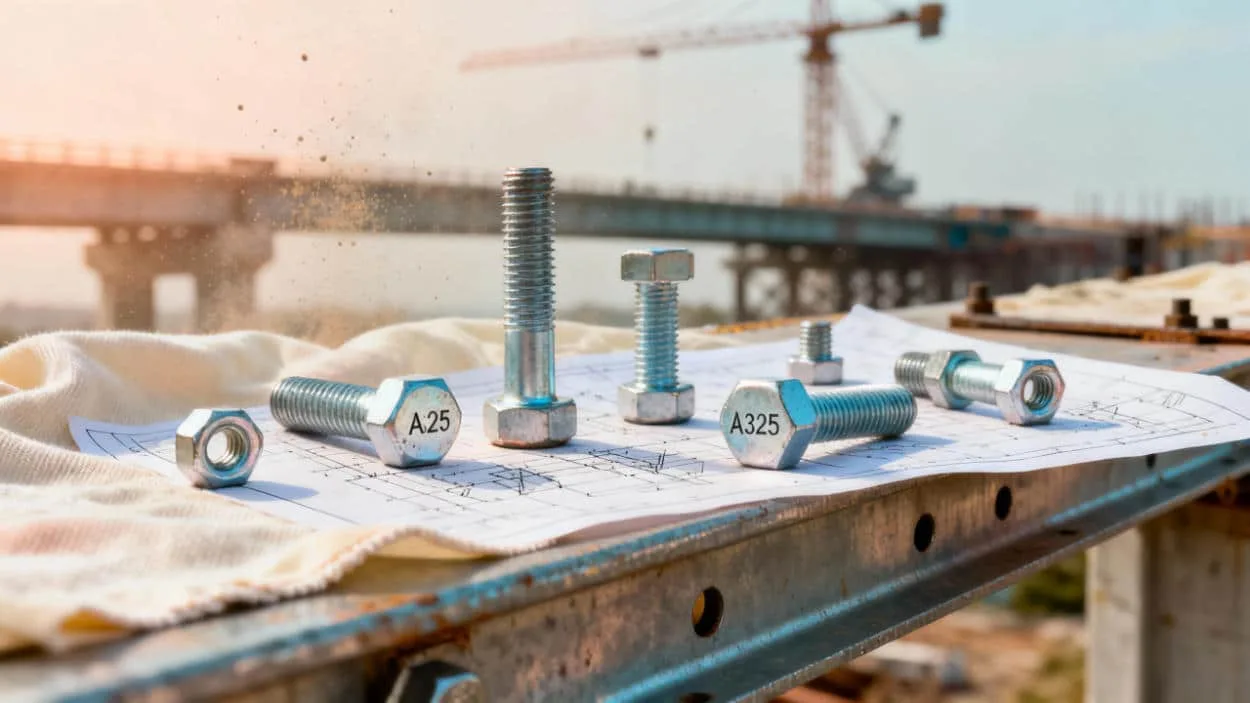
ASTM A325 is a technical standard set by ASTM International. It specifically covers heavy hex structural bolts made from heat-treated steel. These bolts have a thicker and wider head than standard bolts. This extra surface area is not just for looks; it helps distribute the load more effectively across the steel members being joined.
The standard defines everything about the bolt: what it’s made of, how strong it is, and even how it’s marked. Most A325 bolts range in diameter from 1/2 inch to 1 1/2 inches. They are the workhorses of the construction world, found in everything from sports stadiums to massive industrial warehouses.
The Big Shift: A325 and the Move to ASTM F3125
For decades, A325 was its own standalone specification. However, in 2016, a major change occurred in the fastener world. ASTM International decided to consolidate several structural bolt standards into one “umbrella” specification called ASTM F3125.
This new standard combined A325, A325M (the metric version), A490, A490M, F1852, and F2280. The goal was to eliminate inconsistencies and make the rules easier to follow.
Despite this consolidation, the name “A325” didn’t go away. It is now a grade within the F3125 specification. If you see a bolt marked “A325,” it still meets those legendary high-strength requirements, but it technically falls under the F3125 rulebook. This is a vital detail for project managers ensuring their technical standards are up to date.
Material Types: Type 1 vs. Type 3
When you order A325 bolts from Cyclone Bolt, you usually have to choose between two main types. Each is designed for a specific environment.
Type 1: The Standard Choice
Type 1 is the most common version. It is made from medium carbon steel, boron steel, or medium carbon alloy steel. These bolts are heat-treated (quenched and tempered) to reach their high strength levels. Most Type 1 bolts are used in interior structures or painted frameworks where they won’t be constantly attacked by the elements.
Type 3: The Weathering Warrior
Type 3 bolts are made from “weathering steel.” This material is designed to develop a protective, rust-like orange patina over time. Unlike regular rust that eats away at metal, this patina seals the surface and prevents deeper corrosion. Type 3 bolts are the go-to choice for bridges or buildings with exposed steel frames, as they eliminate the need for painting or galvanizing.
Mechanical Power: Understanding Tensile and Yield Strength
In heavy construction, “strength” is a multifaceted term. We measure it primarily through tensile strength and yield strength.
-
Tensile Strength: This is the maximum stress a bolt can handle while being pulled before it snaps.
-
Yield Strength: This is the point where the bolt begins to permanently deform. You want your bolts to stay within their “elastic” range, meaning they return to their original shape if the load is removed.
For a long time, the A325 standard had a slight quirk. Bolts 1 inch and smaller were required to have a minimum tensile strength of 120 ksi (kilopounds per square inch). For bolts larger than 1 inch, that requirement dropped slightly to 105 ksi.
With the new F3125 standard, these requirements were aligned. Now, almost all A325 grades across the size range are expected to hit that 120 ksi mark. This provides engineers with more consistent data for their material grade guides.
Connection Styles: SC, N, and X
How a bolt is used in a joint is just as important as the bolt itself. In structural engineering, there are three primary connection types defined for A325 fasteners.
-
Slip-Critical (SC): These connections rely on the friction between the steel plates rather than the bolt itself. The bolts are tightened to a specific “pretension” to clamp the plates together so tightly they can’t slip. These are used in structures prone to vibration or load reversal, like bridges.
-
Bearing-Type, Threads Included (N): In these connections, the load is transferred through the body of the bolt bearing against the side of the hole. In the “N” designation, the threads of the bolt are allowed to be in the “shear plane” (the gap where the two plates meet).
-
Bearing-Type, Threads Excluded (X): This is similar to the N type, but the bolt is long enough that the threads are kept out of the shear plane. Because the solid shank of the bolt is stronger than the threaded portion, “X” connections have a higher shear capacity.
Why Construction Pros Choose A325 Over Other Bolts
With so many fasteners on the market, why is A325 the gold standard? It comes down to balance. While there are stronger bolts, like the A490, they come with trade-offs.
A325 bolts are incredibly tough but also somewhat forgiving. They are less susceptible to “hydrogen embrittlement”—a phenomenon where high-strength steel becomes brittle and snaps unexpectedly—compared to the stronger A490. This makes A325 safer for galvanizing.
A325 galvanized bolts are a staple in outdoor infrastructure because they offer both high strength and excellent corrosion resistance. You can see more about how we handle these finishes in our coating and plating technical guide.
Essential Hardware: Nuts and Washers
An A325 bolt is rarely used alone. To create a safe structural joint, you need the right “supporting cast.”
-
Nuts: A325 bolts are typically paired with heavy hex nuts that meet the ASTM A563 standard.
-
Washers: Hardened steel washers meeting ASTM F436 are used to spread the load and protect the surface of the steel members during tightening.
Using the wrong nut or a non-hardened washer can lead to a connection failure. This is why we emphasize quality and tech at Cyclone Bolt. We ensure that every component in your assembly meets the necessary materials and specifications.
Common Applications for A325 Bolts
Where will you find these high-strength fasteners? They are everywhere in the built environment.
-
Bridges: From highway overpasses to massive suspension bridges.
-
Buildings: Structural skeletons for skyscrapers, hospitals, and schools.
-
Industrial Facilities: Oil refineries in the Houston area, factories, and power plants.
-
Transportation Infrastructure: Railway trestles and airport hangars.
In each of these cases, the failure of a single joint could be catastrophic. This is why industry organizations like the American Institute of Steel Construction (AISC) have such strict guidelines on their use.
The Houston Advantage: Quality You Can Trust
Located in Houston, Texas, Cyclone Bolt is uniquely positioned to serve the heavy construction and oil and gas industries. We understand that in our neck of the woods, heat, humidity, and salt air are constant threats.
We don’t just supply bolts; we supply peace of mind. Our facility is dedicated to meeting the most rigorous standards, including API Spec Q1 9th Edition and ISO 9001:2015 Quality System Certificate. We also specialize in specialized oilfield standards like API 20E and API 20F.
Every A325 bolt we manufacture or distribute undergoes strict testing. We check for hardness, tensile strength, and thread accuracy. In heavy construction, there is no room for “good enough.”
How to Select the Right A325 Bolt
If you are a project manager or an estimator, choosing the right bolt involves more than just picking a length. You should consider:
-
Environmental Exposure: Do you need Type 3 weathering steel or a galvanized Type 1?
-
Connection Type: Is your engineer calling for a slip-critical (SC) or a bearing-type (N/X) connection?
-
Coating Requirements: Do the specs call for hot-dip galvanizing, mechanical galvanizing, or zinc plating?
-
Traceability: Does your project require Mill Test Reports (MTRs) to prove the origin and strength of the steel?
At Cyclone Bolt, we provide full traceability on our structural fasteners. We want you to know exactly what is going into your structure.
The Backbone of Heavy Construction
ASTM A325 structural bolts are the unsung heroes of our modern world. They provide the clamping force and shear strength required to keep our most massive structures safe. From the move to the ASTM F3125 standard to the differences between Type 1 and Type 3 materials, these details matter.
According to ASTM International, standards like A325 are the foundation of global building safety. By following these rules, we ensure that the bridges we drive over and the buildings we work in are secure for generations to come.
Ready to Secure Your Next Project?
Don’t leave your structural integrity to chance. Whether you are building a new landmark or maintaining industrial infrastructure, you need fasteners that meet the grade.
Cyclone Bolt is your Houston-based partner for high-strength A325 structural bolts. We bring years of expertise, a commitment to quality, and a massive inventory to every order.
Contact us today to request a quote or to discuss your specific project needs with our technical team. Visit our material grade guides to explore your options or reach out through our website. Let’s build something strong together.