
Originally published 2026-01-05 · Cyclone Bolt
Operating a power plant or industrial boiler system requires components that can withstand extreme environments. High pressure and searing heat are constant factors. In these systems, the fasteners are the silent heroes. They hold flanges, valves, and pressure vessels together under immense stress.
Choosing the right bolt is not just about size. It is about the specific chemical and mechanical properties defined by ASTM International. The most critical standard in this sector is ASTM A193.
At Cyclone Bolt, located in Houston, Texas, we understand that a single incorrect bolt can lead to catastrophic failure. We provide fasteners that meet the most rigorous Technical Standards in the industry. This guide explains the ASTM A193 grades essential for power generation and steam applications.
What is ASTM A193?
ASTM A193 is the standard specification for alloy-steel and stainless steel bolting materials. It specifically covers materials intended for high-temperature or high-pressure service. This includes applications like pressure vessels, valves, flanges, and fittings.
Steam pipe systems are dynamic. They expand and contract as temperatures fluctuate. The bolts must maintain their clamping force during these cycles. If the material is too brittle, it snaps. If it is too soft, it stretches and leaks. ASTM A193 ensures the steel has the correct balance of strength, ductility, and heat resistance.
Common ASTM A193 Grades in Power Generation
Not all steel is created equal. ASTM A193 is divided into several “grades.” Each grade uses a different chemical composition and heat treatment. Knowing which one to choose is vital for the safety of your facility.
Grade B7: The Industrial Workhorse
ASTM A193 Grade B7 is the most common bolt used in the energy sector. It is a chromium-molybdenum alloy steel. B7 bolts are quenched and tempered to achieve high tensile strength.
-
Temperature Range: Effective up to 800°F (427°C).
-
Applications: Pipe flanges, valves, and general pressure vessels.
-
Strength: Typically reaches a minimum tensile strength of 125 ksi for diameters up to 2-1/2 inches.
B7 is favored for its reliability and cost-effectiveness. However, as temperatures climb above 800°F, the material begins to lose its mechanical properties. For these extreme environments, engineers look toward Grade B16. You can see more details on our Material Grade Guides.
Grade B16: For High-Heat Steam Lines
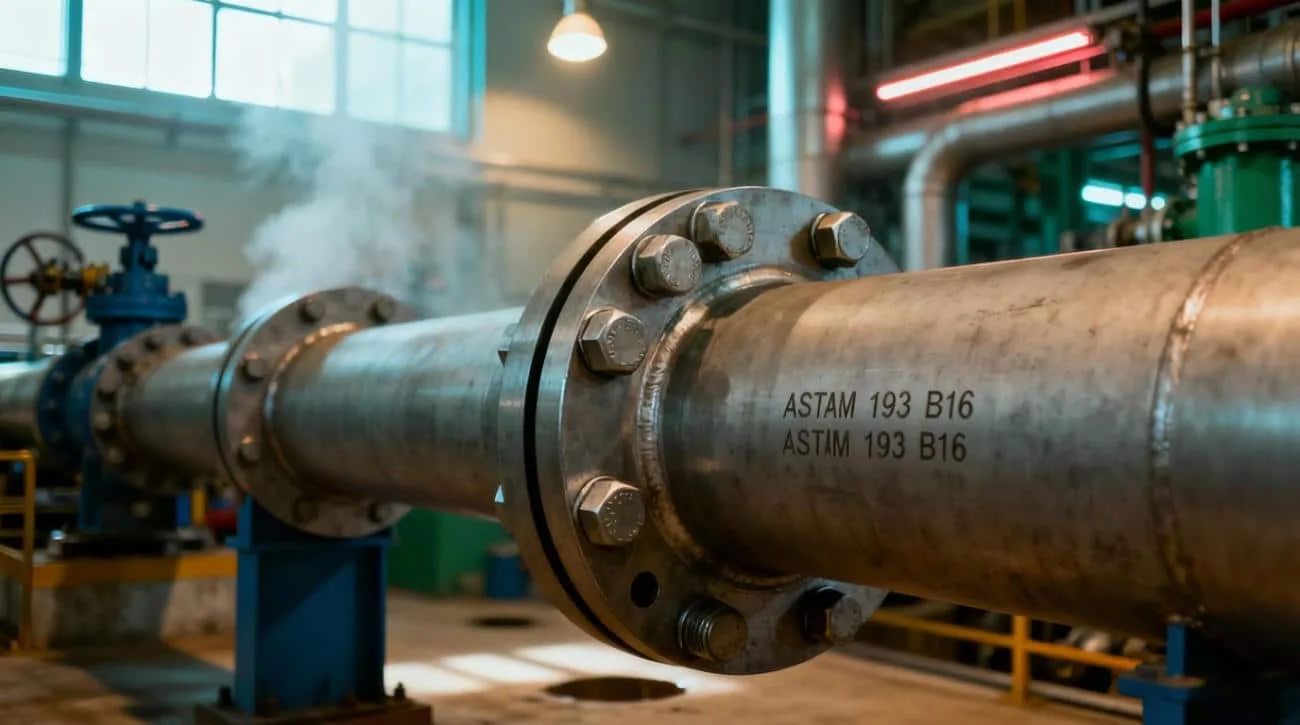
When your system operates between 800°F and 1100°F, Grade B7 is no longer sufficient. This is where ASTM A193 Grade B16 comes into play. It is a chromium-molybdenum-vanadium alloy.
The addition of vanadium is the key difference. Vanadium allows the bolt to maintain its strength at higher temperatures than B7. It resists “creep,” which is the tendency of metal to slowly deform under permanent stress at high heat.
-
Temperature Range: Effective up to 1100°F (593°C).
-
Applications: High-pressure steam turbines, boilers, and power plant piping.
-
Key Benefit: Superior resistance to thermal relaxation.
Grade B8 and B8M: The Stainless Steel Solution
In some boiler environments, corrosion is as big a threat as heat. Steam and chemical additives can eat away at standard alloy steels. In these cases, stainless steel grades like B8 and B8M are necessary.
-
Grade B8: Made from AISI 304 stainless steel. It offers excellent corrosion resistance.
-
Grade B8M: Made from AISI 316 stainless steel. It includes molybdenum, which provides even better resistance to chlorides and pitting.
These stainless grades are often used in “wet” steam environments or where chemical treatments are aggressive. They also perform exceptionally well in cryogenic (extreme cold) service, making them highly versatile. Check our Materials and Specifications page for more technical data on these alloys.
Understanding Mechanical Property Requirements
Selecting a grade is the first step. Understanding the mechanical requirements is the second. ASTM A193 sets strict limits on several factors:
-
Tensile Strength: The maximum load the bolt can handle before breaking.
-
Yield Strength: The point at which the bolt permanently deforms.
-
Elongation: How much the metal can stretch before snapping.
-
Reduction of Area: A measure of the material’s ductility.
-
Hardness: Resistance to indentation or surface wear.
Fasteners must undergo rigorous testing to ensure they meet these numbers. At Cyclone Bolt, our Quality and Techteam oversees every phase of testing. We ensure that every shipment matches the project’s exact engineering requirements.
The Importance of Proper Marking
Every ASTM A193 bolt must be clearly marked. This is a safety requirement. If a technician replaces a B16 bolt with a B7 by mistake, a steam leak is likely.
Identification markings usually include:
-
The Grade Symbol: (e.g., B7, B16, B8).
-
The Manufacturer’s Identification: A unique symbol representing the company that made the bolt.
These markings allow for traceability. In high-risk environments like power plants, knowing the origin of every fastener is mandatory.
Manufacturing Controls: API 20E and 20F
In the oil, gas, and power industries, ASTM standards are often paired with API (American Petroleum Institute) specifications. These provide even stricter controls over the manufacturing process.
-
API 20E: This covers alloy and carbon steel bolting. It defines three “Bolting Specification Levels” (BSL-1, BSL-2, and BSL-3). BSL-3 is the most stringent, requiring full traceability and advanced non-destructive testing. You can learn more about API 20E here.
-
API 20F: This focuses on corrosion-resistant bolting, such as stainless and nickel alloys. Similar to 20E, it ensures that high-risk applications use only the highest quality materials. Read more about API 20Fspecifications.
Adhering to API Spec Q1 9th Edition ensures that the quality management system behind the manufacturing is sound.
Protective Coatings for Steam Bolting
Steam environments are often humid. This leads to rust and corrosion on alloy steels like B7 and B16. To prevent this, various coatings are applied.
-
Zinc Plating: Good for general moisture protection but has temperature limits.
-
Manganese Phosphate: A common “heavy” coating that provides a good base for lubricants and prevents galling.
-
PTFE (Teflon/Xylan) Coatings: Excellent for preventing corrosion and making bolts easier to remove during maintenance.
-
Cadmium Plating: Offers superior protection but is used less frequently today due to environmental regulations.
Choosing the right coating is critical. Some coatings can cause “hydrogen embrittlement” if not baked properly during the process. For a deep dive into finishes, visit our Coating and Plating Technical Guide.
Quality Management and ISO Certification
Safety in power generation depends on consistency. You need to know that the tenth bolt in the box is just as strong as the first. This is why ISO 9001:2015 certification is vital.
Our ISO 9001:2015 Quality System Certificate certified processes mean every step of our operation—from material procurement to final inspection—is documented and audited. We maintain the highest standards of quality to ensure your steam systems stay online and safe.
High-Temperature Challenges: Creep and Relaxation
In steam piping, heat is the primary enemy of bolt tension. When a bolt stays hot for years, it can undergo “stress relaxation.” The bolt doesn’t break, but it loses its “stretch.” This stretch is what provides the clamping force on a flange.
If a bolt relaxes, the gasket can fail. ASTM A193 B16 is specifically designed to fight this. Its chemical makeup resists the atomic-level movement that causes relaxation. This is why B16 is the standard for steam turbine casings and high-pressure steam headers.
Matching Materials for Thermal Expansion
When designing a boiler system, you must consider thermal expansion. Steel expands when it gets hot. If the flange and the bolt expand at different rates, the tension on the joint changes.
If your flange is made of stainless steel but you use carbon steel bolts, you might crush the gasket or break the bolt during a heat cycle. Always match the thermal properties of your fasteners to your equipment. Our experts can help you navigate these Technical Standards to find the perfect fit.
External Resources for Engineering Teams
To stay updated on the latest changes to bolting standards, we recommend following industry authorities.
-
ASTM International: The governing body that maintains the A193 standard. You can find detailed technical papers on their official site.
-
ASME (American Society of Mechanical Engineers): ASME’s Boiler and Pressure Vessel Code (BPVC) is the definitive guide for power plant construction. Visit ASME for more information on how bolting fits into broader mechanical codes.
Partner with Cyclone Bolt for Your Next Project
Houston is the global hub for energy and infrastructure. Cyclone Bolt sits at the center of this expertise. We don’t just sell fasteners; we provide technical solutions.
Whether you need 1,000 Grade B7 studs for a routine shutdown or specialized B16 bolts for a turbine overhaul, we have the inventory and the technical knowledge to deliver.
We are experts in ASTM specifications. Send your RFQ and let us match the exact grade you need. Visit our Quality and Tech page to see our capabilities or contact our sales team today to secure the integrity of your steam systems. Contact Cyclone bolt today for More Info