
Originally published 2025-10-12 · Cyclone Bolt
In the world of engineering, the bolt is a symbol of fundamental strength and reliability. Its primary mission is elegantly simple: to clamp two or more surfaces together with immense force, creating a joint that is stronger than its individual parts. For the vast majority of industrial applications, this is where the fastener’s job ends. But in the high-stakes, zero-failure environments of aerospace, defense, and high-performance motorsports, a standard fastener is often not enough. In these arenas, a bolt must do more than just clamp; it must become an active participant in the safety and functionality of the entire assembly.
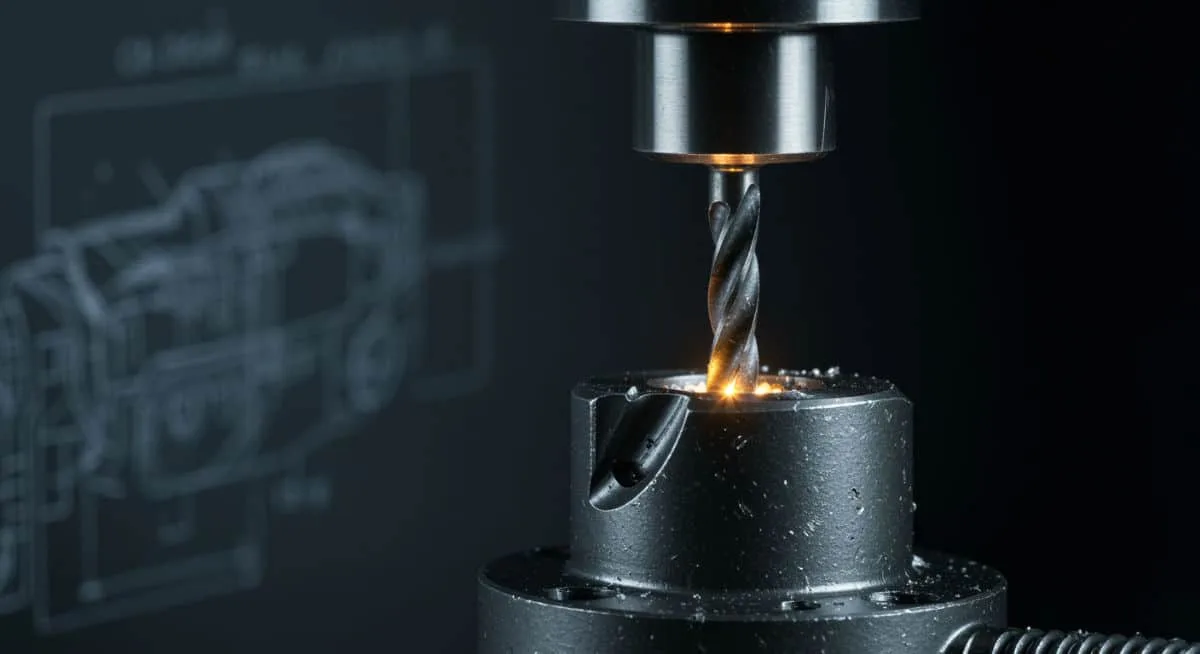
This is where the art and science of precision drilling come into play. By integrating specialized features like holes and channels directly into a fastener, we transform it from a passive component into a purpose-built solution. A simple drilled hole can provide a fail-safe locking mechanism or a vital lubrication pathway, elevating the fastener’s role from a simple connector to a critical, multi-functional asset. At Cyclone Bolt & Gasket, our advanced CNC machining and drilling capabilities allow us to engineer these specialized features with the absolute precision that mission-critical applications demand.
Beyond Clamping: The Functional Demands for Drilling Fasteners
Adding a hole to a fastener is not a simple modification; it is a calculated engineering decision designed to solve a specific problem. The two most common and critical applications are for safety wiring and lubrication.
- Cross-Drilled Holes for Safety Wiring (Lock Wiring) In any assembly subjected to intense vibration, thermal cycling, or extreme stress, there is a constant risk that a fastener could loosen over time. In an aircraft engine, a military vehicle, or a racing car, a single loose bolt can have catastrophic consequences. While thread-locking compounds have their place, they are not a substitute for a positive, mechanical locking system.
This is the role of safety wiring, or lock wiring. By feeding a strand of specialized wire through a cross-drilled hole in the head of a bolt or stud and securing it to another fastener or a fixed anchor point, a physical barrier is created that prevents the fastener from rotating loose.
- How it Works: The wire is installed in a way that it is always under tension, pulling the fastener in the tightening direction. Should the bolt try to loosen, it would have to overcome the tensile strength of the wire, which is virtually impossible under normal operational loads.
- The Ultimate Fail-Safe: It serves as a simple, yet incredibly effective, fail-safe insurance policy. It also provides a clear visual indicator; a quick inspection can confirm that all critical fasteners are secure and have not been tampered with. This is why it is mandated in countless aerospace and defense specifications.
- Drilled Channels for Lubrication and Greasing In many complex mechanical systems, there are moving parts that pivot or rotate around a fastener, such as in heavy machinery, articulated joints, or automation equipment. Ensuring these moving parts are properly lubricated is essential for reducing friction, preventing wear, and extending the service life of the entire assembly.
Often, the most efficient way to deliver lubricant to the heart of these joints is through the fastener itself. By drilling a precise axial channel down the center of the bolt and a small radial hole to an exit point, the fastener becomes a conduit for grease or oil.
- Targeted Lubrication: This method allows lubricant, often applied via a zerk fitting on the bolt head, to be delivered directly to the high-friction bearing surfaces where it is needed most.
- Simplified Maintenance: It simplifies the design of the assembly, eliminating the need for complex external lubrication lines and allowing for easier and more effective routine maintenance.
The Challenge: Precision Without Compromise
Drilling a hole into a high-strength fastener is a far more complex task than it appears. It is a process that requires absolute precision, as a poorly executed modification can do more harm than good.
- Maintaining Structural Integrity: The primary challenge is to add the desired feature without compromising the fastener’s strength. An off-center hole, a sharp edge, or a burr left from drilling can create a “stress riser”—a point where stress can concentrate, becoming the starting point for a fatigue crack.
- Working with High-Strength Materials: The fasteners used in these critical applications are not made from ordinary steel. They are high-strength, heat-treated alloys, stainless steels, or exotic materials like Inconel® and titanium. These materials are incredibly tough and difficult to machine, requiring specialized tooling, techniques, and expertise.
- Absolute Positional Accuracy: A cross-drilled hole for safety wire must be perfectly positioned to ensure the wire passes through correctly without being sheared or weakened. A lubrication channel must exit at a precise point to deliver grease effectively. There is no margin for error.
The Cyclone Bolt Advantage: State-of-the-Art CNC Precision
Meeting these challenges is precisely where Cyclone Bolt’s advanced manufacturing capabilities shine. Our investment in state-of-the-art CNC (Computer Numerical Control) machining centers is our guarantee of perfection.
- Unmatched Accuracy and Repeatability: Our CNC equipment can position and drill holes with tolerances measured in the thousandths of an inch. This process is computer-controlled, ensuring that whether the order is for one specialized bolt or one thousand, the feature is placed in the exact same location, every single time.
- Flawless Finish: Our processes ensure that every drilled hole is clean, smooth, and free of burrs that could compromise the fastener’s integrity. This attention to detail is critical for maximizing fatigue life and ensuring safety.
- Integrated Quality Control: This precision drilling is integrated into our overarching quality management system, which is certified to the rigorous standards of ISO 9001:2015 and API Q1. This means every specialized fastener we produce is backed by a system of total quality control, from material verification to final inspection.
A fastener is more than just a piece of hardware. It can be an engineered solution, a critical safety device, and a key functional component. By combining our deep material expertise with our advanced CNC drilling capabilities, we provide our partners in aerospace, defense, and other high-performance industries with the specialized, value-added fasteners their most critical applications demand.
Bring us your most complex fastener challenges. Contact Cyclone Bolt & Gasket today to learn how our precision drilling and manufacturing services can elevate the performance and safety of your assemblies.
People Also Ask (PAA) from Cyclone Bolt
- What is the purpose of the hole in the head of a bolt? A hole drilled through the head of a bolt, known as a cross-drilled hole, is primarily used for safety wiring (or lock wiring). This allows a wire to be passed through, physically preventing the bolt from loosening due to vibration.
- What is safety wiring or lock wiring? Safety wiring is a positive locking method used in high-vibration environments like aerospace and motorsports. A wire is threaded through a cross-drilled hole in a fastener and anchored, physically stopping the fastener from rotating loose.
- Does drilling a hole in a bolt weaken it? If done correctly with precision CNC equipment, the reduction in strength is minimal and is factored into the engineering design. However, an improperly drilled, off-center, or rough hole can create stress risers that significantly weaken the bolt and can lead to premature failure.
- What industries require cross-drilled fasteners? The aerospace, defense, motorsports/racing, and high-performance engine industries are the primary users of cross-drilled fasteners for safety wiring due to the critical need to prevent components from loosening under extreme vibration.
- Can you drill holes in high-strength materials like titanium? Yes, but it requires specialized equipment and expertise. Materials like titanium, Inconel®, and heat-treated alloy steels are very tough. Precision drilling is typically performed using advanced CNC machining centers with carbide tooling and proper cooling.
- What is a lubrication bolt? A lubrication bolt is a specialized fastener with a drilled channel, usually down its center, that allows grease or oil to be passed through it. This is used to lubricate moving parts that pivot on the bolt, simplifying maintenance and improving component life.
- What is a castellated nut and cotter pin? A castellated nut has notches (like the top of a castle) that line up with a hole drilled through the bolt’s shank. A cotter pin is inserted through the notches and the hole to provide a simple, effective positive lock, preventing the nut from backing off.
- What is the difference between a drilled head bolt and a drilled shank bolt? A drilled head bolt has a hole through the head for safety wiring. A drilled shank bolt has a hole through the threaded portion (the shank), which is typically used with a castellated nut and a cotter pin to lock the nut in place.
- Why use CNC machining for drilling bolts? CNC (Computer Numerical Control) machining ensures absolute precision and repeatability. It guarantees the hole is perfectly centered and dimensionally accurate, which is critical for maintaining the fastener’s structural integrity and functionality.
- What is a “positive locking device” for fasteners? A positive locking device is a mechanical system that physically prevents a fastener from loosening. It is not reliant on friction. Examples include safety wiring, cotter pins, and tab washers.